When You Design a Child’s Space, You Design Their Behavior
——Why So Much “Children’s Furniture” Fails in Real Homes
By Nathaniel Brooks | Updated on March 2026 | 🕓 12 minutes
Key Highlights
- How does the design of a child’s space influence their behavior?
- What is a behavioral pathway, and why does it matter for children?
- Why do many commercially available children’s furniture products fail in real homes?
- How can observation and modularity improve the effectiveness of a child’s space?
- What role does the environment play as a “silent teacher” in shaping autonomy and creativity?
When many families begin setting up a child’s bedroom or activity area, they often follow a familiar path.
They search online for keywords like “children’s furniture” or “child-friendly design,” scroll through beautifully curated images, and end up purchasing a complete set of products that look safe, cute, softly colored, and carefully branded with words such as “growth,” “enlightenment,” and “companionship.”
The result is often a room filled with cartoon-themed desks and chairs, brightly colored storage units, and fixed-function study tables. Yet, despite all this intentional design, the child may still choose to lie on the living room floor to do homework, or scatter toys throughout the house instead of using the designated space. This scene is far more common than many parents expect.
The underlying issue is that much of what is sold as “children’s furniture” prioritizes visual appeal and marketing labels over how children actually use space. These products often fail to consider children’s real behavior patterns, physical development, cognitive needs, and the realities of family life. The label “children’s furniture” does not guarantee practical suitability. Many parents discover that expensive items quickly fall into disuse.
The deeper problem is that we are often buying scaled-down versions of adult furniture, rather than spatial elements genuinely designed around children’s behavior and development. We believe we are designing a children’s space, but in reality, we are simply stacking children’s furniture. What truly shapes a child’s behavior is not the furniture itself, but the behavioral pathways embedded in the space.
1. What Is a “Behavioral Pathway”?
You are not placing furniture—you are defining how a child uses the space.
The concept of a behavioral pathway is not abstract or mystical.
It refers to the continuous sequence of actions and behaviors that a person is guided through in a space—from entering, staying, moving, interacting, and eventually leaving—shaped by environmental cues at every step.
For children, behavioral pathways are not theoretical constructs. They are directly determined by stages of physical and psychological development. Preschool-aged children typically squat, crawl, and reach for objects; these movement patterns should directly inform furniture height, material choices, and spatial layout.
From a scientific perspective, research in developmental psychology and motor development consistently shows that environments have long-term effects on behavioral patterns. Studies examining the relationship between child temperament and later mental health risks have even identified associations at the level of brain functional networks.
Research published in Child Development has shown that early childhood temperament can predict higher risks of both internalizing and externalizing behavioral problems later in life. Yet, intriguingly, not all children with high-risk temperaments go on to develop psychopathology.
One explanation lies in the interaction between temperament and environment. Children with high levels of behavioral inhibition (BI)—a temperament trait characterized by cautiousness and withdrawal—often show weaker functional connectivity in attention and cognitive control networks. However, supportive and appropriately designed environments can mitigate these risks.
For adults, behavioral pathways are relatively stable and habitual. For children, however, behavioral pathways are almost entirely shaped by the environment. These findings highlight a critical principle: spatial design must account for individual differences. Even children of the same age may require different spatial arrangements due to variations in temperament, cognition, and motor development.
Consider some very ordinary examples:
The height of a table determines whether a child sits upright to draw or lies on the floor.
Whether storage is within arm’s reach determines whether a child can independently clean up.
Whether there is a continuous open area determines whether a child can move freely or must remain seated.
Whether furniture is movable determines whether a child can participate in reorganizing their own space.
In other words, children do not “refuse” to use furniture. More often, the behavioral pathways built into the furniture simply do not align with how children naturally move and act.
2. Why “Children’s Furniture” So Often Fails in Real Homes
In the rush to embrace “child-friendly” labels, many families invest heavily in commercially available children’s furniture—only to encounter frustration soon after.
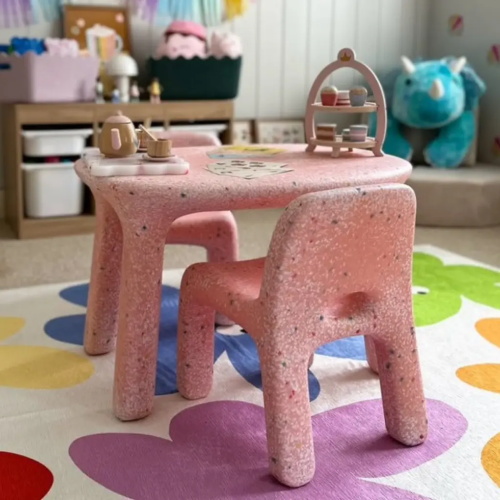
One common issue is excessive decoration and overstimulation through color. While high-saturation colors may capture attention in the short term, psychological research suggests that prolonged exposure can lead to distractibility and emotional instability. Early childhood environments benefit from warmth and brightness, but excessive color variety can reduce a child’s sense of autonomy and calm.
Another major problem is the mismatch between size and behavior. Much children’s furniture is simply a reduced-scale version of adult designs, ignoring children’s actual movement patterns and usage contexts. This includes overlooking the differences between a three-year-old, who prefers enclosed and complex spaces, and a four- or five-year-old, who tends to thrive in more open layouts.
Children’s body proportions, motor strategies, and control abilities differ fundamentally from adults’. When furniture constantly requires parental assistance to use, children quickly learn to bypass it altogether.
Fixed-function designs further restrict exploration. Rigid study desks and immovable storage units deprive children of opportunities to adapt their environment. When children cannot rearrange or repurpose furniture, their autonomy and creativity are directly constrained.
During preschool and early elementary years, children’s dominant behavioral mode is move–explore–switch. Fixed desks, single-height chairs, and tightly defined “learning zones” contradict this natural rhythm. This is not a failure of discipline—it is a failure of behavioral pathway design.
Over-functionalization also compresses exploratory space. Many children’s furniture products emphasize being “feature-rich,” which often means that every action has a predefined “correct” use. Deviations from intended use are labeled as misbehavior.
Yet decades of research in environmental psychology and child development confirm that open-ended, reconfigurable spaces—where functions are not rigidly defined—better support creative play and autonomous behavior.
Market research in Europe and North America has found that 30–40% of children’s furniture in households goes unused. This striking statistic reflects how poorly many products align with real family needs.
At a deeper level, many products marketed as children’s furniture neglect basic ergonomic principles and developmental science. Truly child-centered design is rooted in a deep understanding of children’s height, reach, movement range, and habitual behaviors. What children need most is not “more features,” but spaces where functions remain flexible and pathways stay open.
3. Effective Children’s Spaces Are About “How to Move,” Not “What to Buy”
The first principle is observation before placement.
Design should begin not with “what I think is best,” but with “what I actually observe.” This means watching a child’s daily movements and interest patterns before deciding on layout.
Where does the child naturally pause?
What posture do they use when drawing, building, or reading?
Where do toys accumulate after play?
Which areas are consistently ignored?
These unconscious behaviors reveal the true behavioral pathways at work.
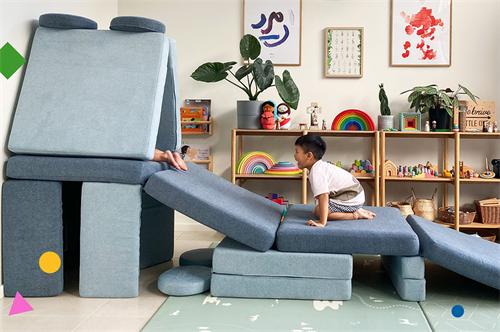
The second principle is flexibility and modularity. Modular furniture and open storage systems allow children to reshape their environment, fostering creativity and self-regulation. Low, movable storage bins—commonly used in Nordic households—enable independent cleanup while doubling as tools for building new play scenarios.
The third principle is material safety combined with multisensory experience. This goes beyond toxicity standards to include texture, sound, temperature, and tactile feedback. Multisensory materials support integrated sensory development in early childhood.
The fourth principle is leaving room for exploration. Spaces should not be over-programmed. Open areas invite movement, invention, and experimentation. One study found that regardless of environment design, infants who could walk traveled farther and explored more than those who could not—highlighting that developmental readiness interacts with, rather than replaces, environmental support.
The goal of spatial design should be to support natural development, not to forcibly mold behavior.
4. Space as a “Silent Teacher”
Spatial education is implicit and continuous.
A cabinet a child cannot open repeatedly communicates: “These things belong to adults; you have no authority here.” Over time, this erodes responsibility and initiative.
Fixed, non-adjustable furniture positions children as static users rather than active participants or co-creators. A smooth, untouchable tabletop sends a message of “preserve cleanliness,” while a felt board that welcomes marks and changes says “your creations matter.”
Over-zoned spaces with rigid labels—reading corner here, toy area there—replace internal order-building with external rules, suppressing children’s ability to self-organize space according to context.
A “multi-functional” study desk that requires parental explanation at every step quietly announces: “Without me, you cannot learn.” Similarly, complex “educational” furniture and toys that require adult mediation train children to wait for instructions, stripping them of the joy of trial-and-error discovery.
True autonomy emerges from a direct dialogue between child and environment—not through adults acting as translators.
This is why seemingly simple, even “bare,” spaces often nurture children who are more independent, curious, and intrinsically motivated.
Because when you design a child’s space, you are not just arranging objects—you are shaping the behavioral pathways that quietly guide who they become.
FAQs
Q1: Can a child’s space influence their long-term behavior and development?
Yes. Environmental cues, furniture layout, and spatial flexibility directly shape behavioral pathways, which in turn affect autonomy, attention regulation, and exploratory behavior.
Q2: How do behavioral pathways differ for children compared to adults?
Children’s pathways are highly influenced by developmental stage, motor skills, and temperament, making them more sensitive to environmental design than adults, whose pathways are more habitual and stable.
Q3: Are bright, cartoon-themed furniture sets ideal for children?
Not necessarily. Excessive color and visual stimulation can reduce focus and autonomy. Warm, subtle colors and open, reconfigurable layouts are often more effective.
Q4: How can parents create spaces that encourage independence?
Observation, modular and movable furniture, multisensory materials, and open areas allow children to explore, reorganize, and engage in trial-and-error learning, fostering autonomy and intrinsic motivation.
Q5: Is fixed, highly structured furniture harmful?
It can limit creative exploration and teach children to rely on adult instruction, rather than developing self-organization, problem-solving, and independent decision-making skills.
References
1. Evans, G. W. (2019). Projecting cumulative environmental risks: Multiple stressors and child development. Journal of Child Psychology and Psychiatry, 60(5), 497–508.
2. Rothbart, M. K., & Bates, J. E. (2006/updated editions). Temperament. In Handbook of Child Psychology (Vol. 3). Wiley.
3. Klingberg, T. (2018). The overflowing brain: Information overload and the limits of working memory. Oxford University Press.
About the Author
Nathaniel Brooks, BSc – Home Ecology Analyst & Sustainable Living Research Writer
Nathaniel Brooks is a home ecology analyst and independent writer specializing in indoor ecosystems, sustainable household practices, and environmental behavior research. He holds a degree in Environmental Science from the University of Edinburgh and has worked alongside urban agriculture programs, green building consultants, and educational sustainability platforms. His articles combine scientific research with practical observations to help readers create healthier, more resilient homes and gardening spaces.
Editorial Transparency Statement
This article was researched using peer-reviewed journals, industry studies, and expert opinion. All claims regarding child development, environmental psychology, and furniture design are supported by scientific literature. Product examples are illustrative and not sponsored or promoted.
Disclaimer
This content is for educational and informational purposes only. It does not constitute professional medical, psychological, or educational advice. Parents and caregivers should consult qualified professionals for guidance specific to their child’s needs.
Recommend for you:
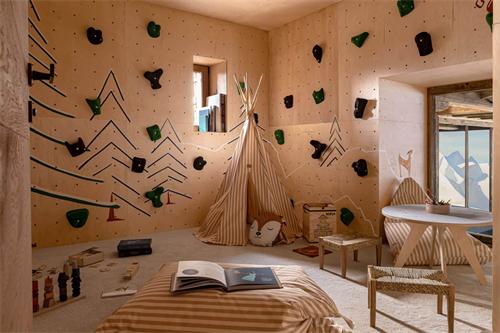
When You Design a Child’s Space, You Design Their Behavior
Why So Much “Children’s Furniture” Fails in Real Homes
What Our Eyes See as ‘Bright’ Isn’t What Plants Actually Perceive
The Overlooked Issue of Light Stability in Balcony Gardening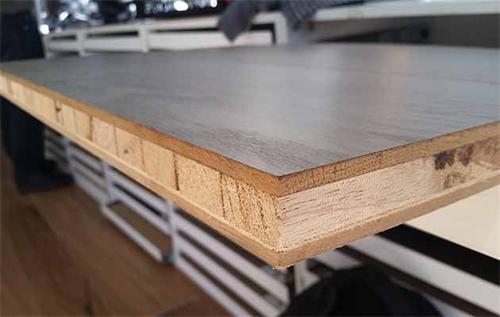
Solid Wood, Engineered Boards, or Bamboo — What Actually Changes After Five Years of Living With Them
A Long-Term Look at Aging, Maintenance, Repairs, and Real-Life Use — Not a Material Ranking Guide
When plants become witnesses to environmental risk, how should we reinterpret their “illness”?
They are not just being harmed — They are absorbing, documenting, and concentrating the risks in our environment.