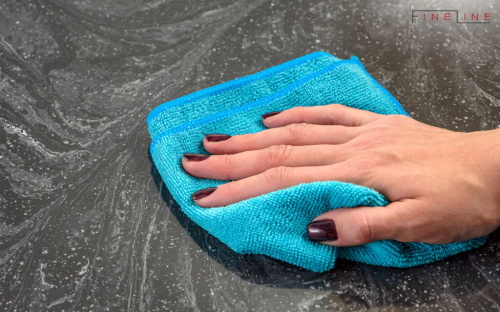
Solid Wood, Engineered Boards, or Bamboo — What Actually Changes After Five Years of Living With Them
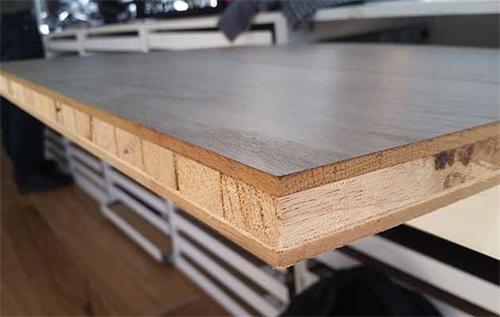
——A Long-Term Look at Aging, Maintenance, Repairs, and Real-Life Use — Not a Material Ranking Guide
By Nathaniel Brooks | Updated on May 2026 | 🕓 11 minutes
Key Highlights
- What really changes in furniture after five years of daily use?
- How do solid wood, engineered boards, and bamboo differ in aging patterns?
- Why do some materials fail suddenly while others age gradually?
- Which furniture type is easiest to repair after long-term wear?
- How do lifestyle changes (children, remote work, moving) reshape material performance?
- Why showroom impressions often fail to predict long-term durability?
Five years ago, when I moved into a new home, I spent an unusually long time choosing a dining table. The salesperson enthusiastically introduced three nearly identical options: a black walnut solid wood table with warm, natural grain; an engineered board table with real wood veneer that looked almost the same but cost far less; and a bamboo table marketed as eco-friendly and structurally stable. Under showroom lighting, they all appeared smooth, polished, and visually similar. The tactile differences were subtle—certainly less dramatic than the price gap. Trusting the idea that “they look close enough” and mindful of my budget, I eventually chose the engineered board table.
For the first few years, it performed beautifully. It supported everyday meals, coffee stains wiped off easily, and it felt perfectly functional. The turning point came during a family gathering not long ago. A glass vase left a ring of water on the surface. I cleaned it as usual—but after it dried, a pale white mark remained permanently etched into the finish. Around the same time, I noticed the area where we placed dishes daily had developed a dull, slightly sanded texture. Even the joints between the legs and stretchers felt less tight than before.
That moment changed how I thought about materials. A friend who bought a solid wood table around the same time also had scratches and marks—but instead of looking worn out, it seemed to develop a soft patina, as if time had added character rather than damage. I realized that evaluating materials cannot happen at the moment of purchase. Surfaces that look similar at first can age in completely different ways. Materials are not simply objects; they are travelers through time.
Materials Are Not Static Properties—They Are Systems Moving Through Time
After the “water ring incident,” I stopped thinking about materials as fixed attributes. Instead, I began to see them as dynamic systems shaped by multiple variables. I summarized this with a simple formula:
Final Material Performance = Usage Intensity × Environmental Change × Maintenance Capacity × Psychological Expectation
Usage intensity determines how materials respond to daily wear. Solid wood can often be sanded and refinished after damage, much like smoothing wrinkles. Engineered boards rely on a decorative surface layer; once that layer is breached, the core material is exposed, and repairs become difficult. Bamboo, with its high hardness, resists scratches well—but long-term concentrated stress can cause subtle internal fatigue.
Environmental change silently sculpts materials over time. Solid wood is a living material; it expands and contracts with humidity and temperature. Without proper treatment, it may crack or warp—signs of its ongoing dialogue with nature. Engineered boards are structurally stable, yet their edges are vulnerable to moisture infiltration, which can cause swelling or delamination. Bamboo, especially when reconstituted, is generally stable but still sensitive to sudden dryness.
Maintenance capacity determines long-term performance. Solid wood rewards occasional cleaning and oiling with graceful aging. Engineered boards typically require minimal daily care, but once damaged, repair options are limited. Bamboo maintenance is relatively simple, though it should be protected from prolonged sun exposure and standing water.
Finally, psychological expectation plays a major role. Do you want furniture to remain pristine forever, or are you comfortable embracing the marks of time? The answer profoundly shapes how you perceive aging materials.
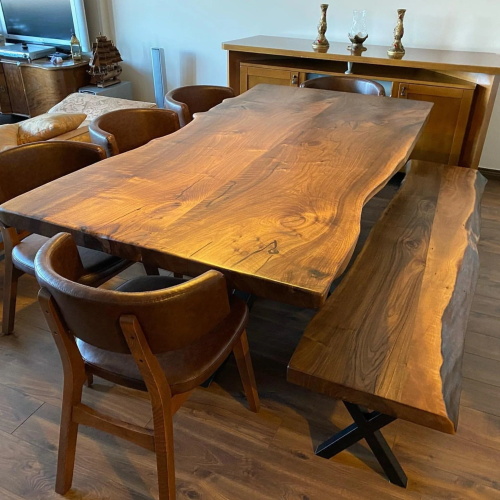
A Five-Year Timeline: How Differences Gradually Emerge
When observed across five years, material differences rarely appear overnight—they evolve gradually.
Month 6: Early Signs Beneath the Surface
Furniture is still in its “honeymoon phase.” However, high-use corners of engineered board tables may begin to show faint micro-wear. Solid wood finishes may become slightly compressed, creating a softer sheen. Bamboo surfaces remain almost scratch-free, though placing hot cookware directly on them can leave faint heat marks in the finish or adhesive layers.
Year 2: Diverging Wear Patterns and First Repair Decisions
Two years marks the first major turning point. Engineered boards may display irreversible dents or chips where the veneer is compromised. Owners face choices: conceal damage with repair pens or accept visible scars. Solid wood may accumulate scratches or small dents, yet many can be sanded and refinished, demonstrating its regenerative capacity. Bamboo furniture in dry climates might develop tiny seasonal gaps at joints that close again in humid months, reflecting its sensitivity to environmental cycles while maintaining structural integrity.
Year 5: Functional and Aesthetic Reassessment
After five years, differences become more pronounced. Engineered boards may show overall fatigue—edge banding loosens, and the once-pristine finish fades. The table remains functional but loses much of its original refinement. Solid wood tables may have undergone a mid-life refinishing, emerging renewed—or they may display a patina that enhances character. Bamboo furniture can show polarized outcomes: in stable environments it may look almost new, but in high-stress conditions adhesive joints may weaken slightly over time.
The Real Change Over Five Years: Life Itself
Furniture does not exist in a static showroom; it lives alongside changing lifestyles.
Unexpected Upgrades in Usage Intensity
During the first years, homeowners often treat furniture carefully. Over time, daily life becomes more relaxed—coasters disappear, cleaning becomes casual, and cumulative wear accelerates. Children introduce new challenges: crayons, impacts, climbing, and spills. Engineered boards are vulnerable to sharp damage; solid wood withstands impact and can often be repaired; bamboo’s hardness can unexpectedly resist many forms of abuse. The rise of remote work has also transformed dining tables into eight-hour workstations. Solid wood provides psychological stability through thickness; engineered boards may develop minor depressions under prolonged pressure; bamboo’s dense structure often performs well under continuous static loads.
Functional Role Changes
Furniture rarely maintains a single purpose. Dining tables become hybrid workstations, craft tables, or gaming surfaces. Solid wood’s repairability becomes invaluable. Engineered boards may accumulate permanent marks from craft tools. Bamboo’s smooth, hard surface proves easy to clean and versatile for multi-use settings. Storage furniture also evolves—entryway cabinets may become heavy-duty household storage centers. Solid wood structures often handle weight with resilience, engineered boards depend heavily on hardware strength, and bamboo structures require attention to bending stress limits.
Shifting Psychological Expectations
Priorities change with life stages. Early in homeownership, design aesthetics dominate; later, ease of cleaning and durability become central—especially after children arrive. Engineered boards initially shine with seamless finishes but can become difficult to clean once damaged. Solid wood’s grain and bamboo’s joints may require more careful cleaning but age more gracefully. Eventually, furniture becomes part of the background, valued for reliability rather than visual perfection.
Four Key Differences After Five Years
1. Aging Patterns
Engineered boards often age through sudden failure: once the protective layer breaks, deterioration accelerates. Solid wood ages through gradual evolution, often becoming more attractive. Bamboo may appear visually intact but develop subtle structural fatigue internally.
2. Repairability
Solid wood offers true reversibility—sanding can restore surfaces close to original condition. Engineered boards usually allow only cosmetic fixes. Bamboo’s hardness and adhesive structure make localized repairs difficult.
3. Adaptability to Moving
Engineered board furniture may struggle with repeated disassembly, losing structural integrity. Solid wood often survives multiple moves, functioning as a long-term companion. Bamboo furniture is strong but sensitive to torque during disassembly.
4. Aesthetic Lifespan
Engineered boards’ visual appeal is tied to printed or veneered finishes that may age quickly. Solid wood’s natural grain remains timeless. Bamboo has a distinctive aesthetic—beloved by some but less adaptable to changing interior styles.
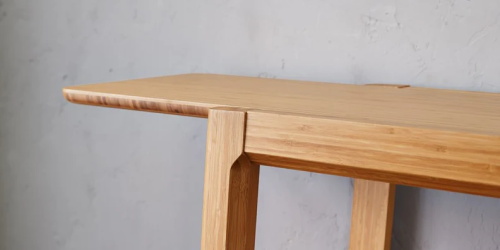
Why We Often Misjudge Materials
Showrooms present materials at their peak: perfect lighting, stable humidity, flawless surfaces. We rarely see how they behave after years of seasonal changes. Newly renovated homes also tend to have higher indoor humidity during the first year or two, making engineered boards and bamboo seem especially stable while solid wood may show early expansion. These early impressions can mislead long-term expectations.
Marketing narratives also encourage oversimplified labels—“solid wood always cracks” or “engineered boards are cheap and disposable.” Such extremes obscure the nuanced reality that materials are complex systems interacting with lifestyle, environment, and time.
Ultimately, the most meaningful question is not which material is universally superior, but which material’s time behavior aligns best with your evolving life over the next five or ten years. Furniture is not a static purchase—it is a long-term relationship shaped by daily living. Understanding this may matter far more than any single buying decision.
FAQs
1. Does solid wood always last longer than engineered boards or bamboo?
Not always. Solid wood is more repairable and can age gracefully, but its lifespan depends heavily on maintenance, climate stability, and usage intensity. Poorly maintained solid wood can warp or crack faster than high-quality engineered materials.
2. Is engineered board furniture always low quality?
No. Engineered boards perform very well in stable indoor environments and are structurally consistent. Their limitation is not immediate durability, but reduced repairability once surface layers are damaged.
3. Why do showroom furniture pieces look so different after a few years at home?
Showrooms control humidity, temperature, lighting, and usage. Real homes introduce fluctuating humidity, mechanical stress, spills, sunlight exposure, and lifestyle changes that accelerate aging patterns.
4. Does moving house significantly affect furniture lifespan?
Yes. Repeated disassembly and transport stress joints differently depending on material type. Solid wood generally tolerates relocation better than engineered boards.
References
1. American Hardwood Export Council. (2023). Hardwood guide: Applications, durability, and lifecycle considerations.
2. Furniture Industry Research Association. (2023). Furniture durability and performance testing: Technical guidance notes. FIRA International.
3. International Journal of Adhesion and Adhesives. (2022–2024). Research articles on wood composites and bonding durability. Elsevier.
4. Weschler, C. J. (2023). Indoor materials and residential exposure dynamics: A review of indoor environmental factors. Indoor Air, 33(4), e13121.
5. Sustainable Materials and Technologies. (2022–2024). Research on bamboo composites and lifecycle assessment of sustainable materials. Elsevier.
6. Indoor Air Journal. (2023). Weschler, C. J. Indoor environmental quality and material aging in residential settings.
About the Author
Nathaniel Brooks, BSc – Home Ecology Analyst & Sustainable Living Research Writer
Nathaniel Brooks is a home ecology analyst and independent writer specializing in indoor ecosystems, sustainable household practices, and environmental behavior research. He holds a degree in Environmental Science from the University of Edinburgh and has worked alongside urban agriculture programs, green building consultants, and educational sustainability platforms. His articles combine scientific research with practical observations to help readers create healthier, more resilient homes and gardening spaces.
Editorial Transparency Statement
This article is based on a combination of material science literature, building performance research, and long-term residential usage observations. While laboratory testing provides baseline durability metrics, real-world performance often diverges due to environmental variability and human behavior.
The interpretations in this article aim to translate technical findings into practical, lived-home insights. No material is universally “best”; performance depends on context, maintenance, and lifecycle expectations.
The author does not have financial affiliations with furniture manufacturers or material suppliers discussed in general terms.
Disclaimer
This article is for informational and educational purposes only and should not be interpreted as professional structural engineering, product warranty, or procurement advice. Furniture performance varies significantly depending on manufacturing quality, installation, environment, and usage patterns.
Readers are encouraged to consult manufacturers, certified interior designers, or material specialists for decisions involving high-value or custom-built furniture investments.
Recommend for you:
Why So Many Home Designs Become Unbearable After Three Years
Layout, Not Furniture, Is What People Regret Most — And Why “We’ll Fix It After Moving In” Rarely Works
When Predators Vanish: The Hidden Ecological Collapse Behind Urban Pest Outbreaks
Who Disappeared — and Why Cities Are Fighting the Wrong Enemy
Urban Mycology: Growing Mushrooms Safely Indoors in 2026
Inside the Risks of Urban Mushroom Cultivation
Why Balcony Gardening Fails So Often in the First Year — A Systems Explanation
Most balcony gardening projects fail long before the first seed is planted.