
When Predators Vanish: The Hidden Ecological Collapse Behind Urban Pest Outbreaks
——Who Disappeared — and Why Cities Are Fighting the Wrong Enemy
By Oliver Hayes | Updated on May, 2026 | 🕓 12 minutes
Key Highlights
- Why do pest outbreaks often signal missing predators rather than “dirty” cities?
- Why does excessive urban “cleanliness” remove critical habitats for beneficial predators?
- How do pesticides accelerate resistance evolution in cities?
- What is the “Predator Absence Problem,” and why does it destabilize urban ecosystems?
- Can cities become biodiversity refuges instead of ecological dead zones?
- Why is zero-pest management ecologically unsustainable?
- What practical urban design strategies can help rebuild natural pest regulation?
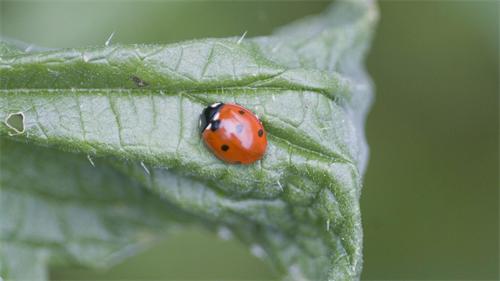
In cities, we rarely see mantises lying in ambush between leaf veins. We don’t witness the astonishing “surgical oviposition” of parasitic wasps. Few people can recognize the fierce-looking larvae of lady beetles, or the delicate, pearl-like eggs of lacewings suspended from silken threads.
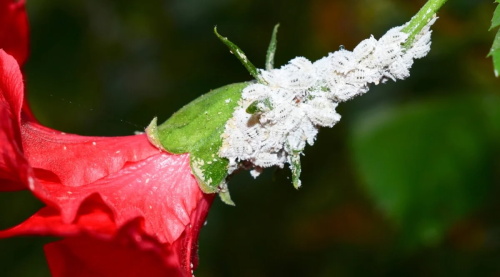
But we are very familiar with aphids. We know the dense clusters coating tender shoots, the spider mites that seem impossible to eradicate, and the whiteflies that return no matter how often we spray.
This points to a central concept: the Predator Absence Problem. The essence of urban pest outbreaks is not that pests have become “worse,” but that a crucial trophic layer in the food web has been systematically removed.
Ecology offers a concept for this phenomenon: trophic cascade. It describes a chain reaction in which the reduction of top or mid-level predators leads to structural expansion of the next level down—typically herbivorous insects. This is not merely a matter of numbers increasing. It is the release of a population’s control valve.
I. The “Control Logic” of Urban Greening: An Unintentional Siege on the Food Chain
If we treat the city as an ecosystem, then prevailing urban landscaping practices are, in effect, systematically expelling predators.
1. Monoculture Landscapes: An Unlimited Buffet for Pests
From North America to Europe to Singapore, cities have fallen into aesthetic convergence: uniform street trees lining boulevards, commercial districts planted with repeated varieties of ornamental species. What appears visually orderly is ecologically fragile.
This creates two critical consequences:
A single, stable food source.
When an entire street is planted with the same species, it becomes a “food highway” for specialist herbivores. Pests no longer need to search; they are supplied with continuous, high-quality resources. Population growth becomes exponential.
Predators cannot persist.
Predatory insects require diverse prey across seasons to maintain stable populations. When prey diversity collapses, predators may feast briefly—but then starve or disperse.
In agriculture, this vulnerability is known as the monoculture risk model. Yet agricultural systems at least rotate or fallow crops. Urban monocultures are permanent. When an invasive pest breaches geographic barriers and enters such an environment, the outcome can be devastating.
2. The “Clean City” Culture: Sweeping Away Predator Refuges
Urban management often prioritizes visual tidiness:
- Fallen leaves must be removed.
- Shrubs must remain low and symmetrical.
- Dead branches must be cleared immediately.
Yet these so-called “visual wastes” are lifelines for predators:
- Leaf litter provides foraging grounds for insectivorous birds and overwintering sites for ground beetles and spiders.
- Dead wood offers nesting cavities for solitary bees, including many parasitic wasps.
- Tall grasses and understory vegetation serve as egg-laying and refuge sites for lacewings and hoverflies.
When cities are maintained like immaculate living rooms, we inadvertently erase the “maternity wards” and “winter villas” of natural enemies. In exchange for visual cleanliness, we purchase ecological fragility.
II. Structural Mutation in Pest Communities: From “Residents” to “Mobs”
When predators disappear, pests do not simply become more numerous—the entire structure of their community changes.
1. From Multi-Species Coexistence to Single-Species Dominance
In natural ecosystems, multiple herbivorous insects typically share the same vegetation:
- They compete with one another.
- Each remains at relatively low density.
- A dynamic equilibrium forms.
In predator-deficient cities:
- The most competitive species breaks the balance and becomes dominant.
- Without predatory suppression, it undergoes cyclical outbreaks.
- Municipal authorities respond with increased chemical intervention.
This structural simplification is more dangerous than sheer population growth. It signals the collapse of ecological regulation.
2. An Accelerator of Resistance Evolution
Urban environments function as unique evolutionary laboratories:
- Routine pesticide application imposes intense selection pressure.
- Scarce predators mean resistant survivors are unlikely to be eaten.
- Urban heat islands create warmer winters, enabling year-round reproduction.
The consequences:
- Accelerated resistance evolution. Pest adaptation outpaces chemical innovation.
- Chemical dependency loops. Pesticides kill predators → pest rebound → stronger resistance → stronger pesticides.
This explains why biological control often struggles in cities. Releasing beneficial insects into habitats devoid of shelter is like pouring water into a leaking bucket.
What emerges is an “artificially controlled ecosystem”—one in which mechanical and chemical inputs replace the regulatory functions once performed freely by biological systems.
This raises a fundamental question: when ecological regulation shifts from a free natural service to an expensive artificial intervention, have we calculated the long-term cost?
III. Why Urban Residents Misinterpret “Pest Problems”
- We see insects and conclude: the environment is deteriorating.
- We do not see predators and conclude: they must not matter.
But pest outbreaks are not indicators of declining sanitation. They are signals of broken food chains. A fire does not occur because sparks multiply; it spreads because the firefighters are gone.
IV. Rebuilding the “Biological Police” in Cities
Rather than chasing the illusion of zero pests, a more pragmatic approach is to restore regulatory layers.
1. Microhabitat Restoration
- Retain portions of leaf litter and dead wood by designating “ecological corners.”
- Introduce nectar plants—adult parasitoid wasps require floral resources for energy. Umbellifers and composites can significantly support their populations.
- Install insect hotels to provide nesting space for solitary bees.
2. Mixed Planting Strategies
- Break monoculture patterns. Follow the 5–10–20 guideline: no more than 5% of one species, 10% of one genus, or 20% of one family.
- Prioritize native plants. Having coevolved with local insects, they sustain more diverse predator communities.
3. Establish Pest Tolerance Thresholds
- Define ecological thresholds. Allow low-level pest presence before intervention—these individuals are the prey base for predators.
- Avoid zero-tolerance management. Zero tolerance inevitably leads to over-intervention, destabilizing the food web.
V. Can Cities Become Eological Buffer Zones?
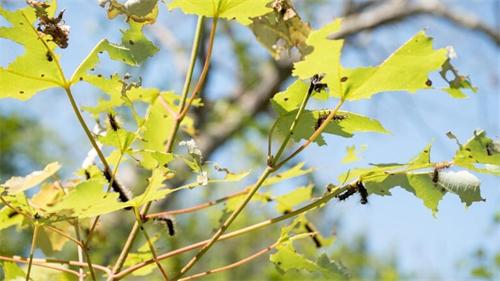
As wild ecosystems continue to decline globally, urban green spaces could function as stepping stones or refuges for biodiversity. But without predators, these green areas become ecological voids—visually lush yet structurally hollow.
Cities are not the antithesis of nature. When mantises once again sway among flowerbeds, when parasitic wasps quietly regulate aphid colonies, occasional pest appearances will no longer provoke alarm. They will be minor fluctuations, absorbed by functioning ecological networks.
Only then will cities become genuine components of the planet’s future ecological fabric.
FAQs
1. Why do pests seem worse in cities than in forests or wild ecosystems?
Urban ecosystems are often simplified environments with fewer predators, lower biodiversity, fragmented habitats, and heavy pesticide exposure. In natural ecosystems, predators continuously suppress herbivorous insects, preventing explosive outbreaks.
2. Are all insects that prey on pests considered predators?
Not always. Some are true predators, such as lady beetles and mantises, while others are parasitoids, such as parasitic wasps that lay eggs inside host insects. Both play critical regulatory roles in ecosystems.
3. Why do pesticides sometimes make pest problems worse?
Broad-spectrum pesticides frequently kill beneficial predators along with pests. Since many pests reproduce faster than predators, pest populations can rebound rapidly while predator communities recover slowly or fail to recover entirely.
4. What are “beneficial insects” in urban ecology?
Beneficial insects include organisms that naturally regulate pest populations or support ecosystem health. Common examples include lacewings, hoverflies, lady beetles, ground beetles, spiders, parasitic wasps, and pollinators.
5. Can urban residents support predators without creating “messy” neighborhoods?
Yes. Even small ecological design changes—such as native flowering plants, limited leaf-litter zones, insect hotels, or diversified landscaping—can significantly improve habitat quality while maintaining visually appealing public spaces.
6. Why are native plants important for predator recovery?
Native plants coevolved with local insects and tend to support more stable food webs. Many native predators rely on specific plants or prey relationships that ornamental species may not provide.
7. Do urban heat islands affect pest outbreaks?
Yes. Warmer city temperatures can extend breeding seasons, reduce winter mortality, and accelerate insect development cycles, allowing some pest species to reproduce year-round.
8. Is eliminating all pests a realistic ecological goal?
No. Healthy ecosystems naturally contain low levels of herbivorous insects. Completely eliminating pests often destabilizes food webs because predators depend on prey availability to survive.
References
1. Aronson, M. F. J., Lepczyk, C. A., Evans, K. L., et al. (2017). Biodiversity in the city: Key challenges for urban green space management. Frontiers in Ecology and the Environment, 15 (4), 189–196.
2. Meineke, E. K., Dunn, R. R., Sexton, J. O., & Frank, S. D. (2013). Urban warming drives insect pest abundance on street trees. Ecology Letters, 16 (6), 675–684.
3. Philpott, S. M., Cotton, J., Bichier, P., et al. (2014). Local and landscape drivers of arthropod abundance, richness, and trophic composition in urban habitats. Urban Ecosystems, 17, 513–532.
About the Author
Oliver Hayes, MSc – Urban Gardening Systems Researcher & Sustainable Home Writer
Oliver Hayes is a researcher and content writer specializing in urban gardening ecology, balcony food systems, and sustainable home environments. He holds a Master’s degree in Environmental Horticulture from the University of Copenhagen and has collaborated with community garden networks, indoor farming startups, and ecological design organizations across Europe. His work focuses on helping everyday households better understand the hidden environmental factors affecting plant health, indoor biodiversity, and long-term sustainable living practices.
Editorial Transparency Statement
This article is an independent ecological analysis based on publicly available research in urban ecology, biodiversity conservation, trophic cascade theory, landscape management, and integrated pest regulation. It is intended to encourage long-term ecological thinking rather than promote commercial pest-control products or landscaping services.
Disclaimer
This article is provided for informational and educational purposes only. It does not constitute professional ecological consulting, pest-management advice, environmental engineering guidance, or municipal policy recommendations.
Urban pest-control decisions should consider local regulations, environmental conditions, public health concerns, and expert consultation where necessary. Readers should avoid applying pesticides, biological agents, or habitat modifications without understanding potential ecological impacts and local legal requirements.
Recommend for you:

The Shared Surface Problem: How Families Can Avoid Tension at Home
Turning Shared Spaces into Harmony Without Losing Personal Privacy
Why I Stopped Choosing “Luxury-Looking” Materials
How Real-Life Wear and Daily Use Taught Me That Beauty Doesn’t Always Equal Comfort
Before You Buy: How Small Observations Can Transform Your Home
7 Days of Observation and Simple Habits to Make Every Corner Work for You
When Predators Vanish: The Hidden Ecological Collapse Behind Urban Pest Outbreaks
Who Disappeared — and Why Cities Are Fighting the Wrong Enemy