
The Shared Surface Problem: How Families Can Avoid Tension at Home
——Turning Shared Spaces into Harmony Without Losing Personal Privacy
By Clara Whitfield | Updated on May | 🕓 12–14 minutes
Key Highlights
- Why do shared household surfaces create silent emotional tension?
- How can small “personal corners” reduce conflict in shared homes?
- Why does adding more storage often fail to solve family clutter problems?
- What is the difference between physical boundaries and behavioral boundaries?
- How can one room successfully support multiple functions without causing stress?
- How can a simple “study tray” reduce dining table conflicts?
- Why does psychological ownership matter more than perfect organization?
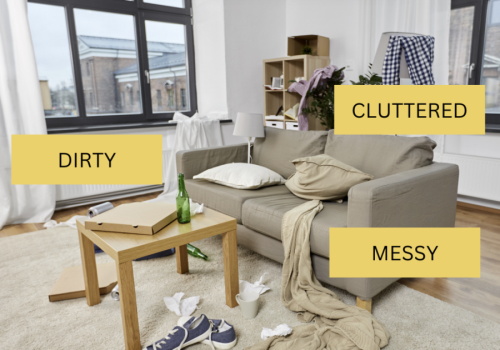
You walk into the kitchen, ready to make a cup of coffee and begin your day—only to find the countertop covered with unopened mail from yesterday, your child’s art project, and your partner’s coffee mug that was washed but never returned to the cabinet. A wave of irritation rises. You take a deep breath—but say nothing. You simply push everything aside.
If this scene feels familiar, you are not alone. This kind of “silent tension” unfolding in shared spaces is quietly spreading through countless households. The living room is simultaneously occupied by children’s toys, a father’s workout equipment, and a mother’s laptop. At dinnertime, the dining table becomes a battlefield for homework, a place for family meals, and a pile of unfinished paperwork all at once.
What is the root of the problem? When the needs of shared space collide with the desire for personal space, a friction that is invisible yet deeply real begins to form.
01 The Shared Surface Problem: How to Reduce Silent Tension
This phenomenon can be defined as “shared surface conflict.” It is not merely about clutter. At a deeper psychological level, each of us uses space to assert our presence—and other people’s belongings can feel like an intrusion into our limited territory.
Why is this conflict often overlooked? Because we hesitate to speak up. We fear appearing petty, hurting feelings, or being misunderstood as overly critical. Research confirms that in intimate relationships involving shared space, this kind of silent endurance is especially common. One study on step-sibling conflict found that “territorial violations” (such as entering a room without permission or using personal belongings) were among the three core triggers of disputes. When this sense of territorial awareness extends from private bedrooms to public areas like kitchen counters and coffee tables, silent resentment begins to accumulate.
If left unresolved, these seemingly trivial frictions can erode the foundation of family relationships over time—like water wearing down stone—eventually forming long-term resentment that is difficult to dissolve. Recognizing this dynamic is the first step toward solving it.
02 Designing Personal Corners in Shared Homes
The key to resolving shared surface conflict is not demanding perfection from everyone. Instead, even within shared spaces, each person needs a “personal corner.”
What is a personal corner? It does not have to be a separate room. It is a small area with clear visual or functional boundaries that belongs to an individual. For example:
- A labeled storage basket in the kitchen for your coffee, tea bags, or snacks.
- One designated shelf in the living room bookcase for your books and framed photos.
- A portable storage box containing your craft supplies or electronics that can be put away after use.
- A small side table paired with a comfortable chair as your personal reading nook.
In a family of four in London, the parents created an “adult corner” by the living room window—two Eames chairs and a small round table. The children were clearly told that this was a space for their parents to relax and talk, and it should not be disturbed without invitation. In return, each child’s desk and bedroom were treated as their absolute territory.
This arrangement allowed family members to maintain psychological security within a shared environment, significantly reducing disputes over ownership and usage rights.
03 Why Clear Boundaries Matter More Than More Storage
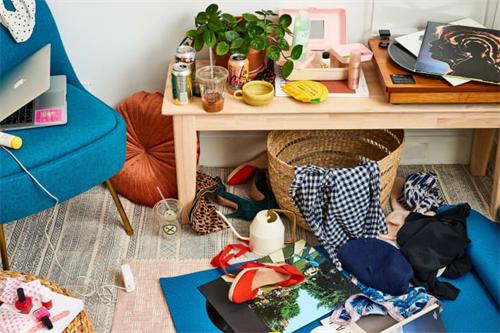
When faced with clutter, many people instinctively buy more cabinets or storage boxes. While storage can help, it does not address the root issue: unclear psychological ownership. Without clear boundaries, additional storage simply creates more territory to compete over.
What truly matters is establishing both physical boundaries and behavioral boundaries.
Physical boundaries
Use color, labels, or physical dividers to define areas. For example, use different colored storage boxes to separate family members’ documents. At the dining table, use placemats to clarify: during meals, this is your seat; during study time, this is your designated workspace.
Behavioral boundaries
Clarify who is responsible for cleaning, when cleaning happens, and the rules governing shared items. For example, agree that the kitchen counter must be cleared every night before bed, with all items returned to their proper place. The living room entertainment system may be maintained by the parents, with usage rules established for children.
When a child’s study area overlaps with the kitchen workspace (for instance, homework done at the dining table), introduce a movable “study tray.” All school supplies stay on the tray. When it’s time to eat or cook, the tray can be relocated in one motion. This simple physical boundary allows the surface to switch clearly between “family dining table” and “personal study space,” greatly reducing disputes over usage.
Clear boundaries create psychological stability. When you know what belongs to you and what requires negotiation, feelings of uncertainty and intrusion decrease—and silent friction diminishes accordingly.
04 When One Room Serves Too Many Functions, It Serves None Well
Modern homes often assign too many roles to a single room. The living room is a home theater, a children’s play area, a temporary office, and sometimes even a dining room. When one space tries to meet every need, no one ends up using it comfortably.
The solution is to establish clear divisions by space and by time.
Spatial zoning
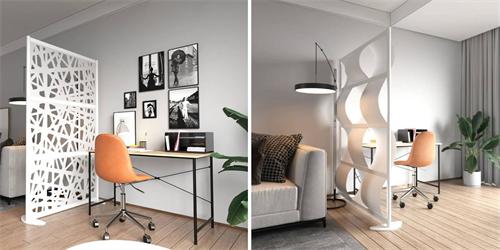
If possible, physically separate different functions. Fix the play area to one corner of the living room and define it with a rug. Set up the work area along a dining room wall with a foldable desk. After work hours, close the laptop and fold the desk away, restoring the space to a purely dining environment.
Time-based zoning
When spatial separation is impossible, introduce time boundaries. For example, during the day the coffee table may serve as a LEGO playground. After 7 p.m., all toys must be stored away, and the living room returns to an adult relaxation zone. Define “office hours” and “family hours” so the function of the space shifts with time.
Imagine attending an important video meeting in the living room while cartoon sound effects play in the background and LEGO bricks crunch underfoot. This is the social embarrassment created by poorly defined multifunctional spaces. A simple rule—“9 a.m. to 12 p.m., the living room is Mom’s office, no toy intrusions allowed”—can prevent these moments.
05 The Weekly Space Conversation: A 20-Minute Ritual to Prevent Resentment
Even the best physical planning cannot last without communication. Regular, structured conversation is the foundation of long-term harmony in shared spaces. Co-living guides for students consistently emphasize that preventive meetings are more effective than post-conflict resolution. Families can adopt this principle by setting aside a weekly “space conversation” lasting about 20 minutes.
Why 20 minutes? Too short feels rushed; too long becomes exhausting. Twenty minutes is enough to address core issues without feeling overwhelming.
Suggested agenda:
Opening (5 minutes): Gratitude and appreciation
Each person shares one positive observation from the past week regarding shared space use. For example: “Thank you, Dad, for clearing the kitchen counter every day this week,” or “Thank you for putting away the LEGO last night.” This establishes a constructive tone.
Core discussion (10 minutes):
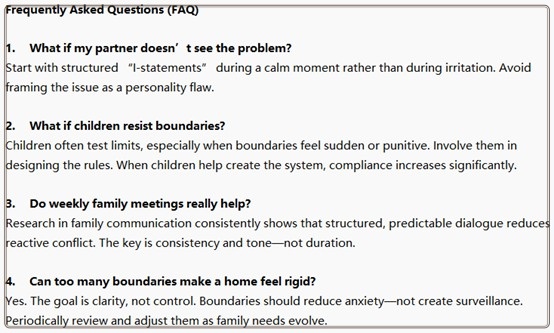
Take turns discussing any shared surface conflicts that arose during the week. Use “I-statements” rather than blame. For example: “When I see paperwork left on the dining table, I feel anxious because I need a clean space to eat breakfast,” instead of “You always leave your papers everywhere!” Work together to create simple solutions, such as designating a temporary document basket.
Decisions and responsibilities (5 minutes):
Clarify rules and cleaning responsibilities for the upcoming week. Who gets priority use of the TV? Does the kitchen cleaning schedule need adjustment?
End the meeting with a light activity or brief story to ensure everyone leaves in a positive mood.
This ritual transforms issues from personal attacks into shared family matters. It ensures everyone has a voice in decision-making. Think of it as a “micro-adjustment dial” for family relationships—preventing minor friction from building into destructive resentment. Research suggests that families who hold regular meetings improve communication by up to 40% and reduce conflict by 35%.
Harmony in shared family spaces does not depend on flawless storage systems or larger homes. It is rooted in mutual respect for boundaries and ongoing, open communication.
When we understand the psychological roots of shared surface conflict, intentionally create personal corners, replace endless storage with clear boundaries, and substitute silent endurance with regular space conversations, the true meaning of home begins to emerge.
References
1. Altman, I. (1975). The environment and social behavior: Privacy, personal space, territory, and crowding. Brooks/Cole.
2. Evans, G. W. (2016). Childhood poverty and adult psychological well-being. Proceedings of the National Academy of Sciences, 113(52), 14949–14952.
3. Saxbe, D., & Repetti, R. L. (2010). No place like home: Home tours correlate with daily patterns of mood and cortisol. Personality and Social Psychology Bulletin, 36(1), 71–81.
About the Author
Clara Whitfield, MA – Biophilic Design Consultant & Eco-Lifestyle Content Specialist
Clara Whitfield is a consultant and writer focused on biophilic interior design, ecological home trends, and sensory-centered living environments. She earned her Master’s degree in Sustainable Design from the University of Manchester and has contributed to residential wellness projects, eco-conscious furniture brands, and environmental education initiatives. Her writing explores how natural systems, material choices, and urban living conditions shape both household comfort and environmental resilience.
Professional & Educational Disclaimer
This article is intended for educational and informational purposes only. It does not constitute psychological, legal, or therapeutic advice.
If ongoing conflict within shared spaces is contributing to significant relational distress, family dysfunction, or mental health concerns, consulting a licensed therapist, counselor, or mediator is recommended.
Disclaimer
This article is intended for educational and informational purposes only. The concepts discussed are based on environmental psychology research, family communication principles, and observational examples from shared living environments.
The suggestions provided are general in nature and may not apply equally to every household, cultural context, or relationship dynamic. Family conflict can involve complex emotional, psychological, financial, or interpersonal factors that extend beyond home organization or spatial design.
Examples and scenarios included in this article are illustrative and are intended to demonstrate common patterns in modern shared living environments.
Recommend for you:
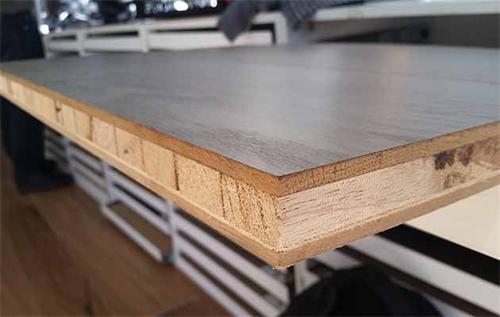
Solid Wood, Engineered Boards, or Bamboo — What Actually Changes After Five Years of Living With Them
A Long-Term Look at Aging, Maintenance, Repairs, and Real-Life Use — Not a Material Ranking Guide
The Truth Behind Overhyped Home Materials
Why Usage Matters More Than Marketing or Time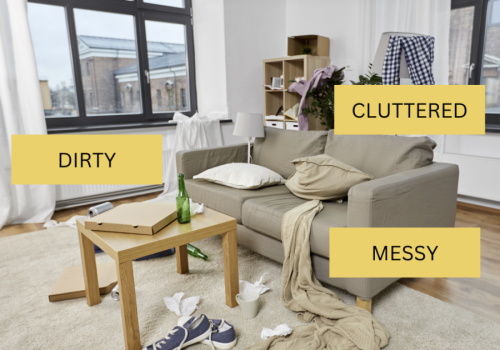
The Shared Surface Problem: How Families Can Avoid Tension at Home
Turning Shared Spaces into Harmony Without Losing Personal Privacy
Smart Homes That Actually Reduce Stress — What the Research Says
The most common promise smart homes sell is “convenience” — doing a little less, so you can save a little more mental energy.