
Smart Homes That Actually Reduce Stress — What the Research Says
By Clara Whitfield | Updated on April 2026 | 🕓 12 minutes
Key Highlights
- Can smart homes actually reduce stress, or do they sometimes create more anxiety?
- What does environmental psychology say about “cognitive offloading” and automation?
- Do circadian lighting systems genuinely improve sleep and mental well-being?
- Why do users continue buying devices they openly distrust?
- How can you tell whether automation is solving a real problem or simply adding maintenance stress?
- What kinds of smart home automations tend to work best in practice?
- Why might predictable routines matter more than advanced technology?
The most common promise smart homes sell is “convenience” — doing a little less, so you can save a little more mental energy. In environmental psychology, there’s a related concept called cognitive offloading: transferring effortful conscious decisions into automated processes in order to preserve psychological resources. A review published in Frontiers in Psychology pointed out that when routine tasks are handed over to automated systems, the brain can indeed reallocate resources toward higher-level tasks, theoretically reducing the cognitive burden associated with chronic stress.
Last winter, I stayed for two weeks at my friend Henrik’s apartment in Oslo. The apartment itself wasn’t large, but it had a kind of “magic” I envied immediately: every morning the curtains slowly opened on their own, while the lights shifted from a dim orange glow into bright white, almost like a sunrise simulation. At night, everything quietly dimmed again.
Henrik told me that system helped him survive the previous polar night — those months when the sun barely rises at all. The lighting essentially tricked his body into believing daytime still existed.
I was fascinated.
As soon as I got home, I ordered smart bulbs, sensors, and automated curtains. Three months later, I removed half of them.
Not because the products were bad. Because I misunderstood something fundamental: I assumed “smart” automatically meant “less stressful.” Instead, it gave me a crash course in how stress actually works.
1. Where Do Automated Decisions Go?
The reason Henrik’s setup worked was simple: it solved a very specific problem. During the polar night, natural light cues disappear, and the body no longer knows when to wake up or rest. His automation wasn’t a gimmick. It was replacing the sun.
My situation was different.
I automated nearly everything that could be automated. Lights turned on when I walked in. The thermostat adjusted itself. Speakers activated with alarms. In theory, I was making dozens fewer decisions every day.
But those decisions had never really been exhausting to begin with.
Reaching over to flip a light switch takes less than a second and barely consumes mental energy. The real stress came later — when I was sitting on the couch wondering, “Why didn’t that light turn on?” Then I’d open the app, discover a device had gone offline, and begin troubleshooting whether the Wi-Fi had failed or the hub had malfunctioned.
Later, I came across a 2023 study in Frontiers in Psychiatry called the inMind trial. Researchers planned to recruit 215 patients with mild to moderate depression to test an app-assisted stress reduction program. What stood out to me was how cautious the researchers themselves were: the estimated effect size was only 0.28 — roughly half the effect size commonly reported in mindfulness meditation studies.
In other words, even the researchers were unwilling to confidently claim that “digital tools significantly reduce stress.”
That reminded me of something an emergency nurse in Chicago once told me. She had also tried a smart thermostat and eventually abandoned it.
Her explanation was painfully practical:
“I used to adjust the temperature manually maybe a few times a year. Now I think about it three times a day — checking whether it’s connected in the morning, whether the readings are accurate at noon, and whether the schedule executed properly at night. The energy I supposedly saved just got replaced with anxiety.”
So now I only keep one form of automation: the bedroom curtains.
Because that is the only task in my house that is both highly repetitive and low-risk. If the system fails one day, I can simply pull the curtains manually. Nothing collapses. No chain reaction starts.
2. Circadian Lighting: The Gap Between Laboratories and Real Life
The idea that smart lighting can regulate circadian rhythms is probably one of the most evidence-confused areas in the entire industry.
A 2017 field study followed 20 healthy volunteers who wore light exposure monitors while their sleep was recorded using polysomnography. The researchers found that the timing of light exposure really did correlate with circadian regulation: nighttime exposure above 10 lux increased the number of nighttime awakenings.
That same year, a stricter laboratory experiment exposed 19 young adults — average age twenty-four — to short-wavelength blue light. Their sleep onset was delayed, and their deep sleep quality declined.
At first glance, smart adaptive lighting sounds scientifically justified.
But once you keep reading, the picture becomes much less certain.
One experiment published on PubMed Central kept participants awake for twenty-seven consecutive hours under red-light and blue-light conditions while continuously measuring cortisol, melatonin, and salivary amylase. In the final data, the stress-related hormone curves under both lighting conditions were almost completely overlapping. Statistically, there was no reliable difference.
The researchers were refreshingly direct: within their experimental framework, they could not meaningfully distinguish the effects of red and blue light on cortisol or melatonin.
There was also a 2011 retrospective study with a somewhat larger sample size — 116 healthy adults between eighteen and thirty years old. The researchers found that as long as indoor lighting remained below 200 lux — roughly equivalent to ordinary living room lighting — melatonin secretion was delayed by ninety-four minutes compared with complete darkness, while secretion duration shortened by about ninety minutes.
What does that actually mean?
It means many so-called “smart lighting systems,” if their brightness is insufficient or their light spectrum poorly calibrated, are functionally no different from ordinary light bulbs from decades ago. They simply add automated color adjustment and triple the price.
In my own bedroom now, there is only one manual desk lamp.
Cool white light in the morning. Warm light at night.
Not because it’s “smart,” but because I consciously remember to switch it. That small act of remembering has oddly become its own calming ritual — a tiny form of control.
3. What Can We Really Learn From a Three-Patient Experiment?
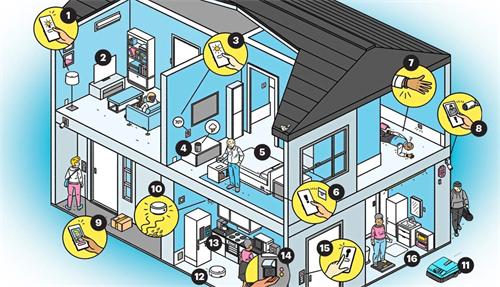
In 2012, the Lawson Health Research Institute in Canada conducted an unusually small longitudinal study.
They equipped three patients — all of whom had both mental illness and chronic physical conditions — with a touchscreen device, activity tracker, smart pillbox, and smart scale, then followed them for an entire year.
The results sounded encouraging.
The patients walked more, missed fewer medications, and communicated with doctors more frequently.
But the researchers themselves immediately acknowledged the obvious limitations: only three participants, no control group, and all of them lived in environments with close clinical support teams.
So what actually helped them? The technology? Or the feeling that someone was consistently paying attention to them?
The study could not separate the two.
Reading that section made me think about my grandmother.
She has never used a smart device in her life, but every afternoon at four she makes tea, and every evening at five she goes for a walk — without fail. That predictable rhythm gives her a profound sense of stability.
Technology, at best, is simply trying to imitate that predictability.
Whether it succeeds depends entirely on whether you are willing to maintain it.
And maintenance itself is a new form of burden.
4. We Say We Care About Privacy — But Our Behavior Says Otherwise
The smart home industry contains a phenomenon researchers repeatedly expose, even while companies rarely mention it: the privacy paradox.
A 2020 experiment published in Computers & Security asked participants in Saudi Arabia to examine evidence of privacy leaks involving a smart plug. Immediately afterward, participants reported reduced trust and elevated concern.
But when researchers measured them again one month later, attitudes had almost completely rebounded.
That is how people often behave: even when we know risks exist, convenience can suppress concern temporarily until anxiety slowly resets itself back to baseline.
Another 2023 study in the same journal examined repeat buyers of smart devices and found something even more interesting.
Education, income, and age could predict whether someone claimed to care about privacy, but those factors could not reliably predict whether they would actually purchase high-risk devices.
The only variable consistently aligned with both words and behavior was gender: female users reported higher privacy concerns and genuinely adopted more protective behaviors.
Another experiment archived on PubMed Central explored smart appliance energy management through discrete-choice modeling. Researchers discovered that people were relatively willing to share household energy consumption data, but strongly resisted sharing GPS location data. Meanwhile, participants who genuinely cared about energy conservation demanded less financial compensation for participating.
Put together, these findings reveal something far more complicated than a simple “convenience versus privacy” debate.
Energy savings, money, social signaling, laziness, and cognitive fatigue all pull in different directions simultaneously. Most people eventually choose whichever option feels easiest in the moment — and that itself becomes another form of decision fatigue.
My own solution now is simple:
Every device in my home with a camera or microphone remains physically unplugged.
Not because I distrust technology completely, but because I do not trust myself to consistently manage privacy permissions forever.
Instead of checking privacy dashboards every day, I would rather pull the plug once and be done with it.
5. Talking to a Smart Speaker About Your Feelings? Don’t Get Emotional Too Quickly
Smart speakers and conversational AI systems are often marketed as “24-hour mental health support.”
But when I read a 2019 systematic review in JMIR Mental Health, my optimism faded considerably.
The review screened thirteen studies. Only four were rigorous large-scale randomized controlled trials; the rest were feasibility studies or quasi-experimental designs.
Although nearly all studies reported reductions in psychological distress after intervention, the results became far less convincing under stricter comparison conditions. Among the five studies using inactive control groups, only some demonstrated statistically significant advantages.
More importantly, three studies directly compared conversational AI systems against human therapy or self-help materials in head-to-head trials.
The AI systems did not outperform them.
The review authors used careful language:
“Promising potential exists, but the efficacy and acceptability of conversational agents in mental healthcare still require more robust validation.”
Translated into plain language: they may work as emotional journals or supportive companions, but not as therapists.
The review also highlighted a problem many people overlook entirely: almost none of the studies properly evaluated patient safety.
For example, if a user expresses suicidal thoughts, can the system reliably recognize the risk and escalate appropriately?
For ordinary users, the practical takeaway is fairly straightforward: these systems may help with mood tracking, breathing reminders, or emotional journaling, but you should not expect them to rescue you during a genuine mental health crisis.
6. My Setup Now: Subtraction Instead of Addition
After all the experimentation, my philosophy has completely reversed.
The question is no longer “What else can I automate?”
It is “What else can I remove?”
My bedroom now contains only three things:
A manually adjustable color-temperature desk lamp.
A timer-controlled curtain motor.
And a completely non-networked mechanical alarm clock.
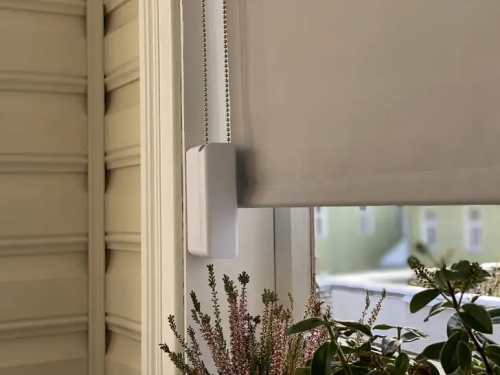
The lamp uses cool white light in the morning and warm light at night. The curtains provide a subtle sense of “daylight” during dark winters or long rainy periods. And the alarm clock forces me to hear an actual sound instead of swiping away another phone notification.
I removed every motion sensor from the living room.
Because both humans and cats kept triggering them, causing lights to flicker unpredictably and making the entire space feel tense.
The kitchen still has one extremely simple timed power outlet controlling the electric kettle. Every morning at six, it automatically begins warming water so that it is ready when I wake up — no waiting, no remembering.
Every three months, I do something I call a “stress audit.”
I open my phone and check which apps I have not touched in the last two weeks. Those become candidates for physical removal.
Last month I unplugged an air-quality monitor.
Not because it was inaccurate, but because I realized I had started compulsively checking PM2.5 readings. Even tiny fluctuations in the numbers made me strangely anxious. The information was not meaningfully improving my life, but it had successfully created a new sense of vigilance.
Whether smart homes reduce stress has very little to do with how advanced the technology is.
What matters is whether the technology solves something that is actually draining your mental energy.
If you want to experiment with smart home systems yourself, my advice is surprisingly simple:
Don’t buy anything yet.
Take a sheet of paper and write down the three moments in the past week when something about your home genuinely irritated you.
Then ask yourself:
How many of those moments came from repeatedly doing the same tiny task?
And how many came from things not working properly?
If the answer is mostly the first category, automation may genuinely help.
If it is mostly the second, the solution may not be more devices.
It may be fewer.
FAQs
1. Are smart homes proven to reduce stress?
Research suggests they can reduce stress under certain conditions, particularly when automation solves a specific recurring problem. For example, lighting systems that support circadian rhythms during long winters may improve daily functioning. But studies also show that poorly designed or overly complicated systems can increase frustration, decision fatigue, and anxiety.
2. Are smart speakers safe for mental health support?
Smart speakers and conversational AI tools may help with mood tracking, relaxation exercises, journaling, or reminders. However, current evidence does not support treating them as replacements for licensed mental health professionals, especially during serious psychological crises.
3. Which smart home features are most useful for stress reduction?
Systems that automate highly repetitive, low-risk tasks tend to work best. Examples may include automated curtains, scheduled lighting, simple timed outlets, or climate routines that require minimal maintenance and rarely fail catastrophically.
4. Is a simpler home sometimes better for mental health?
For many people, yes. Reducing unnecessary devices, notifications, and automation layers may improve feelings of control and predictability. In some cases, manual routines create greater psychological stability than highly connected systems.
5. How should someone start building a low-stress smart home?
Instead of automating everything immediately, it may help to first identify recurring household frustrations that genuinely consume mental energy. Automation tends to work best when it solves a clearly defined problem rather than adding novelty for its own sake.
References
1. inMind Study Protocol. Investigating the effectiveness of a smart mental health intervention (inMind) for stress reduction during pharmacological treatment for mild to moderate major depressive disorders: Study protocol for a randomized control trial. Frontiers in Psychiatry, 2023.
2. Risko, E. F., & Gilbert, S. J. (2016). Cognitive offloading and effort: A review. Frontiers in Psychology. (Narrative review; sample sizes vary across cited primary studies.)
3. Gabel, V. L., et al. (2017). Field study on circadian light exposure and sleep metrics. Cited in: Effects mediated by melatonin and cortisol of artificial light and noise, alone and in combination, on sleep and health. Exploration of Medicine, 2024.
4. Study on short-wavelength light exposure and sleep (2017). Cited in: Effects mediated by melatonin and cortisol of artificial light and noise.
5. Figueiro, M. G., et al. (2011). Inpatient studies on melatonin onset under room light vs. dim light. Cited in: Effects mediated by melatonin and cortisol.
6. The Effects of Red and Blue Lights on Circadian Variations in Cortisol, Alpha Amylase, and Melatonin. PMC/NIH (PMC2905913).
7. Aleisa, N., & Renaud, K. (2020). The privacy paradox applies to IoT devices too: A Saudi Arabian study. Computers & Security, 2020.
8. Gaffney, H., Mansell, W., & Tai, S. (2019). Conversational Agents in the Treatment of Mental Health Problems: Mixed-Method Systematic Review. JMIR Mental Health, 2019.
About the Author
Clara Whitfield, MA – Biophilic Design Consultant & Eco-Lifestyle Content Specialist
Clara Whitfield is a consultant and writer focused on biophilic interior design, ecological home trends, and sensory-centered living environments. She earned her Master’s degree in Sustainable Design from the University of Manchester and has contributed to residential wellness projects, eco-conscious furniture brands, and environmental education initiatives. Her writing explores how natural systems, material choices, and urban living conditions shape both household comfort and environmental resilience.
Editorial Transparency Statement
This article is based on a combination of peer-reviewed academic research, publicly available scientific literature, real-world user experiences, and firsthand observations. The goal of the article is not to promote or discourage smart home technology, but to critically examine whether specific forms of automation genuinely reduce stress in everyday life.
Personal anecdotes included in the article are used to illustrate broader behavioral patterns and should not be interpreted as universal outcomes.
No device manufacturer, smart home platform, or technology company sponsored or influenced the editorial content of this article.
Disclaimer
This article is intended for informational and educational purposes only and does not constitute medical, psychological, legal, cybersecurity, or professional health advice.
Research findings discussed in the article may not apply equally to all individuals, households, or medical conditions. Smart home systems, AI assistants, and wellness technologies should not be considered substitutes for licensed healthcare professionals, mental health treatment, or emergency services.
Readers should independently evaluate privacy risks, cybersecurity practices, and device reliability before purchasing or installing connected technologies in their homes.
Any references to scientific studies are provided for contextual discussion and should not be interpreted as definitive clinical conclusions.
Recommend for you:

Why Beautiful Rooms Don’t Always Work
The Hidden Psychology Behind Furniture Placement — and How to Fix It
When Predators Vanish: The Hidden Ecological Collapse Behind Urban Pest Outbreaks
Who Disappeared — and Why Cities Are Fighting the Wrong Enemy
Microbial Ecology in Potting Soil Explains What Care Routines Cannot
Why Identical Balcony Plants Grow Differently Under the Same Water and Light
Why So Many Home Designs Become Unbearable After Three Years
Layout, Not Furniture, Is What People Regret Most — And Why “We’ll Fix It After Moving In” Rarely Works