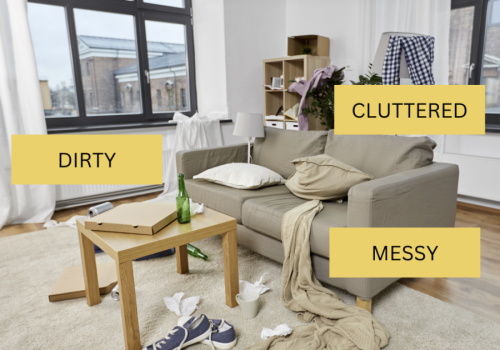
Before You Buy: How Small Observations Can Transform Your Home
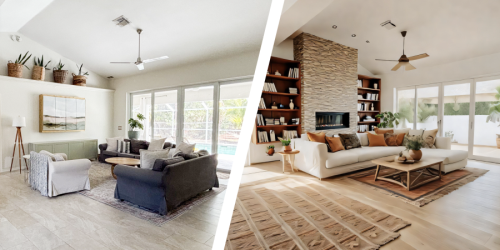
——7 Days of Observation and Simple Habits to Make Every Corner Work for You
By Clara Whitfield | Updated on April 2026 | 🕓 13 minutes
Key Highlights
- Why do some home purchases become unused within weeks?
- How do “hot zones” and “cold zones” affect daily comfort?
- Why can a 50-centimeter furniture shift completely change a room?
- What tiny forms of friction quietly create clutter and stress?
- How can cardboard boxes prevent expensive furniture mistakes?
- How can daily reset habits improve the feeling of a home without renovating?
After carefully comparing prices and designs, have you ever bought a piece of furniture or a home item—only to realize it’s barely used? The coffee machine gathering dust. The stack of sheets never opened. The exercise chair that quietly became a clothing rack.
Transforming your home doesn’t necessarily require buying something new. Often, it begins with observation, micro-adjustments, and small experiments. Before you open a shopping app, the real design process has already started—by using your daily life patterns as the blueprint.
1. The 7-Day Observation Method: Study Your Home Like an Anthropologist
Before adding anything new, understand how your home is actually being used. Your home is a living ecosystem—not a showroom.
Why seven days?
Because one day never tells the full story. Weekday routines and weekend rhythms are completely different. Only a full cycle reveals the true tempo of your home.
Mika, an illustrator living in Tokyo, constantly complained that her 6-square-meter kitchen lacked counter space and planned to buy an expensive extension rack. During her “7-day observation,” she documented her daily movements with photos. To her surprise, the real culprit wasn’t kitchen equipment—it was unopened delivery boxes and the tote bag she prepared for the next day.
The problem wasn’t “lack of storage,” but “no transit path for temporary items.”
Instead of buying a new rack, she created a simple “processing station” between the entryway and the kitchen. Instantly, the counter felt spacious again.
How to Do It:
Tools: A notebook, or your phone’s notes app and camera.
What to record: Draw a simple floor plan of each room. Use arrows to mark your movement patterns (e.g., wake up → bathroom → find clothes → make coffee → look for keys → leave).
Note:
- Where do you pause?
- Where do you detour?
- Which cabinets haven’t been opened all week?
Identify your “cold zones” (rarely used corners) and “hot zones” (spaces you pass through daily). Purchasing decisions should be based on hot-zone needs—not on filling cold zones.
2. The 30-Minute Reset Rule: A Global Micro-Habit
Thirty minutes a day is enough to counteract entropy and prevent clutter from accumulating. This isn’t deep cleaning—it’s a daily “save point” that restores order.
In Germany, there’s a concept called Feierabend—the protected personal time after work ends. For many, part of this ritual includes quickly tidying the home, shifting it from “daytime functional mode” to “evening relaxation mode.” That spirit captures the essence of the 30-minute reset.
Imagine setting a timer after dinner each evening. You’re not “cleaning”—you’re performing a “factory reset”:
- Return magazines from the sofa to the shelf
- Take cups from the coffee table back to the kitchen
- Line up the shoes kicked off by the door
When the 30 minutes end, stop immediately.
How to Do It:
- Choose a fixed time: Attach it to an existing habit, such as after dinner or while preparing for bed.
- Focus on resetting, not scrubbing: Returning items to their place—not deep cleaning—is the priority.
- Make it collective: Turn on one album and reset together as a household before the music ends.
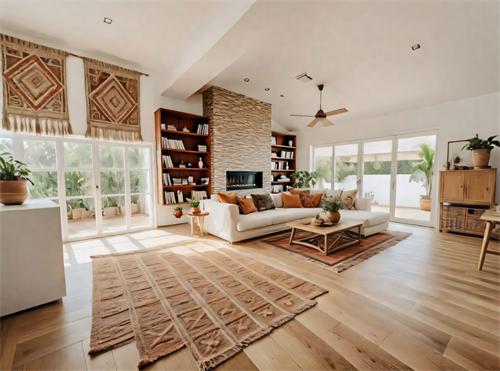
3. Adjust Just One Pathway: Learn from IKEA’s Flow Logic
A small shift in movement flow can change how an entire room functions.
Movement pathways are the “traffic design” of your home. When they work well, you barely notice them—but you feel the smoothness constantly.
IKEA is rethinking its classic maze-like store layout and experimenting with more linear formats. Younger shoppers rely on GPS navigation and are more likely to feel anxious in complex spatial systems. They prefer direct, efficient, intuitive movement.
This logic applies at home: if you’re constantly bumping into things or taking awkward detours, your mood subtly declines.
In a narrow apartment in Melbourne, the owner moved the sofa forward just 50 centimeters, creating a clear path behind it that connected directly to the garden door. That tiny adjustment transformed the living room from a pass-through corridor into an “island” where people could comfortably stay. The garden became more accessible—and more frequently used.
How to Do It:
- Identify your main routes: Living room to kitchen? Bedroom to bathroom?
- Change only one thing: Move the chair blocking the path. Relocate the trash bin out of the walkway. Test it for 24 hours.
- Golden rule: Main pathways should allow two people to pass sideways—or one person carrying items—to move comfortably.
4. The Friction Checklist: Remove the Moment That Makes You “Not Bother”
Friction is the tiny inconvenience that makes you abandon a task.
In the U.S., many designers are shifting from traditional “fall prevention” thinking to “friction elimination.” Instead of just removing rugs to avoid tripping, they redesign layouts so that support surfaces are continuous, essential items are within easy reach, and bending or stretching becomes unnecessary. It’s not only about safety—it’s about fluid movement.
Consider:
- Are cabinet doors easy to open?
If your trash bin blocks the door, you’ll forget what’s inside.
- Are wires and outlets inconvenient?
If charging your phone requires walking across the room, chargers will migrate everywhere.
- Is daily use intuitive?
To make coffee, do you:
Open upper cabinet for cups → lower cabinet for beans → turn for kettle → turn again for filters?
That’s four friction points.
A home cook installed a magnetic rack inside her spice cabinet door so her most-used spices were instantly visible. She turned a search process into a single fluid motion.
How to Do It:
Spend one hour over the weekend performing routine tasks in each room—making tea, changing sheets, getting ready to leave.
Write down every moment you:
- Hesitate
- Bend awkwardly
- Reach too high
- Turn repeatedly
Even a small relocation can eliminate friction.
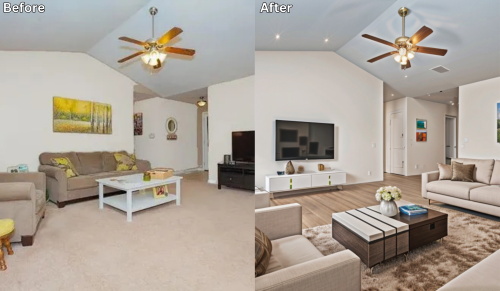
5. Risk-Free Experimentation: Simulate Life Before You Commit
Before spending money, test whether an idea truly fits your life. Think of it as A/B testing for your home.
Before buying large furniture, place temporary wheeled platforms under existing pieces so you can easily experiment with different layouts. Live with them for a day or two. Find the “permanent address” before making it permanent.
Considering a massive sectional sofa? Don’t order yet. Use delivery boxes to outline its footprint on the floor and live with a “cardboard sofa” for a week. You might discover it leaves only a narrow passage—or blocks your favorite floor lamp.
Thinking about buying expensive kitchen organizers? Try shoe boxes or shipping boxes first. Label them and use them for two weeks. Does the system match your cooking habits—or add extra steps?
A minimalist in Copenhagen tested wardrobe layouts for a full month using milk crates and fabric curtains before committing to a custom design.
How to Do It:
- Remind yourself: This is just an experiment. It reduces decision pressure.
- Keep notes during the trial:
“Day three: still bending too much for bowls—box placement needs adjusting.”
These notes become your best investment protection.
This is a spiral process of gradual improvement.
Don’t treat it as a chore. Treat it as a dialogue with your home—a quiet exploration game. Spend time truly seeing how your space works, and it will respond gently, offering you a home that feels lighter, easier, and genuinely designed around your life.
FAQs
1. How long should I test a layout before making permanent changes?
For small adjustments, 24–72 hours is often enough to notice whether movement feels smoother. For larger decisions—such as sofas, wardrobes, or storage systems—testing for one to two weeks provides a more realistic understanding of daily use patterns.
2. Can these methods work in very small apartments?
Yes. In compact homes, observation is often even more valuable because every pathway and storage area has multiple functions. Small adjustments—such as moving a chair, relocating chargers, or creating temporary drop zones—can have a disproportionately large impact.
3. How do I know whether a room has a “flow problem”?
Common signs include:
- Frequently bumping into furniture
- Walking around obstacles repeatedly
- Avoiding certain areas of the room
- Leaving items in random places because returning them feels inconvenient
- Feeling mentally tired in a space without understanding why
These often indicate movement friction rather than lack of space.
4. Should every item in a home have a permanent storage location?
Not necessarily. Many homes fail because they ignore “temporary items” like bags, packages, jackets, mail, or daily-use objects. Creating flexible transition zones is often more practical than forcing rigid organization systems.
5. What if other family members have different habits from mine?
The most functional homes usually adapt to collective behavior rather than enforcing one person’s ideal system. Observe where items naturally accumulate and design around real shared habits instead of fighting them constantly.
6. How often should I reevaluate my home setup?
A good rule is every major life transition:
- New job or schedule
- Children growing older
- Moving in with a partner
- Getting a pet
- Aging parents visiting frequently
- Seasonal lifestyle changes
Homes work best when they evolve alongside the people living in them.
References
1. Clear, J. (2018). Atomic habits: An easy & proven way to build good habits & break bad ones. Avery.
2. Duhigg, C. (2012). The power of habit: Why we do what we do in life and business. Random House.
3. Norman, D. A. (2013). The design of everyday things (Revised and expanded ed.). Basic Books.
About the Author
Clara Whitfield, MA – Biophilic Design Consultant & Eco-Lifestyle Content Specialist
Clara Whitfield is a consultant and writer focused on biophilic interior design, ecological home trends, and sensory-centered living environments. She earned her Master’s degree in Sustainable Design from the University of Manchester and has contributed to residential wellness projects, eco-conscious furniture brands, and environmental education initiatives. Her writing explores how natural systems, material choices, and urban living conditions shape both household comfort and environmental resilience.
Editorial Transparency Statement
This article is independently written and based on interdisciplinary research in environmental psychology, behavioral economics, and residential design.
No furniture brands, retailers, or commercial organizations sponsored or influenced the content. All examples are illustrative and intended for educational purposes.
Professional & Educational Disclaimer
This article is for informational and educational purposes only. It does not constitute architectural, engineering, medical, or financial advice.
Before making structural modifications, purchasing large furniture, or altering electrical systems, consult qualified professionals where appropriate. Individual living environments vary, and strategies should be adapted to personal circumstances.
Recommend for you:
When “Eco-Friendly” Becomes High-Maintenance: The Hidden Aging Patterns of Popular Home Materials
How Real Homes Accelerate Wear, and Why Some Sustainable Materials Demand More Care Than You Expect
Smart Homes That Actually Reduce Stress — What the Research Says
The most common promise smart homes sell is “convenience” — doing a little less, so you can save a little more mental energy.
Why Beautiful Rooms Don’t Always Work
The Hidden Psychology Behind Furniture Placement — and How to Fix It
Plant Memory and Resilience to Environmental Change
Why Repotting Often Becomes the Last Straw for Your Plants