
Plant Memory and Resilience to Environmental Change
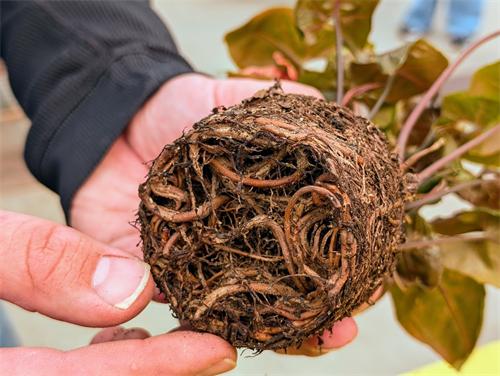
—— Why Repotting Often Becomes the Last Straw for Your Plants
By Oliver Hayes | Updated on April 2026 | 🕓 10 minutes
Key Highlights
- Why do plants often decline after repotting despite careful handling?
- What is stress memory in plants, and how does it influence growth and survival?
- How do accumulated environmental stresses affect plant resilience?
- What strategies can help plants recover successfully from repotting?
Many plant lovers have experienced the same quiet frustration: a plant that appeared healthy for months suddenly begins to wilt, yellow, stop growing, or even die shortly after repotting. No obvious mistake was made. The roots were handled gently, the soil seemed appropriate, watering was careful. And yet, the decline feels inevitable.
What often goes unnoticed is that this failure is not caused by repotting alone. Instead, it reveals a lesser-known biological reality: plants possess a form of “memory” of past environmental stress, and repotting frequently acts not as the first injury, but as the final trigger in a long-accumulated process.
Scientific research has shown that plants are far from passive organisms. They actively perceive, record, and integrate environmental stress signals over time, adjusting their physiology accordingly. This capacity—known as stress memory in plants—is central to understanding why repotting so often coincides with sudden decline.
In most gardening advice, “repotting failure” is reduced to technique: damaged roots, improper watering, unsuitable substrate. Yet in reality, a more common and underestimated pattern exists:
Repotting is rarely the first stress a plant experiences. It is often the last one.
Before repotting ever occurs, the plant may have already endured subtle but cumulative disturbances: fluctuating light exposure, temperature swings, inconsistent watering, repeated relocation, drops in ambient humidity, or the gradual degradation of soil microbial communities. The plant does not simply “tolerate” these changes. It continuously records them at a physiological level, adjusting its growth strategy to survive.
When repotting finally happens, it merely pushes an already strained system past its threshold.
What Is Stress Memory in Plants?
Plant “memory” does not resemble memory in animals or humans. There is no nervous system involved. Instead, stress memory refers to long-term physiological and molecular adjustments that occur after a plant experiences environmental stress, enabling it to respond faster or more strongly to similar stress in the future.
This memory increases survival probability—but often at the cost of growth.
Core mechanisms include:
Hormonal regulation
Stress events such as drought, salinity, or mechanical disturbance alter levels of plant hormones like abscisic acid (ABA), ethylene, and jasmonic acid. These hormonal shifts can persist, allowing the plant to rapidly activate defensive responses during subsequent stress events.
Epigenetic modification
Changes such as DNA methylation and histone modification can alter gene expression without changing DNA sequences. Stress-responsive genes may remain primed for activation long after the original stimulus has passed.
Signal transduction memory
Calcium ion (Ca²⁺) signaling waves and reactive oxygen species (ROS) signals can propagate between roots and shoots, placing the entire plant into a heightened state of alertness.
A classic example is drought priming: plants exposed to short-term water stress often close their stomata more quickly during later droughts, reducing water loss and slowing wilting. However, this also suppresses photosynthesis and growth.
In other words, the plant may appear alive and stable—but it is no longer operating in a normal growth mode.
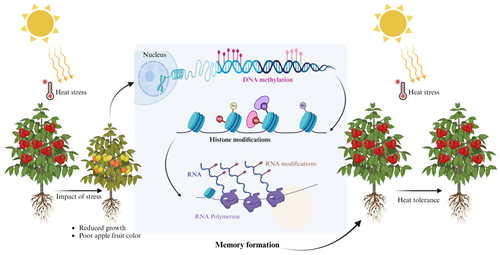
How Repotting Reactivates Accumulated Stress Memory
Not a Single Event, but a Stack of Signals
From a human perspective, repotting is a brief intervention. From the plant’s perspective, it is a compound stress event involving multiple simultaneous disruptions.
Root damage and exposure
Even careful repotting inevitably damages fine roots and root hairs, which are essential for water and nutrient uptake. The root–soil interface is disturbed, microbial communities are reset, and oxygen and moisture distribution changes abruptly. Root exudates decrease, disrupting microbial feedback loops that support nutrient exchange and immune defense.
Environmental discontinuity
New and old substrates differ in moisture retention, pH, aeration, and microbial composition. Repotting is often paired with relocation, introducing sudden changes in light intensity, temperature, and humidity.
Mechanical disturbance
Shaking, tilting, and handling are perceived as mechanical stress—similar to wind damage or physical attack—activating jasmonic acid–mediated defense pathways.
To the plant, these signals converge into a single interpretation: environmental instability with high survival risk.
The result is a shift into an energy-intensive recovery mode:
- Growth is paused while resources are diverted to repair.
- Older leaves may yellow or wilt to reduce transpiration and conserve energy.
- Root respiration increases, rapidly consuming stored carbohydrates and starch reserves.
In a personal comparison, I observed two identical pothos plants: one frequently moved and repotted, the other kept in a stable environment. After three months, the first showed sparse foliage and slow growth, while the second produced long, vigorous vines. The difference was not care quality—but cumulative stress load.
If a plant has already entered a stress-memory state, repotting may push the system beyond recovery capacity. The plant effectively “decides” that the environment cannot be trusted to stabilize.
What follows may include complete growth arrest, prioritization of old-leaf sacrifice, insufficient root regeneration, and increased susceptibility to pathogens.
Thus, when a plant collapses one to three weeks after repotting, it is not that repotting killed it. Repotting revealed that the plant had already lost its resilience.
Why “Everything Looked Fine,” Yet the Plant Died
Human Logic vs. Plant Logic
Plants tolerate a single, intense stress better than repeated small disturbances. Research consistently shows that chronic, low-level stress reduces resilience more severely than one acute event.
Human judgment focuses on isolated actions: “Did I damage the roots?”
Plants evaluate patterns: “Is this environment becoming predictable—or not?”
Repotting often occurs at the worst possible moment: when the system’s buffering capacity is already depleted.
How to Help Plants Transition Scientifically
1. Slow transitions, minimize stacked stress
Before repotting, maintain at least two to three weeks of environmental stability. Avoid fertilizing, pruning, or relocating during this period. Repot only when the plant is actively growing.
Preserve the original root ball as much as possible, retaining some old soil as a buffer. If feasible, replace substrate gradually rather than all at once.
When changing light environments, do so incrementally. For example, move a plant from indoors to a balcony via a week in bright, indirect light.
2. Stabilize environmental variables
The first one to two weeks after repotting are critical. Keep temperature and humidity stable, reduce light intensity slightly, and avoid strong airflow or air-conditioning drafts.
Delay fertilization until new growth resumes. Short-term stagnation is not failure—it is recovery.
3. Guide beneficial stress, not eliminate it
The first watering after repotting should be thorough. Afterward, allow slightly longer intervals between watering to encourage downward root growth and adaptation.
Provide bright but non-scorching light to support efficient photosynthesis without triggering photoinhibition.
The goal is not rapid recovery—but avoiding new stimuli that the plant must remember as stress.
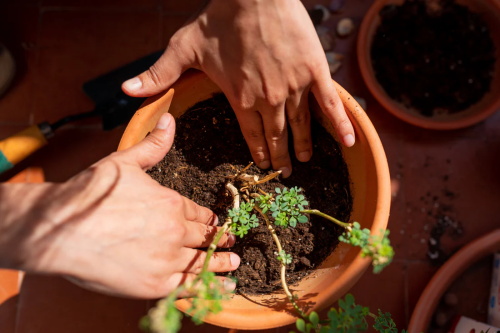
Case Studies
Drought priming in succulents
Some growers report that lightly reducing water availability before repotting succulents improves post-repot survival. Mild pre-stress activates drought and repair pathways, preparing the plant for the compound stress of repotting.
The “slow relocation” of fiddle-leaf figs
Moving a fiddle-leaf fig directly from low indoor light to strong southern exposure often results in leaf drop. Gradually shifting its position every few days over two weeks allows the photosynthetic system to adapt, preventing photodamage and enabling rapid new growth.
Conclusion
Plants do not “suddenly collapse.” They collapse when they no longer believe their environment will stabilize.
Gardening failures are rarely caused by one incorrect action. They emerge from unprocessed, accumulated change.
Our role as growers is not to intervene more—but to intervene more thoughtfully. To act as careful translators of environmental signals and patient guardians during recovery phases.
By understanding and respecting plant stress memory, we can plan repotting, relocation, and environmental adjustments in ways that align with plant biology rather than human impatience.
Sometimes, the most effective care is not stimulation—but stillness.
FAQs
Q: Can repotting alone kill a plant?
A: Rarely. Repotting often reveals pre-existing stress accumulated over time, rather than being the primary cause of failure.
Q: How can I tell if my plant is in a stress-memory state?
A: Signs include slowed growth, yellowing older leaves, reduced root activity, or inconsistent responsiveness to watering and light.
Q: Are all plants equally affected by stress memory?
A: No. Species vary in resilience. Succulents, fiddle-leaf figs, and tropical plants often show pronounced stress responses, while hardy species may tolerate moderate disturbances better.
Q: Can mild pre-stress improve plant resilience?
A: Yes. Techniques like drought priming for succulents or slow light adaptation for figs can help prepare plants for environmental changes like repotting.
Q: How long does it take for a plant to recover after repotting?
A: Recovery varies by species and prior stress history. Generally, two to three weeks of stable conditions post-repotting help the plant stabilize.
References
1. Bruce, T. J. A., Matthes, M. C., Napier, J. A., & Pickett, J. A. (2007). Stressful “memories” of plants: Evidence and possible mechanisms. Plant Science, 173(6), 603–608.
2. Hilker, M., et al. (2016). Priming and memory of stress responses in organisms lacking a nervous system. Biological Reviews, 91(4), 1111–1133.
3. Walter, J., Jentsch, A., Beierkuhnlein, C., & Kreyling, J. (2011). Ecological stress memory and cross stress tolerance in plants. Oecologia, 165, 293–306.
4. Vives-Peris, V., et al. (2020). Root exudates: From plant to rhizosphere and beyond. Plant Cell Reports, 39, 3–17.
5. Poorter, H., et al. (2012). Biomass allocation to leaves, stems and roots: Meta-analysis of responses to environmental variation. New Phytologist, 193(1), 30–50.
About the Author
Oliver Hayes, MSc – Urban Gardening Systems Researcher & Sustainable Home Writer
Oliver Hayes is a researcher and content writer specializing in urban gardening ecology, balcony food systems, and sustainable home environments. He holds a Master’s degree in Environmental Horticulture from the University of Copenhagen and has collaborated with community garden networks, indoor farming startups, and ecological design organizations across Europe. His work focuses on helping everyday households better understand the hidden environmental factors affecting plant health, indoor biodiversity, and long-term sustainable living practices.
Editorial Transparency Statement
This article was written using a combination of peer-reviewed research, professional experience, and practical gardening observations. All claims are based on scientific evidence, and case studies reflect real-world plant care scenarios observed by the author. The editorial process aims for factual accuracy, clarity, and reader utility.
Disclaimer
The information provided is for educational purposes only. While the guidance is grounded in research and professional experience, individual plant responses may vary. The author and publisher are not responsible for any plant damage, loss, or other outcomes resulting from the application of these recommendations.
Recommend for you:
Plant Memory and Resilience to Environmental Change
Why Repotting Often Becomes the Last Straw for Your Plants
What Our Eyes See as ‘Bright’ Isn’t What Plants Actually Perceive
The Overlooked Issue of Light Stability in Balcony Gardening
The “Invisible Hazards” in Your Home: It’s Not Just Formaldehyde
The “Invisible Hazards” in Your Home: It’s Not Just Formaldehyde
Why the Indoor Plant Industry Needs You to Fail
How Plant Care Became Fast Fashion—and Why Your Mistakes Keep the Market Moving