Urban Mycology: Growing Mushrooms Safely Indoors in 2026
——Inside the Risks of Urban Mushroom Cultivation
By Oliver Hayes | Updated on March 2026 | 🕓 12 minutes
Key Highlights
- What makes indoor mushroom growing in apartments potentially unsafe?
- How can humidity damage both mushrooms and building structures?
- Which mushroom species are more suitable for shared living spaces?
- How can coffee grounds be used safely as a growing substrate?
- What are the most common mistakes in indoor mushroom cultivation?
Let’s start with the key point: this is not one of those “10 easy steps to grow mushrooms” success stories. I spent 18 months experimenting in a 65 m² apartment in Berlin, harvesting three times and failing three times. In the end, I developed a growing logic that only applies to urban rental living environments. If you live in an apartment and share space with roommates, a partner, or a landlord, this may be far more useful than the farm tutorials you usually see saved online.
The story begins with a “success.”
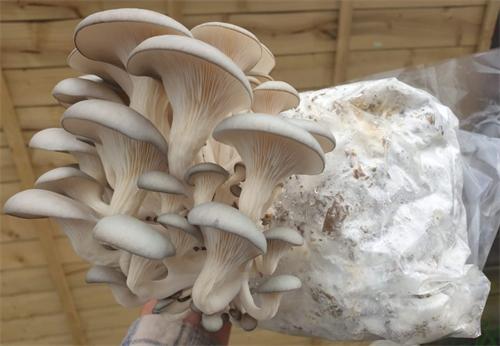
In the autumn of 2024, I grew my first flush of oyster mushrooms in the bathroom. The caps were full and firm. I cooked them into pasta and felt an overwhelming sense of achievement. Three days later, my roommate started coughing. Not a normal cold cough—more like chest tightness after just a few minutes in the bathroom. At first, I didn’t connect it to the mushrooms, until I noticed a grayish-white dusting on the surface of the grow bag—spore release. It turns out that mature mushrooms release spores like smoke, and I had placed them in the worst possible environment: a poorly ventilated bathroom.
That was the moment I realized something important: the “basement farm” and rural greenhouse tutorials online can become safety risks in urban apartments. Most guides bury “safety” at the end of the notes section, but my experience showed that in shared living spaces, safety must come first.
Where is urban cultivation actually dangerous?
After that experience, I reviewed a lot of research and found three overlooked risks in urban enclosed environments:
First: respiratory exposure. Fungal spores are strong allergens. A 2021 record from the Medical University of Silesia in Poland documented a typical case: a 32-year-old healthy woman with no prior allergies developed respiratory distress after only 30 minutes of exposure during her first oyster mushroom harvest. She later developed occupational asthma, and her total serum IgE rose to 78 IU/ml (Branicka et al., 2021). This represents farm-level exposure, but even in apartments, concentrations are lower yet prolonged exposure is more relevant—your bedroom may be only two meters away from the growing setup, making long-term exposure non-negligible.
Second: building contamination. Mushrooms thrive in 85%–95% humidity, but building microbiology research shows that when humidity stays above 60%, molds such as Cladosporium and Penicillium can colonize drywall and wood within days (800molds.com, 2026). In other words, the “high-humidity paradise” you create for mushrooms can become a nightmare for your walls if not properly controlled—directly affecting your rental deposit and neighbor relationships.
Third: social risk. Roommate acceptance, landlord attitudes, and rental contract terms often matter more than technical details in determining whether your project survives the first month. My experience is simple: before starting, reach an informal or written agreement with cohabitants about space usage, responsibility, and termination conditions. It sounds bureaucratic—but it saves far more trouble than post-conflict arguments.
My 3S Safety Framework
Based on three full cycles over 18 months, I developed a rough but practical framework: Species, Space, System.
Species: It’s not what you want to grow, but what your apartment can handle
Many people (including my past self) start with oyster mushrooms because they are “easy.” But oyster mushrooms are actually high spore-producing species. Research teams in Germany and Switzerland found as early as the 1990s that respiratory disease rates were significantly higher among oyster mushroom cultivators (Betz, 1990; Lehrer et al., 1994). In a large study across the US and Europe, Lehrer et al. (1994) reported that 178 out of 701 participants developed allergic reactions to basidiomycete spores. That number made me rethink species selection.
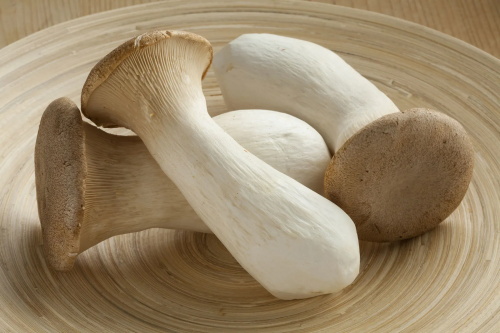
Now I tend to prefer king oyster mushrooms (Pleurotus eryngii) or certain shiitake strains, which produce fewer spores and tolerate temperature fluctuations better. But there’s a catch: oyster mushroom mycelium prefers 25–30°C, while fruiting requires 16–20°C (Kong, 2004; Yang et al., 2013). If your apartment stays above 22°C in winter due to heating, you either choose heat-tolerant strains or accept reduced yield—something I learned in cycle two.
Space: Your “fungal corner” should not be decorative
I no longer place grow boxes in bathrooms or bedrooms. Now they sit in a corner of my kitchen balcony, with a dedicated external-facing window and a door separating them from living space.
For ventilation, apartments cannot use farm-style mechanical systems. I use a small 15 cm circulation fan combined with two 15-minute window ventilation sessions per day. Technical documentation suggests this setup can keep CO₂ below 800 ppm, sufficient for fruiting body development (Vrcoolertech, 2025). Key detail: airflow should skim across the surface of the grow box—not blow directly onto it, or the substrate will dry out.
Humidity control was a learning curve. I initially used a whole-room humidifier, which caused condensation on walls. I later switched to an ultrasonic humidifier that only controls a microclimate above the grow box (about 20 liters of air volume). Inside the tent, I maintain 85–92% humidity, while outside remains strictly below 55%—the warning threshold for building mold growth.
One counterintuitive point: mushrooms don’t need light, but you do. I use 5000K LED strips for two hours a day—not for growth, but to visually detect contamination such as green mold (Trichoderma). In dim corners, contamination is often noticed too late.
System: A safety protocol from inoculation to harvest
Urban home growers don’t need a sterile lab, but they do need a “clean zone” habit. My workspace is a kitchen corner wiped with 70% alcohol, using disposable gloves. A surprising finding: most contamination comes not from air, but from your hands.
I keep a simple cultivation log: temperature (twice daily), humidity (daily), mycelium status (visual check), and odor (daily sniff test). Any unusual smell—sweet, sour, alcoholic—is a red flag for contamination or anaerobic conditions. Do not hesitate. Isolate immediately.
Harvest timing is a blind spot for many indoor growers. Fully opened caps look better aesthetically, but this is when spore release peaks. My rule is to harvest when the cap edges begin to curl upward but have not fully flattened. This sacrifices about 10–15% yield but significantly reduces spore exposure. Worth it? I choose safety.
Waste loop: Coffee grounds as urban gold
Coffee grounds are a treasure for urban cultivators. A 2008 study by the Indian Central Food Technological Research Institute showed that oyster mushrooms grown on coffee-ground substrates achieved a 220% bioconversion rate, producing 220 g of fresh mushrooms per 100 g dry substrate, while degrading 50% of caffeine and 41% of tannins (Murthy & Manonmani, 2008).
In Berlin, I built relationships with two cafés and collect about 2 kg of fresh coffee grounds weekly. I sterilize them in a microwave at high power for 3 minutes (stirring halfway) and use them as substrate instead of wheat straw. But there’s a regional caveat: Berlin café coffee grounds have higher oil content than samples used in studies in India, requiring water ratio adjustments or they become anaerobic and sour.
Three cycles in 18 months: two failures, one partial success
Cycle 1 (Autumn 2024): Oyster mushrooms, bathroom, wheat straw. Temperature 20–24°C, humidity 90–95%, yield 380 g. Outcome: spore exposure incident, roommate coughing, project stopped. Lesson: bathrooms are the worst possible location in apartments.
Cycle 2 (Winter 2025): Oyster mushrooms, balcony, 100% coffee grounds. Temperature 18–28°C (unstable heating), humidity 80–90%, yield 210 g. Outcome: substrate dried out due to heating fluctuations, mycelium stalled in week 3. Even though theoretical biological efficiency of coffee grounds can reach 44.63% (Nieto-Juarez et al., 2021), pure coffee grounds lack water retention. Lesson: real urban conditions rewrite lab data.
Cycle 3 (Summer 2025): King oyster mushrooms, balcony, coffee grounds:sugarcane bagasse = 25:75. Temperature 20–26°C, humidity 85–92%, yield 520 g. Outcome: partial success. The mixed substrate improved moisture retention and aeration, but the longer 6-week growth cycle increased space occupation time. I am still unsure if this is optimal.
Mistakes I made so you don’t have to
- Growing mushrooms in the bedroom. Nighttime is peak spore accumulation; 6–8 hours of unconscious exposure is highest risk.
- Waiting until mushrooms “fully open like umbrellas” to harvest. That is Instagram aesthetics, not indoor safety. Flat cap = spore release stage.
- Buying “wild strains” from social media. Unknown sources may carry unpredictable contamination, and many countries regulate fungal culture distribution.
- Over-spraying water daily. Excess moisture leads to oxygen deprivation, bacterial contamination, and building condensation.
- Placing grow boxes near central HVAC return vents. Once spores enter circulation systems, exposure spreads from “one corner” to the entire apartment.
What is urban mycology becoming in 2026?
Low-spore strains are emerging. Some labs now offer “low-spore” cultivars, a real breakthrough for apartment growers, though options are still limited.
Cheap smart monitoring is becoming effective. In cycle 3, I used a $10 temperature-humidity sensor connected to a smart plug that triggers alerts when thresholds are exceeded. This reduced human error by at least half.
Urban circular networks are expanding. Cities like Berlin, London, New York, and Melbourne are developing “coffee grounds → mushrooms → compost” loops. People exchange cultures and substrates rather than buying commercial kits. This is not just environmental messaging—it reflects a practical truth: local waste often performs better than imported “professional substrates.”
Final thoughts
Urban mycology is not just about “growing your own food.” Every kilogram of coffee grounds converted into mushrooms means roughly half a kilogram of organic waste diverted from landfill or incineration. It reconnects you to decomposition processes within a concrete environment.
But safety is non-negotiable. This article is based on my personal experience in a Berlin apartment and is not professional agricultural or medical advice. Conditions vary widely across cities, climates, and regulations. It is strongly recommended to consult local agricultural extension services (such as Cooperative Extension programs in the US, the RHS in the UK, or state agricultural departments in Australia).
If you decide to start, my advice is simple: start with one species, one corner, one logbook. The value of urban mycology is not maximum yield—it is rebuilding a fragile connection to life cycles in places where it seems impossible.
FAQs
1. Will growing mushrooms make my apartment smell moldy?
Healthy mycelium has a mild mushroom or woody smell. If you detect sharp, sweet, or sour odors, it is usually bacterial or mold contamination—immediately isolate the culture.
2. Is this allowed in rental agreements?
Most standard leases do not explicitly forbid it, but many include clauses about “moisture damage.” It is best to confirm with your landlord in writing or email, emphasizing small-scale, non-commercial, and humidity-controlled setup.
3. How do you store harvested mushrooms?
Paper bags are better than plastic containers. Mushrooms continue respiring; condensation in plastic accelerates spoilage. Store in a paper bag in the refrigerator and consume within 3–5 days.
4. Is it safe for pets?
Most edible mushrooms are non-toxic to pets, but mold in substrates can be risky. Physical separation is the safest approach.
5. Can I spray insecticide or fragrance near them?
Not recommended. Chemical aerosols can inhibit mycelium growth, and fragrances may mask early contamination odors.
6. Do I need to buy a grow kit?
Not at all. Once you understand the principles, a transparent plastic storage box, coffee grounds, and purchased spawn are enough to start. Grow kits only reduce the learning curve—they are not a technical requirement.
References
1. 800molds.com (2026). Humidity Levels That Trigger Mold Growth Indoors Explained. Available at: 800molds.com/2026/04/17/humidity-levels-that-trigger-mold/
2. Branicka, O., Rozlucka, L., & Gawlik, R. (2021). A case of anaphylactic reaction following oyster mushroom (Pleurotus ostreatus) inhalation. International Journal of Occupational Medicine and Environmental Health, 34(4), 575-579. https://doi.org/10.13075/ijomeh.1896.01610
3. Kong, W. (2004). [Optimum growth temperature for Pleurotus species]. Cited in: Mathematical Study of the Effects of Temperature and Humidity on the Morphological Development of Pleurotus Eryngii Fruit Body. ResearchGate. https://www.researchgate.net/publication/288291778
4. Nieto-Juarez, J.I., Cuzcano-Ruiz, A.D., & Reyes-Lopez, W. (2021). Cultivation of the edible mushrooms Pleurotus Ostreatus and its nutritional composition on Spent Coffee. Tecnia, 31(2), 27-32. https://doi.org/10.21754/tecnia.v21i2.1026
5. Vrcoolertech (2025). Air Conditioning Requirements For Mushroom Growing Room. https://www.vrcoolertech.com/news/air-conditioning-requirements-for-mushroom-gro-85163264.html
6. Yang, W., Guo, F., & Wan, Z. (2013). [Morphology and yield of Pleurotus eryngii in indoor controlled environment]. Cited in: Mathematical Study of the Effects of Temperature and Humidity on the Morphological Development of Pleurotus Eryngii Fruit Body. ResearchGate.
About the Author
Oliver Hayes, MSc – Urban Gardening Systems Researcher & Sustainable Home Writer
Oliver Hayes is a researcher and content writer specializing in urban gardening ecology, balcony food systems, and sustainable home environments. He holds a Master’s degree in Environmental Horticulture from the University of Copenhagen and has collaborated with community garden networks, indoor farming startups, and ecological design organizations across Europe. His work focuses on helping everyday households better understand the hidden environmental factors affecting plant health, indoor biodiversity, and long-term sustainable living practices.
Editorial Transparency Statement
This article is based on the author’s personal cultivation experience combined with publicly available scientific literature and environmental research. All practical observations (including yields, failures, and environmental conditions) are derived from real-world experiments conducted in a residential apartment setting.
External references cited in this article are used for contextual support and do not imply endorsement by the referenced institutions. Readers should be aware that results may vary significantly depending on climate, housing structure, ventilation, and local regulations.
This content is intended for informational and educational purposes only and does not constitute agricultural, medical, or safety certification advice.
Disclaimer
Mushroom cultivation in indoor or residential environments may involve risks including but not limited to respiratory exposure to spores, allergic reactions, mold contamination, and building moisture damage. Improper setup or maintenance may affect indoor air quality or structural materials.
Readers are responsible for ensuring compliance with local laws, rental agreements, and health guidelines before attempting any form of indoor fungal cultivation.
The author and publisher assume no responsibility for any loss, damage, or health issues arising from the use or misuse of the information provided in this article.
Recommend for you:
Plant Memory and Resilience to Environmental Change
Why Repotting Often Becomes the Last Straw for Your Plants
Edible Microgreens 2.0: Indoor Nutrition Trends You Haven’t Tried
Microgreens cultivation is about precise timing, environmental control, and post-harvest management—not some urban pastoral fantasy.
The Rise of “Self-Healing Soil” and What It Means for Home Gardeners
What Exactly Is “Self-Healing Soil”?
Why Beautiful Rooms Don’t Always Work
The Hidden Psychology Behind Furniture Placement — and How to Fix It