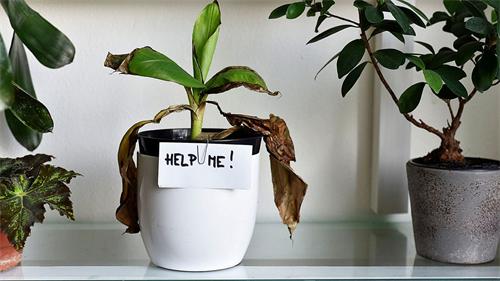
The Rise of “Self-Healing Soil” and What It Means for Home Gardeners
By Oliver Hayes | Updated on May, 2026 | 🕓 Reading time: 14 minutes
Key Highlights
- What is “self-healing soil” and how does it differ from traditional gardening?
- Which methods scientifically support soil restoration, and which show mixed results?
- How long does it take for soil to recover and improve organically?
- How can small-scale gardeners implement self-healing practices on balconies or small yards?
- What signs indicate that soil is actively self-healing?
Over 30 million households in the United States engage in vegetable gardening, and most rely on regular fertilization to maintain yields. However, in 2024, the University of Nebraska’s Nebraska Urban Soil Health Initiative recruited over 300 urban gardeners as “citizen scientists” and found that while more than 70% of participants had a positive attitude toward cover crops, no-till practices, and composting, over 60% had almost no knowledge of biochar amendments—despite biochar being widely promoted as a “soil restoration miracle.”
This made me rethink the concept of soil: it is not just a container that needs to be constantly “fed,” but an ecosystem capable of self-repair.
What Exactly Is “Self-Healing Soil”?
It is neither a new technology nor a magical product. A single teaspoon of healthy soil may contain more microorganisms than the total population of the Earth. “Self-healing” refers to the restoration of the soil network’s ability to regulate itself.
Yet a key fact is often overlooked: a nine-year study in eastern Washington State (2012–2020, four agricultural systems), published in Agriculture in 2025, found that organic systems (with tillage) had 18–92% more soil organic carbon than conventional no-till systems. Surprisingly, after ten years of no-till, soil compaction was almost twice that of conventional plots. The study clearly stated: “The largest differences are between organic and conventional systems, not between tilled and no-till systems.”
The core lies in organic matter inputs and biodiversity, not simply “not tilling.”
Three Symptoms of “Sick” Soil
1. Compaction and crusting: After watering, the surface forms a hard crust. Oregon State University Extension notes that turning wet soil destroys structure and accelerates the loss of organic matter.
2. Declining fertility: Even with consistent fertilizer, yields gradually decrease, indicating the soil’s nutrient retention is declining.
3. Frequent pests and diseases: Recurrent root rot or wilt diseases are linked to imbalanced microbial communities.
The root cause is over-intervention: tilling disrupts fungal hyphal networks, chemical fertilizers suppress microbial diversity, and the lack of cover exposes soil to extreme conditions.
Five Methods for “Self-Healing” Soil
Scientific research is often contradictory, yielding “it depends” conclusions—which is the reality of science.
Method 1: No-Till with Mulch Cover
Principle: Protect fungal hyphal networks and microbial communities.
Supporting and Contradictory Research:
A 2024 citizen science study published in Soil Systems monitored 85 cotton fields in West Texas (2017–2022, 20 growers, 105 management combinations). It found that no-till increased soil organic matter and microbial biomass carbon, but cover crops actually reduced soil organic matter. Eastern Washington’s nine-year study also found that after 10 years of no-till, soil compaction was severe, while tilled organic systems had higher organic carbon.
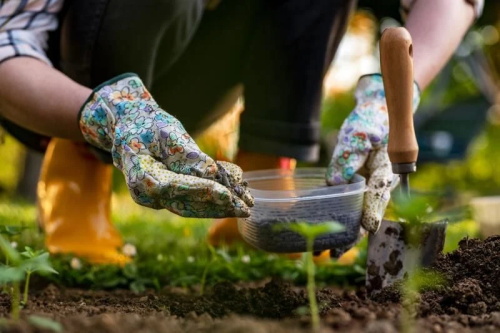
Practical Steps: Stop tilling, add 5–10 cm of organic mulch to the surface, leaving 3–5 cm around plant stems. For severely compacted soil, loosen once with a fork, then cover immediately and avoid further turning.
Uncertainties: No-till works well in humid climates but may lower soil temperature in cold, wet regions. Coastal Washington research showed that no-till works well in sandy soils but performs poorly in silty loams.
Method 2: Kitchen Waste Composting
Principle: Organic matter is the core of soil health; compost provides stable organic matter and diverse microorganisms.
Supporting and Contradictory Research:
A 2022 greenhouse study in Plants (5 treatments, 8 replicates, 32.5 cm pots) showed that 3% vermicompost increased tomato yields by 33%, while 5% only increased by 25%, suggesting an “overdose” effect—high humic acid may inhibit growth. A 2024 Horticulturae study on potted soybeans found 200 g of vermicompost per pot was the minimum for yield promotion.
But a key reversal: A 2023 strawberry study in Horticulturae (5 treatments, 3-year cycle) found that vermicompost only increased yield in the first year (comparable to NPK); in years two and three, yields dropped to the unfertilized control level, significantly below continuous NPK treatment. The reason is nitrogen mineralization mostly occurs in the first year and cannot sustain subsequent growth.
Practical Steps: Homemade compost (greens + browns + moisture + air, 4–6 weeks); vermicomposting suits small spaces (10-liter bin for weekly kitchen waste). Do not expect one application to last multiple years.
Uncertainties: A 2024 Environmental Science and Pollution Research study in Vienna urban gardens (2 gardens, 53 plant samples, 17 soil samples, 22 elements) found that compost reduced heavy metals in radish but increased Cd and Pb in soil extracts. Researchers noted: “Long-term effects need further study.”
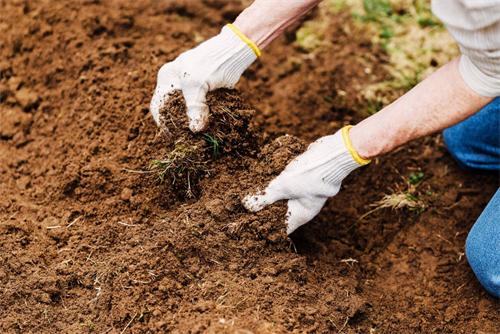
Method 3: Green Manure and Crop Rotation
Principle: Allow soil to rest and rejuvenate during off-seasons; legumes fix nitrogen.
Supporting and Contradictory Research:
A 2025 Agronomy study used the DSSAT model for 7 locations in Nebraska (1991–2020 climate data) and found maize yields were stable; cover crop management had no significant effect on yield, but densities above 250 plants/m² showed diminishing returns. However, the Nebraska Farm Research Network reported that summer cover crops reduced dryland maize yields by 10 bushels/acre in Franklin County and 5 bushels/acre in Clay County, as cover crops consumed soil moisture.
Practical Steps: Sow clover or vetch in autumn, cut or incorporate in spring; for balconies, use miniature versions (inter-pot alfalfa).
Uncertainties: In drought-prone areas, cover crops may compete for water. A 2024 West Texas study even found cover crops reduced soil organic matter, contrary to conventional wisdom.
Method 4: Mycorrhizal Fungi Inoculation
Principle: Arbuscular mycorrhizal fungi (AMF) form symbioses with roots, aiding phosphorus uptake and drought resistance.
Supporting and Limitations:
A 2020 Water study in Spain using saline reclaimed water on tomatoes found AMF colonization never exceeded 16% and did not significantly alter leaf mineral content or water relations. Only by week 17 did it improve stomatal conductance and photosynthesis. Researchers acknowledged: “Low colonization limited larger physiological changes” and “other unstudied mechanisms must be involved.”
Practical Steps: Dip roots in AMF inoculant at transplant; avoid fungicide-containing fertilizers.
Uncertainties: AMF effectiveness is highly variable, depending on soil type, existing microbial communities, and plant species. The final conclusion: “Under commercial field conditions, AMF effectiveness is slow and context-dependent.”
Method 5: Biochar Amendment
Principle: Porous structure provides “refuge” for microbes, sequesters carbon long-term, improves water retention.
Supporting and Contradictory Research:
A 2021 Water study (8 m × 2 m plots, 1 m × 1 m subplots, 4 replicates) found biochar increased peak water content during rainfall, but dry-period water loss was more severe, and overall water content was higher in controls (26.6% vs. 23.4%). In the second year, soil organic carbon, K₂O, P₂O₅, and total nitrogen declined—contrary to long-term carbon sequestration expectations.
A 2020 Canadian study in Agriculture (72 experimental units) found 2% biochar reduced bulk density and increased cation exchange capacity, but water repellency increased with higher doses. CenUSA project conclusions: “Soil quality improved, but yield results were inconsistent.”
Most notably, the Nebraska Urban Soil Health Initiative found that biochar alone (8 tons/acre) reduced zucchini yield by 37%; only when combined with compost and weed barriers was loss avoided. A student study (<3 months, <1L pots) even found no yield increase, speculating that larger space and longer duration are required.
Practical Steps: Always combine with compost; do not use alone; apply 2–5% by soil volume (~1–2 kg per m²); purchase horticultural-grade biochar. First-year yield miracles should not be expected; focus on soil structure improvement.
Uncertainties: Effectiveness depends on feedstock, pyrolysis temperature, soil type, climate, and application rate—almost every variable affects outcomes.
Timeline: How Long Does It Take?
University of Nebraska calculation (2018): Increasing soil organic matter by 1% at a field scale requires approximately 20,000 lbs per acre. Even if 20 tons of cow manure are applied annually, the yearly increase is only 0.065%. Gaining 1% organic matter is thus a “decade-long goal.”
University of Washington Student Farm (2023, 14 plots, 5–20 years of management): Soil organic matter increased by approximately 0.5% per year (R² = 0.25, p << 0.07, marginally significant), while topsoil depth increased by 0.86 cm per year (R² = 0.93, significant). Over 20 years, organic matter rose from around 2% to over 13%. However, there was substantial year-to-year variation, with some years even showing declines. Researchers caution: “Once a new equilibrium is reached, increases tend to stabilize.”
My Observations (personal experience, not scientific data):
- Month 1: Stop tilling, add mulch; worm activity increases.
- First season: Water retention improves; plants perform better during dry periods.
- Year 1: Soil deepens, but external fertilization is still necessary.
- Years 3–5: Fertilizer needs decrease noticeably; post-rain compaction no longer occurs.
- After 5+ years: Soil enters a positive cycle; improvement rate slows.
Honest reminder: After five consecutive years of leaf-litter mulch in my garden, soil tests showed phosphorus and potassium beginning to accumulate excessively—an early sign of nutrient locking. Oregon State University Extension notes: “Single additions of organic matter do not produce long-term effects; organic matter declines due to decomposition.” Soil improvement is not a one-time fix; continuous observation and adjustment are necessary.
Starting Plans for Different Scenarios
Balcony/Pot version: Stop tilling; in spring, add 2–3 cm of vermicompost on top; dip roots in AMF inoculant during transplanting (lower expectations); cover soil during summer. Cost: ~$30–50 per year.
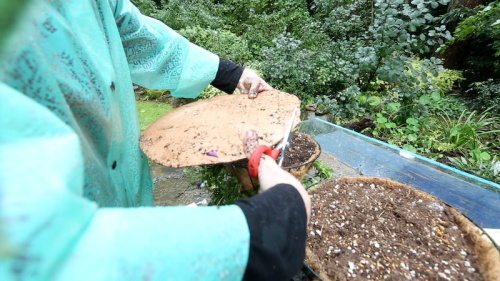
Small Yard version: Create no-till beds (cardboard over weeds + 15 cm compost); sow green manure in winter, cut in spring; leaf-litter mulch in autumn. Cost: ~$50–100 per year.
Beginner Minimalist version: Do only three things—stop tilling, start composting, apply mulch.
Advanced version: Mix 2% biochar with compost (do not use alone); companion planting; establish a worm tower.
Honest Answers to Common Questions
Q1: Can I completely stop fertilizing?
A: Not immediately. The 2023 strawberry study showed vermicompost effectiveness mostly lasted one year, then declined rapidly. Recommendation: reduce synthetic fertilizer by 50% in the first year, replacing with compost; attempt 75% reduction by year three; adjust by year five according to soil tests.
Q2: Can soil as hard as cement be saved?
A: Yes, but it takes time. Washington University research shows that starting from construction backfill, 20 years of regenerative management can increase topsoil from 5 cm to 20 cm. For faster results, loosen once with a fork and immediately cover with organic material.
Q3: What to do in winter?
A: It is the best time. Sow winter green manure, apply thick mulch, and let microbes work undisturbed. Oregon State University notes: fresh organic matter loses about half its mass as CO₂ within 60 days; compost takes 1–2 years to lose half.
Q4: How to tell if soil is self-healing?
A: No lab tests needed. Signs include: no water pooling after rain; easy hand digging; earthworms under stones; well-developed roots with white root hairs; soil color deepening from gray-brown to dark brown or black.
Q5: How is this different from organic gardening?
A: Organic gardening emphasizes avoiding synthetic chemicals; self-healing focuses on restoring the soil’s self-regulation. You can garden organically but harm soil (through excessive tilling), or garden non-organically while building self-healing soil (using moderate mineral fertilizers + protecting microbes).
Conclusion
Soil is one of the Earth’s most complex ecosystems. Any claim of a “one-step fix” should be viewed with skepticism.
I transitioned my garden to “self-healing” management in 2019. Five years later, I can dig by hand, and my tomatoes grow 30% taller than my neighbors’, yet I still test soil annually and add small amounts of mineral fertilizer in some plots. I am still observing which methods work best under my conditions.
Self-healing soil is not a destination, but a relationship—shifting from “controller” to “collaborator.”
References
1. Eaton, C. et al. (2024). The Nebraska Urban Soil Health Initiative. ASHS 2024 Conference Abstracts. 300+ participants, citizen science.
2. Soil Health and Ecological Resilience in Eastern Washington State. (2025). Agriculture, 9-year study (2012–2020), 4 systems.
3. No-Till and Crop Rotation in Cotton Semiarid Regions. (2024). Soil Systems, 85 fields, 20 growers, 2017–2022, 105 combinations.
4. Changes in the Soil–Plant–Water System Due to Biochar Amendment. (2021). Water, 8 m × 2 m plots, 4 replicates.
5. Investigating Biochar Amendment on Podzolic Soil. (2020). Agriculture, 72 experimental units.
6. Baethke, E. (n.d.). Biochar study, <3 months, <1 L pots.
7. AMF on Tomato with Saline Reclaimed Waters. (2020). Water, week 13 colonization data.
8. Biochar and Vermicompost for Tomato Yield. (2022). Plants, 5 treatments, 8 replicates, 32.5 cm pots.
9. Compost Amendment in Urban Gardens. (2024). Environmental Science and Pollution Research, 2 gardens, 53 plant samples, 17 soil samples.
10. Improving Garden Soils with Organic Matter. (2026). OSU Extension EC 1561.
About the Author
Oliver Hayes, MSc – Urban Gardening Systems Researcher & Sustainable Home Writer
Oliver Hayes is a researcher and content writer specializing in urban gardening ecology, balcony food systems, and sustainable home environments. He holds a Master’s degree in Environmental Horticulture from the University of Copenhagen and has collaborated with community garden networks, indoor farming startups, and ecological design organizations across Europe. His work focuses on helping everyday households better understand the hidden environmental factors affecting plant health, indoor biodiversity, and long-term sustainable living practices.
Editorial Transparency Statement
This article is based on a combination of peer-reviewed research, citizen science data, and the author’s direct experience in urban and home gardening. Sources are cited to allow readers to verify scientific claims. Recommendations are provided in good faith, but local conditions may affect outcomes.
Disclaimer
The content of this article is for informational purposes only. It is not intended as professional agricultural advice. Gardeners should conduct their own research and consult local experts when implementing soil management techniques. Results may vary based on climate, soil type, plant species, and other environmental factors.
Recommend for you:
The Cost of Replacement: Why Expensive Furniture Isn’t Always Better
How to Make Thoughtful Choices When Swapping Out Hard-to-Replace Pieces in Your Home
When Predators Vanish: The Hidden Ecological Collapse Behind Urban Pest Outbreaks
Who Disappeared — and Why Cities Are Fighting the Wrong Enemy
Wind, Dust, and the Urban Heat Island Effect: The Three Overlooked Killers of City Balconies
Severely Underestimated Variables in Urban Gardening: Nighttime Temperature Fluctuations
Why Beautiful Rooms Don’t Always Work
The Hidden Psychology Behind Furniture Placement — and How to Fix It