Wind, Dust, and the Urban Heat Island Effect: The Three Overlooked Killers of City Balconies
——Severely Underestimated Variables in Urban Gardening: Nighttime Temperature Fluctuations
By Oliver Hayes | Updated on January 2026 | 🕓 9 minutes
Key Highlights
- Why do balcony plants decline even when watering and sunlight seem correct?
- How does urban wind speed differ from ground-level gardens?
- Can dust really reduce plant photosynthesis and growth?
- Why are nighttime temperatures more dangerous than daytime heat?
- What is the urban heat island effect, and how does it impact balcony gardening?
- Why do high-rise balconies experience stronger environmental stress?
- Which plants are most resistant to wind, heat, and pollution?
- How can balcony gardeners reduce invisible urban environmental stressors?
In urban gardening, many enthusiasts face challenges even before planting the first seed. Most guides and articles on balcony gardening tend to emphasize sunlight, watering, and soil conditions, but they rarely discuss the profound effects of urban microclimates on plant growth—particularly wind speed, dust deposition, and nighttime temperature variations. In reality, these three factors often act as invisible killers, causing balcony plants to wilt, produce poorly, or even die.
The Microclimate Trap of Urban Balconies
Urban balconies are far from being a simple extension of rural gardens. They are influenced by building layouts, artificial materials, and human activities, forming a complex micro-ecosystem. Compared to rural balconies, urban ones are typically warmer, experience poorer air quality, and often have abnormal diurnal temperature ranges. These factors significantly alter the rules of plant survival.
A study in Montreal, Canada, found that due to the urban heat island effect, temperatures in the city center were about 3.4°C higher than in suburban areas, making it difficult for many common tree species to adapt (Stewart et al., 2020). On urban balconies, strawberries often wither prematurely, tomato plants grow weakly, and even resilient plants like pothos may appear listless. Even after carefully checking soil composition, fertilization, and watering frequency, many gardeners cannot identify the cause of plant stress. The hidden culprit is the urban microclimate.
Broadly speaking, “balcony agricultural climate” refers to the combined environmental factors on urban balconies and rooftops that affect plant growth, including temperature, light, water availability, wind speed, and air pollution. These microclimatic conditions vary due to the unique urban environment, requiring targeted cultivation methods to ensure healthy plant growth.
Wind: The Invisible Force on Balconies
Wind is one of the most overlooked factors on urban balconies. Between buildings, the “canyon effect” can multiply wind speed, sometimes by as much as three times compared to open streets. This phenomenon is known as the “Dowling effect” (Zhang et al., 2021).
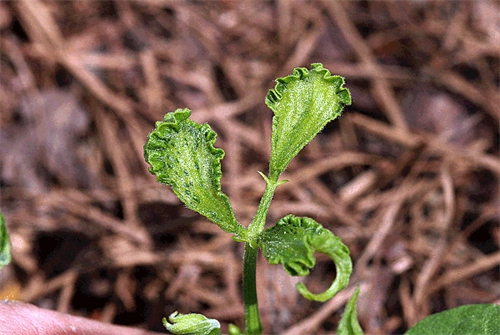
Wind affects plants far beyond physical shaking. Moderate breezes facilitate air circulation, reduce disease occurrence, and promote growth, but accelerated gusts can cause leaf abrasion or mechanical damage. Tender branches may be torn off, and leaves may curl into a “cape-like” shape. Combined with rain, wind can trigger pest and disease outbreaks. High-rise balconies are particularly affected: the NYC Urban Garden Study (2019) reported that average wind speed on upper balconies was 2–3 m/s higher than on ground-level gardens. Zhang et al. (2021) further showed that for every 1 m/s increase in wind speed, the transpiration rate of balcony plants rose by approximately 15%, increasing water stress.
Strategies to mitigate wind damage include planting short, wind-resistant leafy vegetables in high-wind areas and placing larger or climbing plants in sheltered positions. Large plants should have sturdy support frames, and branches should be tied securely. Installing wind-permeable but gust-resistant barriers, such as mesh screens or windbreak nets, can reduce wind speed while maintaining airflow. Additionally, hydroponic or modular planting systems should be reinforced to prevent deformation or damage from strong winds.
Dust: The Microscopic Invader
Dust is another hidden threat to urban balcony plants, and its impact goes far beyond leaf discoloration. Dust can block stomata, interfering with gas exchange and water regulation, ultimately reducing photosynthesis and transpiration efficiency (Rai et al., 2020).
Different dust sources have varying effects: particulate matter from industrial zones, busy roads, or construction sites may contain heavy metals or toxic substances, further stressing plants. Urban studies in Delhi and Mumbai (2018–2021) revealed that dust accumulation on balconies near busy roads was significantly higher than on inner streets or rooftop balconies.
Practical measures to manage dust include regularly cleaning leaves with a soft cloth or spray, avoiding chemical cleaners that could clog stomata, and choosing dust-tolerant species with smooth leaves. Installing protective barriers can also reduce dust deposition. Ignoring dust accumulation over time can lower photosynthetic efficiency, reduce water use efficiency, and ultimately hinder plant growth and productivity.
Urban Heat Island Effect: Unique Thermal Stress
The urban heat island (UHI) effect is common in large cities, characterized by significantly higher temperatures in urban areas compared to surrounding suburban or rural regions. This effect reduces nighttime cooling, creating abnormal diurnal temperature ranges that profoundly affect plant physiological rhythms and growth cycles.
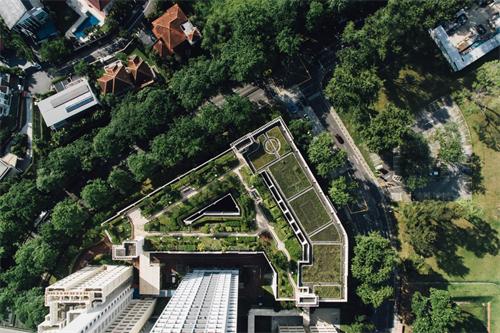
Oke (2021) reported that nighttime temperatures in cities can be 3–5°C higher than in rural areas. Stewart et al. (2020) found that abnormal nighttime temperature variations can delay potted plants’ flowering by 5–7 days. Urban hard surfaces, such as concrete and asphalt, absorb heat during the day and release it slowly at night, turning the city into a massive “thermal retention box.” In peak summer, rooftop surfaces can be 8–10°C warmer than soil surfaces, and air temperature can rise by 3–5°C due to heat radiation. Plants therefore face dual thermal stress: high daytime temperatures and insufficient nighttime cooling.
Mitigation strategies include selecting heat-tolerant species, adding shallow water trays or ceramic pot plantings to provide evaporative cooling, using shading nets or the shade generated by plants themselves, choosing light-colored pots to reduce heat absorption, and ensuring adequate nighttime watering to help plants survive hot nights.
Synergistic Effects of the Three Stressors
Wind, dust, and UHI rarely act in isolation—they can interact synergistically, compounding stress on plants. For instance, high temperatures can intensify leaf heating from dust accumulation, gusty winds may carry more dust onto leaves, and hot, dry conditions can increase plants’ sensitivity to wind (Wang et al., 2022).
High-rise balconies in summer are particularly vulnerable: elevated wind speeds combined with high nighttime temperatures can simultaneously reduce water availability and photosynthetic efficiency, further complicating plant management.
Balcony Plants as Urban Ecological Indicators
Viewing balcony plants as observation points in urban micro-ecosystems allows us to better understand environmental changes. Healthy balcony plants not only beautify surroundings but also improve local microclimates. A 2025 study showed that healthy trees can lower surrounding air temperature by approximately 2.2°C, whereas damaged trees have limited cooling effects, sometimes even causing localized temperature increases of 0.4°C.
By choosing pollution-tolerant and heat- and wind-resistant species, balconies can act as natural air purifiers in cities. The performance of different plants on balconies serves as a “biological indicator” of urban ecological health, helping residents perceive subtle environmental changes and pressures.
Summary and Recommendations
Failures in urban balcony gardening are often not due to gardeners’ mistakes or lack of skills, but to overlooked urban microclimatic factors. Wind, dust, and UHI constitute the three invisible stressors affecting plant growth, either individually or synergistically.
Recommended strategies include:
1. Wind management: Select wind-resistant plants and install support frames and breathable windbreaks.
2. Dust control: Regularly clean leaves, choose dust-tolerant species, and use protective barriers if necessary.
3. Urban heat mitigation: Select heat-tolerant species, provide evaporative cooling, use shading and light-colored containers, and ensure sufficient nighttime watering.
Understanding the influence of urban microclimates transforms balcony gardening from a hobby into a component of urban ecological management. Properly addressing wind, dust, and heat stress not only improves plant survival and productivity but also contributes to a greener, healthier urban living environment.
FAQs
1. Are rooftop gardens more stressful for plants than lower balconies?
In many cases, yes. Rooftops are exposed to stronger sunlight, higher surface temperatures, and greater wind intensity. During summer, rooftop materials such as asphalt and concrete can store heat during the day and slowly release it at night, preventing plants from cooling down properly.
2. Can air pollution permanently damage edible balcony plants?
Long-term exposure to particulate pollution may reduce plant productivity and contaminate leaf surfaces. While occasional exposure is usually manageable with regular washing, balconies located near highways, industrial zones, or heavy traffic areas may accumulate pollutants more rapidly. Leafy vegetables are generally more vulnerable because their edible surfaces are directly exposed.
3. Why do some plants survive on one balcony but fail on another in the same building?
Even within the same building, microclimates can vary dramatically depending on balcony orientation, height, surrounding walls, airflow channels, and reflective surfaces. A south-facing balcony on the 20th floor may experience completely different heat and wind conditions compared to a shaded lower-floor balcony.
4. What are the best beginner plants for difficult urban balconies?
Hardier species such as rosemary, thyme, snake plants, pothos, lavender, mint, and certain dwarf peppers tend to tolerate urban stress better than delicate fruiting crops. Native plants adapted to local climates are often more resilient as well.
5. How often should balcony plant leaves be cleaned in dusty cities?
In heavily polluted or high-traffic urban environments, gently rinsing or wiping leaves once every 1–2 weeks can significantly improve photosynthesis and plant health. Avoid using detergents or oily leaf-shine products, as these may block stomata.
6. Does watering plants at night help during heat waves?
Carefully timed evening watering can help reduce heat stress by allowing roots to absorb moisture before the hottest part of the following day. However, constantly wet soil overnight may encourage fungal disease, so proper drainage remains important.
References
1. Delhi & Mumbai Urban Studies. (2018–2021). Assessment of particulate matter deposition on urban balcony plants. Unpublished urban environmental monitoring data.
2. NYC Urban Garden Study. (2019). High-rise balcony wind impacts on plant growth. New York City Urban Garden Research.
3. Oke, T. R. (2021). Urban climate: Understanding the heat island effect. Routledge.
4. Stewart, I., Oke, T. R., & Krayenhoff, E. S. (2020). Urban heat island and night-time temperature effects on plant phenology. Urban Climate, 31, 100571.
5. Wang, Y., Li, H., Zhang, J., & Chen, F. (2022). Multi-factor modeling of urban balcony microclimate effects on plant growth. Sustainable Cities and Society, 82, 103890.
6. Zhang, Q., Li, Y., & Chen, X. (2021). Influence of wind speed on transpiration rates of balcony plants in urban environments. Building and Environment, 198, 107891.
About the Author
Oliver Hayes, MSc – Urban Gardening Systems Researcher & Sustainable Home Writer
Oliver Hayes is a researcher and content writer specializing in urban gardening ecology, balcony food systems, and sustainable home environments. He holds a Master’s degree in Environmental Horticulture from the University of Copenhagen and has collaborated with community garden networks, indoor farming startups, and ecological design organizations across Europe. His work focuses on helping everyday households better understand the hidden environmental factors affecting plant health, indoor biodiversity, and long-term sustainable living practices.
Editorial Transparency Statement
This article is intended for educational and informational purposes only. The content is based on a combination of published scientific literature, urban environmental research, and practical horticultural observations. Every effort has been made to ensure factual accuracy and balanced interpretation of the available evidence at the time of publication.
The recommendations provided in this article do not promote specific commercial products or sponsored services. Research references were selected based on relevance to urban ecology, balcony gardening, and environmental stress factors affecting plant health.
Disclaimer
Urban gardening conditions vary significantly depending on local climate, building structure, air quality, balcony orientation, and maintenance practices. The strategies discussed in this article may not produce identical results in every environment.
This content should not be considered professional agricultural, environmental engineering, or structural safety advice. Readers should assess their own growing conditions and consult qualified local professionals when necessary, particularly regarding balcony load limits, irrigation systems, or severe environmental pollution concerns.
Recommend for you:
Why So Many Home Designs Become Unbearable After Three Years
Layout, Not Furniture, Is What People Regret Most — And Why “We’ll Fix It After Moving In” Rarely Works
Edible Microgreens 2.0: Indoor Nutrition Trends You Haven’t Tried
Microgreens cultivation is about precise timing, environmental control, and post-harvest management—not some urban pastoral fantasy.
Why I Stopped Choosing “Luxury-Looking” Materials
How Real-Life Wear and Daily Use Taught Me That Beauty Doesn’t Always Equal Comfort
Smart Homes That Actually Reduce Stress — What the Research Says
The most common promise smart homes sell is “convenience” — doing a little less, so you can save a little more mental energy.