
The Cost of Replacement: Why Expensive Furniture Isn’t Always Better

——How to Make Thoughtful Choices When Swapping Out Hard-to-Replace Pieces in Your Home
By Nathaniel Brooks | Updated on May 2026 | 🕓 7–8 minutes
Key Highlights
- How replacement cost differs from purchase price
- What is the hidden risk of oversized or custom furniture?
- How can modular design reduce future relocation stress?
- What practical checklist helps avoid long-term design mistakes?
Many people equate expensive furniture with high-quality furniture. What truly matters, however, is not the price tag but the “replacement cost” and long-term usability of the piece.
When buying furniture, people often fall into a simple yet misleading trap: expensive furniture must be good, cheap furniture must be bad. Social media is flooded with “trending furniture recommendations” and branding campaigns that make us unconsciously believe that spending more money will automatically make a home feel more stylish and comfortable.
Yet, real-life experience tells us something different: price alone is not a reliable measure of value. In fact, furniture that is difficult to replace often deserves the most careful consideration. When a piece is hard to replace, it can remain with us for many years, affecting how we use our space, our daily habits, and even our emotional comfort. Choosing poorly can result in a cost of regret far higher than the initial purchase price.
I am not here to tell you “never buy expensive furniture,” nor to create anxiety. Instead, I aim to provide a rational framework for making sustainable, long-term furniture decisions—especially when facing constraints such as budget, material choices, or spatial limitations.
Hard-to-Replace Furniture: The Hidden Cost You Might Overlook
“Hard-to-replace” doesn’t always mean expensive. A piece becomes difficult to replace when its size, material, style, or function is so specialized that it almost exists solely for your current space and life.
Consider these examples:
- Built-in cabinets that fit perfectly from floor to ceiling.
- Oddly shaped bookshelves tucked under a staircase.
- Vintage carved wooden beds or hand-painted ceramic dining tables with bold colors.
- Smart home-integrated electric beds or oversized L-shaped sofas that cannot be rearranged.
- Furniture made from rare hardwoods or stone that require special care.
These pieces bring hidden costs when moving, remodeling, or redecorating. They may require professional movers, specialized equipment, or extra manpower—and in some cases, they may simply not fit into a new space. If the style is too personalized, finding a replacement can be challenging. Disposal costs, new purchases that must adapt to old traces, and near-zero resale value are all real financial and emotional consequences.
The Hidden Burden of High Prices
Imagine buying a luxurious custom leather sofa perfectly sized for your living room. Five years later, a child is born, and you need a more durable, easy-to-clean fabric sofa, or you want to rearrange the layout. Suddenly, that expensive sofa becomes a problem:
- Its size may prevent it from leaving the room via the door, requiring costly window hoists.
- Its unique leather may have no market resale value.
- The original living room layout designed around this sofa now constrains your life choices.
In short, paying more money does not guarantee peace of mind—it may even increase your headaches.
Why Price Alone Isn’t a Reliable Indicator
Expensive ≠ Durable ≠ Adaptable
The modern furniture market is full of price fluctuations that do not reflect actual durability or usability. A high price may include brand premiums, designer reputation, import tariffs, or rare materials, rather than structural quality.
For example:
- A costly Italian minimalist chair may compromise comfort for aesthetic elegance.
- A famous designer sideboard may use standard connectors no stronger than those of a generic brand.
The real value lies in emotional and functional alignment
Furniture should primarily serve your life, not your vanity. A comfortable reading nook suited to your habits or an adjustable modular bookshelf that grows with your children is far more valuable than an expensive but impractical wine cabinet. Functional flexibility determines whether a piece can “grow” with you.

Three Key Principles for Choosing Hard-to-Replace Furniture
1. Prioritize Durability and Versatility
Material stability: Check core construction. Reliable craftsmanship and timeless style matter more than fleeting luxury. For example:
- Solid oak or walnut dining tables can last decades with proper care.
- Modular bookshelves can adapt to different rooms or layouts.
Style longevity: Avoid excessively trendy or strongly styled designs. Neutral colors, clean lines, and natural textures usually have a longer aesthetic lifespan.
Future-proof sizing: Leave some breathing space. Avoid filling every inch of your home with furniture; anticipate future adjustments.
2. Rationally Assess Replacement Difficulty
Before buying, conduct a “future replacement simulation”:
- Dimensions and weight: Will the furniture fit through doors and elevators? Will moving or rearranging it be practical?
- Modularity and replaceability: Can it be dismantled, or does it require moving as a whole? Can a similar replacement be easily sourced in the future? Is maintenance or resale feasible?
- Independence: Does it overly rely on specific room conditions (wall color, lighting, flooring)?
3. Balance Emotional Value with Practical Value
Do not pay for price alone. Ask yourself:
- What core function does this furniture enhance?
- How often will I use it daily?
- Is maintenance or repair convenient?
Long-term frequency of use and daily satisfaction reflect true value. Furniture with high emotional value but difficult replacement—like an heirloom desk or a sentimental dining table—can justify investment. Otherwise, chasing expensive pieces while ignoring practicality only adds future burdens.
Example Decisions
1. Custom Solid Wood Dining Table vs. Modular Expandable Table
- Custom table: Unique, high-quality feel, but hard to move and limits future rearrangement. It may feel oversized or lonely as family size changes.
- Modular table: Flexible assembly and adjustable size, easy to move, adapts to various spaces. May lack “one-of-a-kind” flair but maximizes long-term usability and adaptability.
2. Luxury Single Sofa vs. Movable Modular Sofa
- Luxury L-shaped sofa: Elegant, but occupies a lot of space and is difficult to move. Damage to one section diminishes the entire piece.
- Modular sofa: Can be split, rearranged, or moved easily. Sections can be replaced individually.
In both cases, the modular option may have slightly lower initial prestige but offers higher long-term practical value. The luxury option dominates space; the modular sofa collaborates with your lifestyle. Its flexibility and sustainability advantages become apparent over time.
Practical Steps: A Rational Furniture Decision Guide
Create a Simple “Replacement Cost” Checklist:
Before purchasing, evaluate your chosen furniture on:
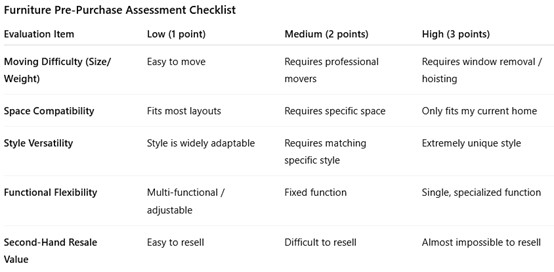
Note: The higher the total score, the higher the replacement cost—so purchase with extra caution.
Follow the “modular, disassemblable” principle:
Whenever possible, select furniture that can be dismantled, combined, or adjusted. This ensures long-term control over your space rather than temporary convenience.
Beware of trends, focus on essentials:
Avoid blindly following viral designs or fleeting trends. Return to furniture’s core purpose—sitting, sleeping, storage—and find reliable, flexible solutions. Don’t pay for luxury decoration alone.
Closing Thoughts
Choosing furniture, especially hard-to-replace pieces, is a conversation with your future self. It tests not only your aesthetic sense but also foresight and life wisdom.
A truly good piece of furniture is not necessarily the most expensive—it is the one that can grow with your life, quietly reliable like an old friend. It accommodates the changes in your household rather than becoming a beautiful but cumbersome burden.
Invest wisely in functionality, adaptability, and longevity, and you’ll find your home more comfortable and flexible than any luxury label could promise.
FAQs
1. Expensive furniture is always higher quality—right?
Not necessarily. Price often reflects brand, design, or materials, but not always durability, flexibility, or long-term usability. Some expensive pieces are harder to maintain or adapt than simpler, well-designed alternatives.
2. Is modular furniture always the better choice?
Not always. Modular furniture is usually more adaptable, but it may lack the emotional presence or craftsmanship of fixed, custom pieces. The best choice depends on whether you prioritize flexibility or permanence in that space.
3. What is the biggest mistake people make when buying furniture?
The most common mistake is optimizing for the current room only instead of future scenarios—such as moving, family changes, lifestyle shifts, or layout redesigns.
4. Does high emotional value justify expensive, non-flexible furniture?
Sometimes, yes. If a piece carries strong emotional or symbolic meaning (family heirloom, long-term anchor piece), higher replacement cost can be acceptable. The key is being intentional—not accidental.
5. How do I avoid regret after buying furniture?
Focus less on “perfect aesthetics” and more on:
- Flexibility
- Maintenance difficulty
- Future adaptability
- Real daily usage frequency
Regret usually comes from mismatch between lifestyle change and physical constraints, not appearance.
References
1. Ashby, M. F. (2018). Materials and Design: The Art and Science of Material Selection in Product Design. Butterworth-Heinemann.
2. Sweeney, T., & Harnden, A. (2021). Sustainable Furniture Design: Principles and Practices. Routledge.
3. Papanek, V. (2019). Design for the Real World: Human Ecology and Social Change. Thames & Hudson.
4. McDonough, W., & Braungart, M. (2010). Cradle to Cradle: Remaking the Way We Make Things. North Point Press.
5. Salen, K., & Zimmerman, E. (2020). The Design of Everyday Things. MIT Press.
About the Author
Nathaniel Brooks, BSc – Home Ecology Analyst & Sustainable Living Research Writer
Nathaniel Brooks is a home ecology analyst and independent writer specializing in indoor ecosystems, sustainable household practices, and environmental behavior research. He holds a degree in Environmental Science from the University of Edinburgh and has worked alongside urban agriculture programs, green building consultants, and educational sustainability platforms. His articles combine scientific research with practical observations to help readers create healthier, more resilient homes and gardening spaces.
Editorial Transparency Statement
This article is based on practical design principles, long-term usability considerations, and established research in sustainable materials and product design. No commercial furniture brands were used to influence recommendations. The focus is on general decision-making frameworks rather than specific product endorsements.
Disclaimer
This content is for informational and educational purposes only. Furniture performance and suitability may vary depending on individual household conditions, materials, and regional differences. Readers should consider personal circumstances and, when necessary, consult professional interior designers or furniture specialists before making major purchasing decisions.
Recommend for you:

AI Gardening Assistants: Can Robots Actually Save Your Plants?
The training data for mainstream AI plant diagnosis models mostly comes from “standard healthy samples” or “typical disease samples.”
The Cost of Replacement: Why Expensive Furniture Isn’t Always Better
How to Make Thoughtful Choices When Swapping Out Hard-to-Replace Pieces in Your Home
Wind, Dust, and the Urban Heat Island Effect: The Three Overlooked Killers of City Balconies
Severely Underestimated Variables in Urban Gardening: Nighttime Temperature Fluctuations
The Rise of Modular Furniture for Short-Term Urban Living
The Furniture Dilemma of Urban Nomads: Is Modularity a Solution, or Just Another Compromise?