AI Gardening Assistants: Can Robots Actually Save Your Plants?
By Clara Whitfield | Updated on May, 2026 | 🕓 14 minutes
Key Highlights
- Can AI reliably diagnose dying plants at home?
- What are the limits of AI models trained on standard plant datasets?
- How can humans and AI collaborate to improve plant survival rates?
- Which situations require direct human intervention over AI advice?
- How to build a personal plant health record to train AI locally?
The Silence of Training Data Majority
The training data for mainstream AI plant diagnosis models mostly comes from “standard healthy samples” or “typical disease samples.” The PlantVillage dataset, widely used by researchers worldwide, contains over 54,000 labeled leaf images covering 10 crops. Under ideal lighting conditions, top-performing models can achieve an accuracy of 98.32% (PDD-DL framework, 2024, based on 42,860 field images).
The problem is: the symptoms of dying plants are rarely “standard.”
A real case comes from a maize farmer in Kisumu, Kenya. During the 2023 rainy season, the farmer used the Plantix app to diagnose curled leaves. The system identified “drought stress” and recommended increased irrigation. But when the farmer peeled back the leaf sheath, they found the true culprit: fall armyworm larvae boring at the base of the stem, disrupting water transport. The leaf curling was mechanical damage, not water deficiency. The JETIR 2025 Plantix functional evaluation report showed that in field trials, the app achieved about 88% diagnostic accuracy for major crops like maize, but the misdiagnosis rate increased significantly in early infections or compound stress scenarios.
Symptom Overlap and the “Single-Cause Fallacy”
AI excels at answering “what disease is this?” but the problem with dying plants is often “compound failure.”
Take the most common yellowing of leaves as an example:
- Water deficiency → uniform yellowing of old leaves
- Nitrogen deficiency → yellowing of old leaves but with green veins
- Root rot → whole-plant yellowing with wet soil
- Spider mites → fine webs on the leaf undersides
- Compacted soil → water flows along the pot edge after watering
- Fluoride toxicity → scorched leaf tips (common in areas with high fluoride in tap water)
These visual symptoms can look very similar, but the causes and treatments are completely different. Even more challenging, dying plants often face multiple simultaneous assaults—overwatering → root rot → fungal infection → fungus gnats → larvae feeding on roots → ultimately presenting as the single symptom of “yellow leaves.”
A 2024 review in Frontiers in Plant Science pointed out that existing deep learning models “do not sufficiently address computational trade-offs in resource-limited agricultural environments and have insufficient ability to handle complex backgrounds and incomplete data.” Laboratory 98% accuracy does not translate to 98% accuracy in your living room.
The Invisible Killers: Lighting and Angles
Research using the PDD-DL framework shows: under standard lighting, model accuracy is 92%; blurry images drop it to 78%, angle deviation to 80%, and low-light conditions to only 85%. A blurry photo snapped at dusk in a panic is much less reliable than you might think.
Three Things AI Really Excels At: Redefining the Value of the Tool
1. Historical Trend Tracking, Not Instant Diagnosis
Cheap soil moisture sensors (around $3–5) paired with a phone can map the environmental curve over the past 14 days. In 2023, UC Berkeley’s AlphaGarden project managed 32 plants (cabbage, cucumber, beet, cilantro, etc.) in a 3m × 1.5m mixed greenhouse using a gantry robot, cameras, and soil sensors. Across four 60-day cycles, AlphaGarden achieved plant coverage and diversity comparable to professional gardeners while saving 44% water.
The advantage of AlphaGarden lies not in “diagnosing what disease a leaf has,” but in continuous monitoring of trends—e.g., noticing “soil moisture did not drop below 60% within 48 hours after watering every Tuesday,” which can silently kill plants. For ordinary home gardeners, a pen and a calendar can replicate 80% of AlphaGarden’s functionality.
2. Pattern-Matching Screening, Only When Symptoms Are Typical
AI performs excellently on high-recognition, single-factor problems:
- Powdery mildew with white powdery coating
- Dense clusters of aphids
- Standard nitrogen deficiency with uniformly yellow old leaves
- Spider mites with fine webbing and pinpoint discoloration on the leaf underside
These symptoms are visually distinct and usually caused by a single factor. AI can act as a first filter efficiently. But even in these “simple” cases, you must flip leaves and check the stem base—AI cannot see hidden angles where the real cause may be lurking.
3. Execution Discipline and “Intervention Brakes”
Humans, when anxious, tend to over-intervene—watering, fertilizing, repotting, spraying pesticides, and pruning within 24 hours is like performing surgery on a weakened plant without anesthesia. Sometimes the core value of AI is “preventing you from acting”: “The soil moisture hasn’t dropped below 80% in the past 3 days. Please pause watering.” In emotional decision-making scenarios, such data-driven intervention brakes can be more valuable than diagnosis itself.
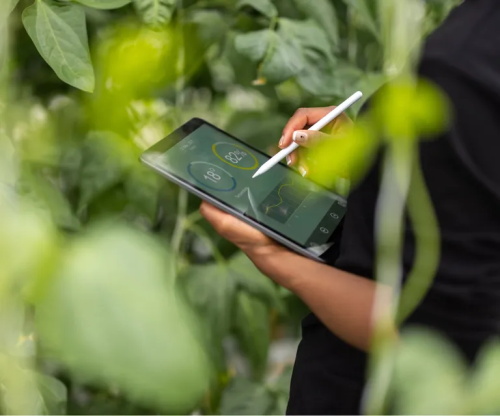
The “Plant Emergency Room” Human-AI Collaboration Framework: A Global 72-Hour SOP
The following procedure does not depend on any specific app or paid product.
Golden 72-Hour Emergency Standard Operating Procedure
0–15 Minutes: AI Initial Screening (Cross-Tool)
- Photograph in natural light: whole plant, leaf front, leaf back, stem base, soil surface
- Upload to 2–3 free tools (Plantix, Google Lens, iNaturalist)
- Record each tool’s Top 2 diagnoses; do not adopt any single conclusion directly
- If different apps give drastically different results, this is itself a warning—symptoms are atypical
15–45 Minutes: Human Five-Sense Verification (Irreplaceable)
- Touch: Check soil 3cm below the surface. Is it compacted? Overly wet? Powdery?
- Lift: Assess pot weight to estimate water content. Too light = too dry; too heavy = waterlogged
- Smell: Check for acidic/rotten odors in roots/soil (anaerobic bacterial infection) or moldy smell
- Observe: Leaf undersides, stem base, drainage holes—AI often misses these “blind spots”
- Check: Environmental changes in the past 7 days. Heater on? Air conditioner moved? Continuous rainy days? Did anyone move the plant?
45–60 Minutes: Cross-Verification Matrix
- Only act when AI’s Top 2 diagnoses overlap with human observations
- When conflicting, default to human tactile and olfactory senses
- AI cannot detect soil odors, smell root rot, or feel pot weight
After 60 Minutes: Minimum Intervention Principle
- First, remove the harm source: stop watering, move out of direct sunlight, isolate diseased plants
- Observe for 24–48 hours
- Then consider treatment: fertilization, spraying, repotting
- When in doubt, “doing nothing” is often safer than doing the wrong thing
Four Dying Scenarios: Human-AI Division of Labor
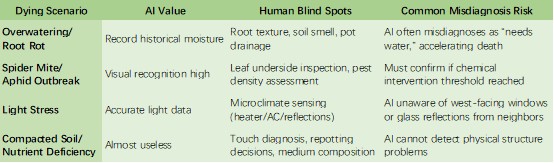
When to Completely Ignore AI Advice
Compensation Period Trap
External symptoms lag behind internal damage. When leaves are extensively yellow, roots may already be 70% rotted. AI based on leaf images is meaningless—it sees three-day-old results, not the current truth.
A grower in São Paulo, Brazil, used an AI app to diagnose cocoa pod rot. The system recommended increasing ventilation and reducing watering, but field inspection revealed the real problem: compacted soil drainage layers causing waterlogging. Increasing ventilation had no effect on underground standing water. This mixed-result case (partial improvement but fundamental issue unresolved) was noted in ICRISAT’s Plantix evaluation report: local weather and soil conditions required manual adjustment of AI recommendations.
Microclimate Blind Spots
AI cannot detect if your plant is above a heater, in front of an AC vent, or exposed to secondary western sun from a neighbor’s glass. A 2022 MDPI Agronomy analysis of multiple plant diagnosis apps’ user reviews highlighted complaints such as “wrong weather report,” “cannot recognize my crop,” and “even high-resolution cameras cannot capture clear images”—systematic problems.
Multiple Causes and “Algorithmic Purity”
AI tends to output a single highest-probability diagnosis. But dying plants usually face a chain reaction: overwatering → root rot → fungal infection → yellow leaves. Treating only the “yellow leaves” without addressing the root rot is equivalent to ineffective treatment.
A 2024 Computers and Electronics in Agriculture study on the IDSDS system found that multi-modal diagnosis integrating multi-spectral indices significantly outperformed single RGB image analysis. Random Forest achieved ~99% accuracy (AUC=1.0) across seven drought stress levels. This shows that relying solely on a single-camera app at home inherently leaves an information gap.
My Personal Failure Case
Last fall in London, I followed an app’s recommendation to add nitrogen fertilizer to a dying fern, not realizing the real problem was overly dry medium + salt accumulation (from long-term tap water use; London water is very hard). The plant died completely within 48 hours. In hindsight: the AI’s “nitrogen deficiency” diagnosis looked visually reasonable (uniform yellowing), but it could not detect soil EC or know I had been watering with untreated tap water for three months.
This taught me a personal rule: when AI recommends “adding” something, first ask—have I eliminated the source of harm?
From “Being Saved” to “Self-Rescue”: Building Your Personal Plant Health Record
Why does AI get better the more you use it? Because you are training it.
Every correction of an AI misdiagnosis builds a more accurate local model for next time. But this doesn’t happen automatically—you must consciously record.
Zero-Cost Record System
Use any spreadsheet to create a “plant medical record”:
- Photo Timeline: Take weekly photos from the same angle to establish a visual baseline
- Environmental Log: Record watering dates/amounts, fertilization dates/types, light changes, plant location changes
- Intervention Record: What was done, why, expected outcome
- Result Feedback: Status changes after 7 days, 14 days, 30 days
After 6 months, your intuition about your plants will surpass any general-purpose app.
Community as a “Human Second Opinion”
Experienced human eyes are more valuable than algorithms:
- Reddit r/plantclinic (global users, fast responses but variable quality)
- Local university agricultural extension stations (e.g., U.S. Cooperative Extension Service, usually free email consultations)
- Local gardening clubs (face-to-face diagnosis with actual plant samples)
Conclusion: Robots Are Not Gardeners, They Are Stethoscopes
AI is the stethoscope of the gardener, amplifying symptoms and providing data but unable to replace human touch, questioning, and experience-based judgment.
The best AI gardening assistant is your intuition database built after 100 failures. AI just helps you retrieve an index of that database faster.
“The robot can tell you what it sees. Only you can tell what you feel. Save the plant with both.”
FAQs
Q1: Can AI apps save my dying plants?
A: AI apps can help identify clear, single-factor issues (like spider mites or powdery mildew), but for plants experiencing compound stresses, AI alone is often insufficient. Human observation of soil, roots, and environmental changes is critical.
Q2: How can I use AI effectively for home gardening?
A: Treat AI as a monitoring tool and first filter. Use multiple apps, track historical data, and always verify with touch, smell, and environmental checks. AI is most valuable for trend monitoring and alerting you to potential chronic issues.
Q3: When should I ignore AI advice?
A: If the plant’s internal damage has progressed beyond visible symptoms (e.g., extensive root rot), or if AI advice conflicts with your tactile and olfactory assessment, prioritize human judgment.
Q4: How do I make AI “learn” my plant environment?
A: Maintain a personal plant health record with photos, environmental logs, interventions, and results. Over time, this will improve your intuition and refine any AI-based advice.
References
1. Parikh, R. (2023). AlphaGarden: Leveraging Simulation in Developing an Autonomous Real-Sim-Real Pipeline for Polyculture Gardening [Master's thesis, EECS Department, University of California, Berkeley]. UCB/EECS-2023-120. [https://www2.eecs.berkeley.edu/Pubs/TechRpts/2023/EECS-2023-120.html]
2. Pramod Kumar, M., & Lavanya, A. L. (2025). A Functional Evaluation Of Plantix: An AI-Based Mobile Application For Crop Disease Management. International Journal of Creative Research Thoughts (IJCRT), 13(2). [https://www.ijcrt.org/papers/IJCRTBJ02023.pdf]
4. MDPI Agronomy. (2022). Evaluating Plant Disease Detection Mobile Applications. Agronomy, 12(8), 1869. [https://www.mdpi.com/2073-4395/12/8/1869](https://www.mdpi.com/2073-4395/12/8/1869)
5. PMC. (2024). AI based real time disease diagnosis in plants using deep learning driven CNNs. PMC12868782. [https://pmc.ncbi.nlm.nih.gov/articles/PMC12868782/]
6. Frontiers in Plant Science. (2024). Revolutionizing agriculture with artificial intelligence: plant disease detection methods, applications, and their limitations. Frontiers in Plant Science, 15, 1356260. [https://www.frontiersin.org/journals/plant-science/articles/10.3389/fpls.2024.1356260/full]
7. ScienceDirect. (2024). Plant disease recognition in a low data scenario using few-shot learning. Computers and Electronics in Agriculture. [https://www.sciencedirect.com/science/article/pii/S0168169924002035]
8. Phys.org. (2025, August 29). AI turns simple plant images into early drought warnings. [https://phys.org/news/2025-08-ai-simple-images-early-drought.html]
9. Hill Country Water Gardens. (2025, June 26). AI Angst: How AI Might Be Wrong & You Pay the Cost. [https://hillcountrywatergardens.com/ai-angst-how-ai-might-be-wrong-you-pay-the-cost/]
About the Author
Clara Whitfield, MA – Biophilic Design Consultant & Eco-Lifestyle Content Specialist
Clara Whitfield is a consultant and writer focused on biophilic interior design, ecological home trends, and sensory-centered living environments. She earned her Master’s degree in Sustainable Design from the University of Manchester and has contributed to residential wellness projects, eco-conscious furniture brands, and environmental education initiatives. Her writing explores how natural systems, material choices, and urban living conditions shape both household comfort and environmental resilience.
Editorial Transparency Statement
This article was independently researched and written by the author. Data, references, and case studies are cited to ensure factual accuracy. No AI gardening apps, products, or companies influenced the content or recommendations.
Disclaimer
The information in this article is for educational and informational purposes only. It is not a substitute for professional horticultural advice. Readers should use their judgment when applying AI tools or interventions to plants. The author and publisher assume no responsibility for any outcomes resulting from the use of the methods or advice described.
Recommend for you:

When You Design a Child’s Space, You Design Their Behavior
Why So Much “Children’s Furniture” Fails in Real Homes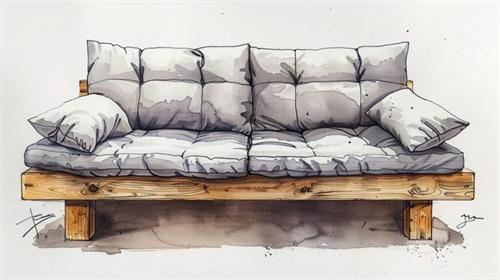
When “Eco-Friendly” Becomes High-Maintenance: The Hidden Aging Patterns of Popular Home Materials
How Real Homes Accelerate Wear, and Why Some Sustainable Materials Demand More Care Than You Expect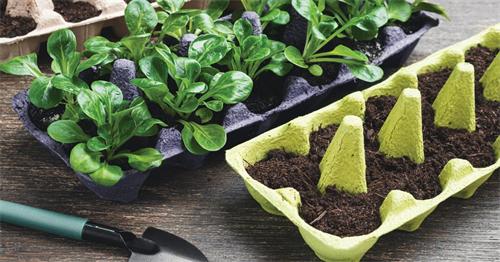
Edible Microgreens 2.0: Indoor Nutrition Trends You Haven’t Tried
Microgreens cultivation is about precise timing, environmental control, and post-harvest management—not some urban pastoral fantasy.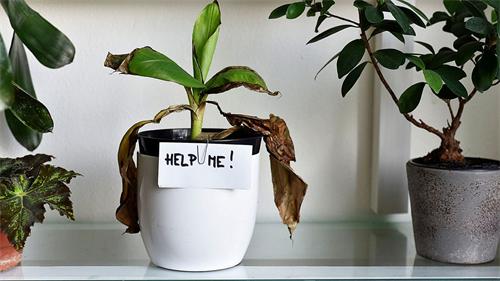
Why “Beginner-Friendly” Plants Fail More Often Than Delicate Ones
Succulents, pothos, snake plants, money trees—these species are repeatedly marketed as easy, low-maintenance, and nearly impossible to kill.