
The Secret Social Lives of Plants
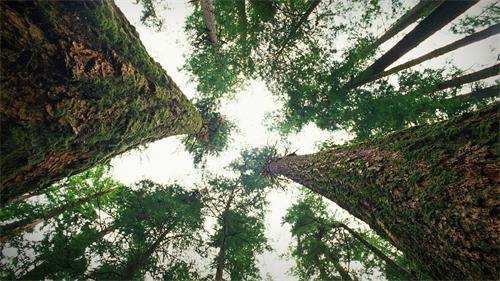
——How Plants Influence Ecosystem Power Through Resource Competition, Chemical Warfare, and Underground Networks
By Oliver Hayes | Updated on March 2026 | 🕓 12 minutes
Key Highlights
- Are forests truly cooperative communities—or hidden battlegrounds for resources?
- How do invasive species reshape soil ecosystems to dominate native plants?
- Under what environmental conditions do plants begin to “cooperate” instead of compete?
- Why are biodiverse ecosystems more stable than monocultures?
- What can home gardeners learn from plant competition and underground ecology?
- Can overly tidy gardens unintentionally weaken ecosystem resilience?
The world of plants has never been quiet. We tend to see forests as peaceful backdrops and lawns as obedient green carpets. But beneath the surface—out of sight—an ongoing struggle over resources, territory, and survival power never stops.
The Secret Social Lives of Plants: Resources, Power, and Underground Negotiations
I. Plants Are Never Just “Individuals”
If you ask someone what a plant is, they might describe leaves, flowers, or trunks—the visible parts. But at least half of a plant lives underground.
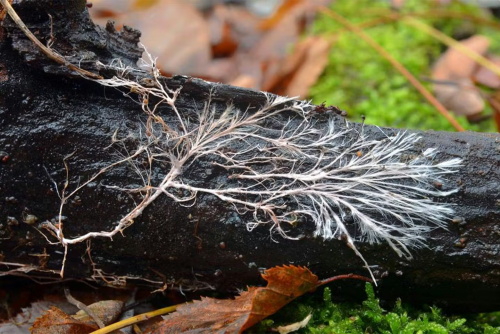
In a seemingly tranquil temperate forest, a towering Douglas-fir produces sugars daily through photosynthesis. Beneath its roots, however, hundreds of kilometers of fungal hyphae weave through the soil, connecting it to neighboring trees. This network has been romantically labeled by the media as the “Wood Wide Web.”
But here’s the question:
Is this network designed for cooperation—or for control?
The truth in agricultural fields is even starker. When you plant a field of corn, the real battle is not between corn and insects, but between corn and corn. Their root systems overlap and entangle underground, competing for every drop of water and every grain of nitrogen. Research shows that when plants detect nearby competitors, they invest more resources into root growth—not to collaborate, but to outcompete and capture resources first.
So which is more common among plants: cooperation or competition?
The answer is not simple. But one thing is certain: plants are never isolated individuals. They are compelled participants in an endless negotiation over resources.
II. Underground Networks: Resource Sharing or Resource Control?
The name Suzanne Simard has become almost synonymous with underground forest networks. In 1997, she published a landmark experiment showing that carbon isotopes could move from paper birch trees to shaded Douglas-fir seedlings through fungal connections. The discovery was featured in Nature and popularized under the name “Wood Wide Web.”
In her bestselling book Finding the Mother Tree, Simard further developed the concept of “mother trees”—older trees that allegedly prioritize sending carbon and nutrients to related seedlings, even passing on “wisdom” before dying.
It sounds like a forest version of Avatar, doesn’t it?
The problem is that the scientific community has grown increasingly uneasy with these romantic interpretations.
In 2023, three mycorrhizal ecologists published a sharp critique, arguing that popular presentations of the “mother tree” theory had drifted beyond the evidence. Their conclusions were blunt:
- Is there strong evidence that mycorrhizal networks universally connect forest trees? Insufficient.
- Do resources reliably flow through networks to benefit seedlings? Limited support.
- Do older trees preferentially help their relatives? No peer-reviewed published evidence confirms this.
So what are these underground networks actually doing?
Another study offers a more nuanced perspective. Using fluorescently labeled phosphorus, researchers traced nutrient movement between two plants. They found something striking: when the fungal partners connecting plants were more distantly related, the fungi themselves grew more vigorously, but nutrient transport through the network decreased—and plants benefited less.
What does this imply?
The underground network may not function as a communal internet. It may operate more like a marketplace. Fungi act as intermediaries, allocating resources among multiple plant “clients,” favoring those that supply them with more carbon. What appears as sharing may in fact be strategic exchange.
Simard herself responded directly to critics, arguing that they represent a reductionist approach—“seeing trees but not the forest.”
Yet the value of this debate lies precisely here: scientific facts do not need romanticization to inspire awe. Forests are already complex—and fascinating—enough.
III. The Chemical Battlefield: Plants’ Silent Weapons
If underground networks resemble complex trade negotiations, aboveground there is another kind of warfare—chemical.
This phenomenon is known as allelopathy: the release of biochemical substances that inhibit neighboring plants.
A classic example is the Black walnut. If you’ve ever tried planting beneath one, you likely failed. Black walnut roots release juglone, a compound toxic to many species. It doesn’t need to compete for light or water; it simply alters the soil to make it inhospitable.
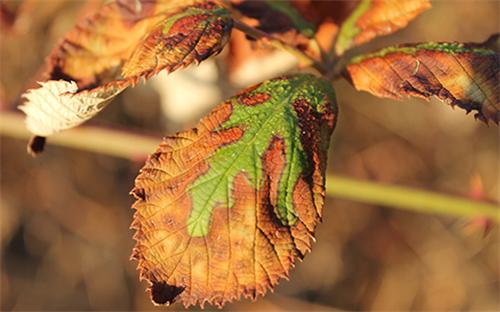
Similar strategies appear worldwide:
- Certain grasses release root exudates that suppress broadleaf plants—one reason lawns remain “pure.”
- In desert ecosystems, extracts from the leaves of red sand and pearl pigweed strongly inhibit each other’s seedlings, more so than stems or roots—suggesting chemical weapons vary in strength by plant part.
- Invasive species often deploy even more sophisticated strategies. Mikania micrantha, known as the “green menace,” reshapes soil in three ways: recruiting nitrogen-fixing microbes, rapidly converting inorganic nitrogen to organic forms, and releasing phenolic compounds that suppress nitrification. It does not merely adapt to the environment—it engineers it.
This raises a practical question:
Why can’t farmers grow the same crop on the same land year after year?
Part of the answer lies in allelopathy. Continuous monocropping can lead to autotoxic compounds accumulating in the soil—plants poisoning themselves. Add increased soil pathogens and nutrient imbalance, and the vulnerability of monoculture becomes clear.
Plants are not gentle. In unseen spaces, chemical warfare is constant.
IV. The Other Side of the Story: Cooperation Under Extreme Stress
If plants only competed, ecosystems would collapse. Under certain conditions, facilitation—what we might call cooperation—does occur.
The key variable is environmental stress.
A 2024 study in semi-arid Mediterranean ecosystems tested seedling communities planted beneath “nurse plants” or in open ground, under varying irrigation levels. The findings were revealing: only under drought conditions and in diverse plant communities did nurse plants provide net positive effects—improving survival and biomass beyond the negative impacts of competition.
Mechanistically, nurse plants reduced dominance by stronger species, giving weaker species a chance to survive.
A similar story unfolds in the Sonoran Desert. The iconic Saguaro often depends on nurse plants during early life. A recent study showed that with irrigation, saguaros grew faster alone. But when drought returned, only those sheltered by nurse plants survived.
Researchers measured light intensity, temperature, and mycorrhizal presence. The decisive factor turned out to be afternoon photosynthetically active radiation: shade provided by nurse plants prevented lethal stress.
An important ecological principle emerges:
The harsher the environment, the more facilitation matters.
The richer the environment, the stronger competition becomes.
Nurse plants are not altruistic. They simply grow—and in doing so, incidentally create shade, increase soil moisture, and enrich microbial communities. In extreme conditions, that incidental effect means life or death.
V. Monoculture vs. Diversity: Why Diverse Systems Are More Stable
Shift from natural forests to human-managed landscapes and the contrast is striking.
Why can a forest persist for centuries without constant intervention, while farmland demands fertilizers, pesticides, and irrigation each year?
Why do entire streets of urban trees succumb to disease at once?
The answer lies in biodiversity.
A 2024 review proposed a “multi-mechanism hypothesis”: biodiversity stabilizes ecosystems not through a single pathway, but through interacting processes.
Diverse plant communities tend to:
1. Accumulate fewer specialized pests, since herbivores cannot find a uniform “buffet.”
2. Use resources more efficiently, as species differ in root depth and growth timing.
3. Support more diverse beneficial organisms, forming layered food webs above and below ground.
4. Create more stable microclimates, buffering temperature and humidity fluctuations.
In plain terms: diversity is not a moral ideal—it is an insurance policy.
Historical examples reinforce this lesson:
- In the 1970s, Dutch elm disease devastated British streets because they were dominated by a single elm species.
- North American ash trees have been ravaged by emerald ash borer in cities that relied heavily on ash for landscaping.
- In Australia, invasive species frequently spread where native vegetation has been replaced by monoculture crops.
VI. Lessons for Home Gardens and Urban Living
What does all this “plant politics” mean for ordinary people?
Quite a lot.
1. Mix, Don’t Monocrop
Avoid planting uniform blocks of a single species. Combine heights, root depths, and plant families. Mixed plantings are more resilient to pests and stress. Traditional companion planting reflects this logic—basil and tomatoes, for example, are often paired for mutual benefit.
2. Protect Soil Life
Minimize tilling and synthetic fertilizers. Turning the soil disrupts fungal networks; excessive fertilizer can reduce plants’ incentive to cooperate with mycorrhizal fungi. Use compost and organic matter to let soil systems function naturally.
3. Observe Plant Combinations
Some plants thrive together; others inhibit each other. Gardening is less about rigid rules and more about observation and experimentation.
4. Don’t Over-Clean Leaf Litter
Fallen leaves are not waste. They decompose into nutrients and fuel underground microbial systems. Removing them entirely cuts off the soil’s resource base.
5. Accept a Bit of Messiness
An overly manicured garden may be ecologically fragile. Leaving some deadwood or wild patches provides habitat for insects that, in turn, regulate pests.
The secret social lives of plants are far more complex than we imagine. And it is precisely this complexity—the constant negotiation between competition and cooperation, control and exchange—that makes the natural world so profoundly compelling.
FAQs
1. What is the “Wood Wide Web”?
The term “Wood Wide Web” refers to underground fungal networks connecting plant roots. These mycorrhizal fungi can transport nutrients, water, and chemical compounds between plants. However, scientists continue debating whether these networks primarily support cooperation or whether they function more like competitive resource-trading systems.
2. Why do monoculture farms often require more pesticides and fertilizers?
Monocultures reduce biodiversity, making it easier for pests and diseases to spread rapidly across large areas of genetically similar plants. They can also deplete soil nutrients unevenly and weaken microbial diversity, increasing dependence on external inputs such as fertilizers, pesticides, and irrigation.
3. Are invasive plants successful because they grow faster?
Not always. Many invasive plants succeed because they alter ecosystems in multiple ways simultaneously. Some change soil chemistry, recruit beneficial microbes, suppress neighboring species chemically, or exploit environments lacking natural predators.
4. Do plants benefit from fungal relationships all the time?
No. Mycorrhizal relationships are dynamic. In nutrient-rich soils, plants may rely less on fungal partners. Under drought, poor soil, or stressful conditions, fungal associations often become more beneficial because they improve water and nutrient access.
5. Why are mixed-species gardens usually healthier?
Plant diversity creates ecological balance. Different species use water, nutrients, and light differently, reducing direct competition. Diverse gardens also support more insects, pollinators, and microorganisms that naturally regulate pests and stabilize the environment.
6. Can fallen leaves improve soil health?
Yes. Leaf litter acts as a natural nutrient recycling system. As leaves decompose, they feed fungi, bacteria, insects, and soil organisms that maintain long-term soil fertility and structure.
7. Is an extremely tidy garden environmentally harmful?
Overly manicured gardens can reduce habitat diversity for insects, microbes, and small animals. Removing all deadwood, leaves, and wild growth may make landscapes visually neat but ecologically fragile.
References
1. Bennett, J. A., Maherali, H., Reinhart, K. O., Lekberg, Y., Hart, M. M., & Klironomos, J. (2017). Plant–soil feedbacks and mycorrhizal type influence temperate forest population dynamics. Science, 355 (6321), 181–184.
2. Karst, J., Jones, M. D., & Hoeksema, J. D. (2023). Positive citation bias and overinterpreted results lead to misinformation on common mycorrhizal networks in forests. Nature Ecology & Evolution, 7 , 501–511.
3. van der Heijden, M. G. A., & Hartmann, M. (2016). Networking in the plant microbiome. PLoS Biology, 14 (2), e1002378.
4. Callaway, R. M., & Walker, L. R. (1997). Competition and facilitation: A synthetic approach to interactions in plant communities. Ecology, 78 (7), 1958–1965.
About the Author
Oliver Hayes, MSc – Urban Gardening Systems Researcher & Sustainable Home Writer
Oliver Hayes is a researcher and content writer specializing in urban gardening ecology, balcony food systems, and sustainable home environments. He holds a Master’s degree in Environmental Horticulture from the University of Copenhagen and has collaborated with community garden networks, indoor farming startups, and ecological design organizations across Europe. His work focuses on helping everyday households better understand the hidden environmental factors affecting plant health, indoor biodiversity, and long-term sustainable living practices.
Professional & Educational Disclaimer
This article is intended for educational and informational purposes only. It does not constitute professional ecological consulting, agricultural advice, or environmental management recommendations.
For land management decisions, invasive species control, or agricultural interventions, readers should consult qualified agronomists, ecologists, or local environmental authorities.
Scientific understanding evolves. Interpretations reflect research available at the time of writing.
Disclaimer
This article is intended for educational and informational purposes only. Ecological research is constantly evolving, and scientific debates surrounding plant communication, mycorrhizal networks, allelopathy, and ecosystem dynamics remain active within the research community. The content presented here summarizes current scientific discussions and should not be interpreted as definitive ecological consensus or professional agricultural advice.
Gardening practices, soil management strategies, and ecosystem responses vary widely depending on climate, geography, species composition, and environmental conditions. Readers should consult local horticultural experts, agricultural specialists, or ecological professionals before making significant land management decisions.
Recommend for you:
The Secret Social Lives of Plants
How Plants Influence Ecosystem Power Through Resource Competition, Chemical Warfare, and Underground Networks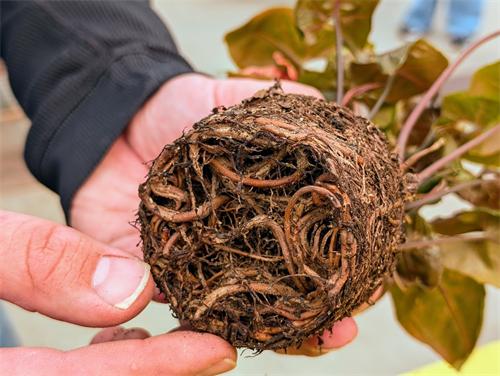
Plant Memory and Resilience to Environmental Change
Why Repotting Often Becomes the Last Straw for Your Plants
Edible Microgreens 2.0: Indoor Nutrition Trends You Haven’t Tried
Microgreens cultivation is about precise timing, environmental control, and post-harvest management—not some urban pastoral fantasy.
When Predators Vanish: The Hidden Ecological Collapse Behind Urban Pest Outbreaks
Who Disappeared — and Why Cities Are Fighting the Wrong Enemy