The Cute Kids’ Room Trap: Why Perfect Spaces Cause Parental Anxiety
——When Aesthetic Order Meets a Child’s Chaos
By Nathaniel Brooks | Updated on January 2026 | 🕓 8 minutes
Key Highlights
- Why do perfectly styled kids’ rooms often increase parental anxiety instead of reducing it?
- How does “aesthetic order” quietly turn a child’s room into a space that feels fragile or untouchable?
- Why do most storage systems fail once children actually start using them in real life?
- What is the difference between “adult-designed order” and “child-driven chaos” in everyday play behavior?
- How can a visually calm room unintentionally discourage exploration and creativity in children?
- Is it possible to design a kids’ room that stays functional without requiring constant tidying?
Recently, I was chatting with a few friends living in London, Melbourne, and Vancouver, and we all found ourselves stuck in the same predicament: when it comes to our kids’ rooms, we seem to be tidying endlessly—and yet, they never truly stay tidy. Those picture-perfect “cute-style” rooms on social media—pastel walls, themed decor, plush toys neatly lined up—turn out, in reality, to be anxiety machines for parents.
Today, I want to take an observer’s perspective and talk about the subtle psychological tug-of-war between us and children’s spaces.
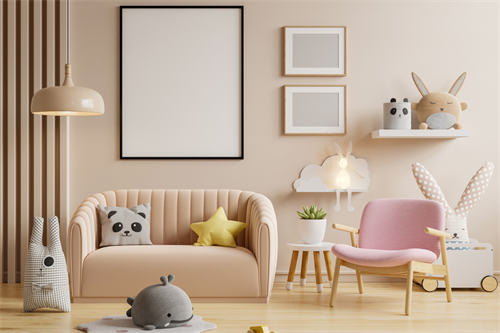
I still remember the first time I stepped into a friend’s “perfect kids’ room.” Pale mint-green walls, cloud-shaped shelves holding a row of Morandi-colored picture books, wicker storage baskets neatly organizing wooden toys. Her three-year-old daughter, wearing matching home clothes, carefully took a toy from a basket and, after playing, returned it under her mother’s gentle reminders. At that moment, the space looked like a carefully composed Nordic-style promotional shot.
But privately, my friend admitted: “Within half an hour after preschool, this place looks like a bomb went off. And I stand at the door feeling a wave of real, physiological anxiety.”
This phenomenon has a name. Environmental psychologists call it “aesthetic anxiety” or a “perfectionism trigger in home environments.” It isn’t fear of actual danger—it’s an instinctive reaction to a loss of aesthetic control. When we meticulously construct a visually ordered system, that system starts making demands on us—it expects to be maintained.
The problem is, children’s cognitive and play behaviors are inherently chaotic and exploratory. Their play isn’t a linear “take one—play—put back” process; it’s divergent, overlapping, and seemingly disorderly. A child exploring the world might dump blocks and combine them with dolls to build a new scene, or spread picture books on the floor to construct a “house.” This isn’t destroying order—it’s creatively using the space.
So, a seemingly absurd conflict unfolds daily in countless households: adults design a space that demands “maintenance,” while children fill it with behaviors that demand “use.” When “use” inevitably disrupts “maintenance,” anxiety emerges.
The Aesthetic Trap Behind “Cute Style”
Why does this anxiety seem especially pronounced in “cute-style” rooms? Or, why are parents of our generation particularly prone to this trap?
Over the past five years, children’s room aesthetics on social media have undergone remarkable homogenization. From North America to Europe to Australia, Pinterest and Instagram are filled with tone-coordinated, “Instagrammable nurseries”: matte pastels, coordinated themes, meticulously placed decor. IKEA’s children’s room displays and parenting bloggers’ “nursery tours” all reinforce the same message: a good kids’ room should look like this.
This aesthetic order exerts a strong psychological comfort for adults. In an uncertain world, a visually controlled space gives a sense of mastery. Critics have noted that the popularity of the “dreary beige parenting aesthetic” isn’t because it’s best for children, but because it reduces stress for parents—it’s clean, orderly, photogenic, and feels controllable. We mistakenly equate “visual calm” with “childhood calm.”
The problem is, this aesthetic order comes at a cost. Once a room is designed to be in a “finished state,” it becomes a space that cannot be disturbed. Every time a child moves a toy, they are “destroying” this finished state. Over time, parents realize they aren’t enjoying time with their children—they are constantly “repairing” a scene that the child keeps undoing.
Researchers have pointed out that people feel more comfortable when they can control their environment, even if no actual change occurs. Conversely, when that sense of control is stripped away—when a room continually slides from “order” into “disorder”—anxiety accumulates. This explains why many parents stay up after their children are asleep to tidy the room: they aren’t preparing for tomorrow—they are restoring a sense of psychological order that has been disrupted.
The Structural Failure of Storage in Kids’ Rooms
If we acknowledge the source of anxiety, we can understand another phenomenon: storage in children’s spaces almost inevitably fails—and it’s not due to parental incompetence.
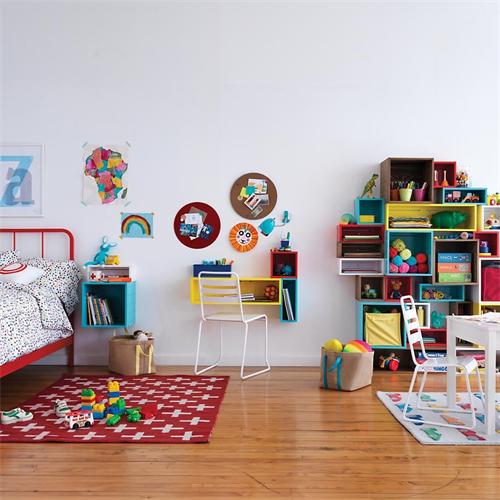
I’ve observed the “evolution of storage systems” in many households. Generation 1: open shelves + categorized storage boxes. Failure reason: kids dig through every box looking for a single piece. Generation 2: lidded boxes + labels. Failure reason: kids can’t be bothered to open lids; toys pile up on top. Generation 3: tall, closed cabinets at adult height. Failure reason: children can’t reach; parents become “toy managers.”
This progression reveals a fundamental contradiction: adult-designed storage systems pursue static aesthetics, while children’s activities are dynamic and random. Our storage philosophy comes from the adult world: return items to their place, store by category, tidy up after use. But for children, toys aren’t “items”—they are the “materials” from which they construct their world. Architects work with materials by constantly recombining, mixing, and experimenting—you wouldn’t expect an architect to put every material away after each use.
IKEA’s 2025 children’s product research highlighted this. Product managers noted that modern households have “too much anxiety,” and both parents and children “want more meaningful play.” Their new line encourages toys to “be placed throughout the home” rather than stored away each night. It’s an interesting shift: from “storing toys” to “accommodating play.”
Yet most children’s room designs haven’t fully embraced this shift. We are still applying adult-order logic to children’s-chaos logic. This isn’t system malfunction—it’s a mismatch.
The Psychological Cost: When Perfection Becomes a Cue
What psychological toll does this ongoing aesthetic conflict and storage failure exact?
For parents, it manifests as constant micro-anxiety and overcontrol. The fatigue accumulated from the daily cycle of “tidy—mess—tidy again,” the instinctive irritation when a child empties a freshly organized box, the late-night ritual of kneeling to reorder plush toys by size—all of this drains mental energy.
For children, the consequences can be deeper. Living in a space that’s “too perfect” to touch sends a message: this space isn’t yours. Worse: play itself becomes anxiety-inducing. Observers note that if a room is “too perfect” to interact with, children learn not aesthetics, but “risk avoidance.” They internalize that keeping tidy is more important than exploring, and meeting adult expectations outweighs curiosity.
This isn’t alarmist. Designers have shared their lessons: one designer ignored her two-year-old daughter’s clear preference for room color and insisted on a “cute, pale purple, meticulously designed” space. Did her daughter like it? No. That room ultimately became the mother’s creation, not the child’s territory.
Writing this, I must clarify: I’m not criticizing “cute style,” nor advocating abandoning tidiness. As a parent also caught in this dilemma, I understand the longing for beauty and order.
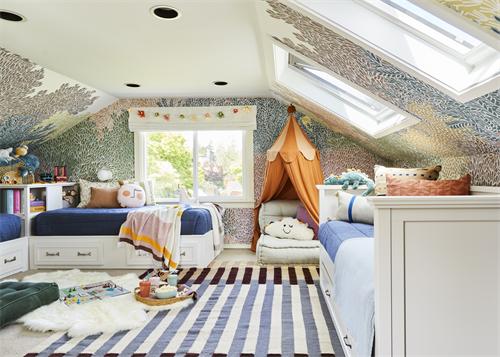
I want to explore: can we view children’s spaces differently?
Perhaps a good kids’ room isn’t “always visually tidy,” but a room that can accommodate chaos without triggering anxiety. Perhaps the standard for storage shouldn’t be “how much it can hold,” but “whether children can use and restore it themselves.” Perhaps we can allow a corner where “mess” is legal—it can last overnight, it can persist.
I still like beautiful children’s rooms. Occasionally, when scrolling through those pastel-toned, neatly lined-up plush toy photos, I’m still captivated—I still save them. But I know that’s not the endpoint.
The real goal might be the day I can walk into my child’s room, see toys strewn across the floor, and my first thought isn’t anxiety but: what fun story just unfolded here?
That room isn’t my artwork. It’s their laboratory—messy, alive. And I don’t have to kneel every night to restore perfection. I can sit down and listen to the stories hidden in the chaos.
After all, children don’t need a perfect backdrop. They need a space where they can fail, restart, and let beauty grow from the mess.
FAQs
1. Why do “cute” or perfectly styled kids’ rooms cause stress for parents?
Because they often create an implicit expectation of permanence. When a room looks “finished,” any disruption—like toys on the floor—feels like disorder that needs fixing. Over time, this creates a loop of constant mental pressure: tidy, mess, repeat.
2. Is the problem really the design style, or the way parents use the space?
It’s less about style itself and more about intention. Many “cute” rooms are designed for visual completion rather than active use. The issue arises when a room optimized for appearance is used as a high-intensity play environment.
3. Does a messy room harm a child’s development?
Not inherently. In many cases, controlled mess reflects active learning and creativity. What matters more is whether the child understands basic ownership of space and can gradually learn simple reset routines, not whether the room stays visually tidy.
4. How can parents reduce anxiety without giving up on aesthetics?
One practical shift is to separate “display zones” from “active zones.” Keep a small area visually structured if it helps adults feel calm, but allow other areas to remain flexible and changeable. This reduces the pressure for the entire room to stay perfect.
5. What’s a more realistic goal for a child’s room?
A better goal is “usable order” rather than “visual perfection.” A room that can shift between chaos and reset without emotional tension is more sustainable than one that looks perfect but constantly triggers stress.
References
1. Fisher, A. V., Godwin, K. E., & Seltman, H. (2014). Visual environment, attention allocation, and learning in young children: When too much of a good thing may be bad. Psychological Science, 25(7), 1362–1370.
2. Burdick, H. (2021). The Pinterest Effect: How social media shapes parental expectations and home aesthetics. Journal of Family Psychology, 35(4), 523–534.
3. IKEA. (2025). Play in the Modern Home: Research Report on Children’s Play and Storage. IKEA Research.
About the Author
Nathaniel Brooks, BSc – Home Ecology Analyst & Sustainable Living Research Writer
Nathaniel Brooks is a home ecology analyst and independent writer specializing in indoor ecosystems, sustainable household practices, and environmental behavior research. He holds a degree in Environmental Science from the University of Edinburgh and has worked alongside urban agriculture programs, green building consultants, and educational sustainability platforms. His articles combine scientific research with practical observations to help readers create healthier, more resilient homes and gardening spaces.
Editorial Transparency Statement
This article was independently researched and written without sponsorship from any brands or commercial interests. Sources are cited where applicable to ensure credibility and traceability.
Professional & Educational Disclaimer
The content in this article is for informational and educational purposes only. It does not constitute professional psychological, medical, or design advice. Readers should consult qualified professionals for individualized guidance.
Recommend for you:

Home Privacy in 2026: Balancing Open Spaces and Digital Surveillance
We tore down physical walls, only to weave a digital net inside our homes.
AI Gardening Assistants: Can Robots Actually Save Your Plants?
The training data for mainstream AI plant diagnosis models mostly comes from “standard healthy samples” or “typical disease samples.”
Edible Microgreens 2.0: Indoor Nutrition Trends You Haven’t Tried
Microgreens cultivation is about precise timing, environmental control, and post-harvest management—not some urban pastoral fantasy.
Why I Stopped Choosing “Luxury-Looking” Materials
How Real-Life Wear and Daily Use Taught Me That Beauty Doesn’t Always Equal Comfort