
Home Privacy in 2026: Balancing Open Spaces and Digital Surveillance
By Clara Whitfield | Updated on May, 2026 | 🕓 11 minutes
Key Highlights
- What is a “Broken Floor Plan,” and why are homeowners embracing it?
- How do smart speakers and doorbell cameras affect social behavior at home?
- Why are privacy concerns no longer limited to device owners?
- Can smart home convenience coexist with personal privacy?
- What does “local-first” technology actually mean?
- How can homeowners reduce surveillance risks without abandoning technology?
That weekend gathering was supposed to be ordinary. Six friends squeezed into my living room, and the open-plan layout let laughter and music drift freely between the kitchen, dining area, and sofa space — exactly the feeling that made me fall in love with this apartment when I bought it. Then the indicator light on the smart speaker in the corner suddenly shifted from its dormant darkness to an active icy blue, like an eye jolted awake. The conversation did not stop, but someone instinctively lowered their voice. That single moment of hesitation made me realize something: we tore down physical walls, only to weave a digital net inside our homes.
I still love the jazz playlists that speaker creates, and I still rely on my cameras to watch over packages at the door while I travel. But home life in 2026 is caught in a strange paradox. The real estate market is embracing a new layout trend called the “Broken Floor Plan” — not a return to fully closed rooms, but a softer fragmentation of space using half walls, glass dividers, and acoustic screens. At the exact same time, consumer technology is extending data collection into every crack and corner of domestic life. Physical space is searching for boundaries, while digital space is eliminating them. What are we supposed to do with that contradiction?
The rebellion against openness is happening quietly. In an industry interview at the beginning of 2026, New York interior designer Kati Curtis explained that after the pandemic, clients no longer asked to “tear down every wall.” “People are taking Zoom meetings in the living room while children are doing homework in the same visual space. Not every moment needs to expose everyone to everyone else’s sound.”[Kati Curtis, 2026, industry interview]
Realtor.com listed the “Broken Floor Plan” as one of the layout features buyers increasingly prioritized in its March 2026 trend report. Miami designer Maritsa Rabie recommended using double-sided bookshelves, suspended felt panels, and glass dividers to break up oversized open spaces — not out of nostalgia, but to create “acoustic bubbles of privacy” within otherwise connected environments. [Realtor.com, 2026]
Last year, I visited a renovated Haussmann apartment in Paris where designer Jeff Aird preserved the original archways and sections of the walls. Your eyes could still travel through the apartment, but sound waves were softened and interrupted. “You want to glimpse the next room,” he told me, “without feeling as exposed as you do in a traditional open-plan layout.” That sense of “contained openness” — feeling that your corner of the room still belongs to you — may be the clearest definition of what people in 2026 are trying to rediscover in the idea of home. [Jeff Aird, 2025, personal interview during property visit]
But just as people are rebuilding physical boundaries with glass, screens, and soundproofing, digital devices are doing the opposite.
In March 2025, Amazon made a decision that surprised many users: it discontinued the “Do Not Send Voice Recordings” option on Echo devices. Before that change, users could choose to process voice commands locally without uploading recordings to the cloud. That option disappeared [Ars Technica, 2025]. Around the same period, the U.S. Federal Trade Commission had already fined Amazon $25 million in 2023 for violating children’s privacy laws, indefinitely storing children’s voice recordings, and using them for algorithmic training. Amazon agreed to settle and pay the penalty, yet the company’s data strategy still appeared to be moving steadily toward deeper cloud dependence. [Federal Trade Commission, 2023]
There had already been more dramatic incidents years earlier. In 2018, an Echo device accidentally recorded a private conversation between a couple and sent it to someone in their contact list. Amazon described the incident as an “extremely rare occurrence” and promised improvements. The outcomes of these controversies have been mixed. Smart speakers continue to sell well, and voice assistants remain convenient. But when that blue light turns on now, the air carries a trace of uncertainty. [CBS News / TechCrunch, 2018]
The controversies surrounding doorbell cameras are even more complicated. In February 2026, Ring aired a Super Bowl advertisement promoting an AI-powered feature called “Search Party.” If your dog goes missing, the system can request footage from nearby Ring users and search through neighborhood camera recordings. Founder Jamie Siminoff expected Americans to embrace the feature enthusiastically. Instead, the ad triggered a backlash from privacy advocates. The map shown in the commercial — blue circles pulsing outward from one household to activate more and more cameras — made many viewers uncomfortable.

In a later interview with TechCrunch, Siminoff defended the idea by arguing that “doing nothing is effectively opting out.” He compared it to seeing a lost dog in your backyard: you can choose to check the collar and call the owner, or you can ignore it. But the analogy leaves out an important reality. When you install a Ring camera, you are not only signing away portions of your own privacy. You are also capturing the images of every passerby on the sidewalk, every friend who visits your home, every child playing on the street nearby. Their images become part of a system they never explicitly consented to join. [Ring "Search Party" Super Bowl ad, 2026]
Ring’s privacy history has indeed been troubled. In 2023, the FTC accused the company of security failures that allowed employees to spy on customers — including footage captured inside bedrooms and bathrooms — while hackers who gained access to accounts harassed children through compromised devices. Ring ultimately settled for $5.8 million and agreed to establish a formal privacy and security program.
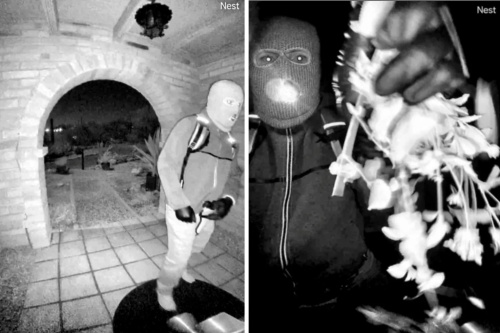
Yet the irony is impossible to ignore. Even while these controversies continued, surveillance technology was simultaneously proving its usefulness. In 2025, when NBC anchor Savannah Guthrie’s 84-year-old mother, Nancy Guthrie, went missing in Tucson, Arizona, a Google Nest camera captured footage of a masked individual attempting to cover the lens with leaves. That video spread widely online and became part of the public narrative surrounding the case. Surveillance systems now stand at the intersection of safety and intrusion. A camera may help locate a vulnerable elderly person — while also making an entire neighborhood feel as if daily life unfolds inside someone else’s frame.[NBC News / TechCrunch, 2025]
This contradiction is not limited to the United States. In Europe, the deterrent power of GDPR is real. In 2025, France’s CNIL fined Shein €150 million over cookie consent violations[CNIL, 2025]. Yet enforcement specifically targeting smart home ecosystems remains relatively limited, existing more as a looming warning than a fully defined regulatory framework.
Meanwhile, research published in the Journal of Medical Internet Research examining adults over fifty in Japan revealed another layer of complexity. Older users did worry about corporate misuse of data and hacking risks. But they were equally concerned about system failures during power outages, the difficulty of learning new technologies, and perhaps most importantly, cost. In the study, 51% of respondents considered affordability a greater issue than many privacy risks. In other words, privacy matters — but when devices become too expensive or too difficult to use, compromise becomes inevitable.[JMIR, 2025]
All of this brings me back to a concept that has been overlooked for far too long: bystander privacy. In academic literature, the term refers to the privacy rights of individuals who are not device owners but still fall within the scope of data collection. The smart speaker in your living room does not record only your wake words. It also captures a friend’s late-night confessions, fragments of arguments between partners, or a nanny humming lullabies to a child. Your doorbell camera records not only potential intruders, but also postal workers’ routines, neighbors’ visitors, and the unconscious expressions of strangers passing by. These bystanders never clicked “agree.” Many of them do not even know the agreement exists. [Saqib, E., He, S., Choy, J., Abu-Salma, R., Such, J., Bernd, J., & Javed, M., 2025, "Bystander privacy in smart homes]
Perhaps in 2026, digital hospitality should include something new: openly informing guests about data-collecting devices inside the home and offering some kind of “guest mode.” But even that is not enough. The deeper question is whether we have already become accustomed to transforming our most intimate social spaces into environments of passive surveillance, reassuring ourselves simply because “I have nothing to hide.”
I do not want to give you a checklist. Checklists too easily become low-value content, and after completing them, people often develop a false sense of security. Instead, I want to propose a “three-night thought experiment.” You do not need to buy anything new. You do not need technical expertise. All it requires is twenty minutes each evening for three nights.
On the first night, conduct a “space audit.” Turn off your phone and walk through your home from the entrance as though you were visiting it for the first time. Do not look at the furniture or decoration. Look only at indicator lights. List every device with a camera, microphone, internet connection, or data-recording capability. Then ask yourself one very specific question: if a friend stayed over tonight, which of these devices would make them feel watched? Do not answer from your own perspective — of course you already know the data is “just stored in the cloud.” Answer from theirs. That question often reveals the blind spots we have gradually become numb to ourselves.
On the second night, perform a “function interrogation.” Choose the smart device you use most often and open its privacy settings page. Do not rush to disable everything; that would turn the device into a useless brick. Instead, ask yourself: does this feature truly need to remain online twenty-four hours a day? Does the voice assistant really need to sit in the hallway? Does the camera truly need to monitor the entire social area of the living room? One of the major shifts in smart home technology during 2025 was the rise of “local-first” systems — devices that process data within the home so information physically never leaves the building. If your device does not support local processing, you can still disable automatic “data improvement” sharing options and set recordings to auto-delete after seven or thirty days. Data should decay like food. It should not accumulate forever.
On the third night, conduct a “network separation.” Log into your router’s management page — the address is usually printed on the back of the device — and create a separate Wi-Fi network for your smart home products. Isolate them from your work laptop, phone, and tablet. This sounds technical, but most modern routers now provide simple setup options labeled “IoT network” or “guest network.” You do not need to understand VLANs. You only need to understand one principle: if a smart light bulb is compromised, you do not want it becoming a bridge into your personal computer.
At the end of those three nights, you will not have created a perfect fortress of privacy. In fact, perfection may be a false concept in this era altogether. Amazon paid fines and still collects voice data. Ring revised policies while continuing to promote neighborhood surveillance. GDPR issued massive penalties while smart home regulations remain partly undefined. We are making choices within a world built on compromises.
But the act of choosing still matters.
Now, when the blue light in my living room turns on, I know it only listens after I deliberately activate it. When friends visit, I can comfortably tell them the living room devices are set to guest mode. More importantly, my apartment still contains one completely device-free corner: a lamp, an old chair, and a few books. No indicator lights. No internet connection. No data collection. It is a physical refuge inside the digital age.
The real wisdom of home life in 2026 is not choosing between openness and enclosure. It is learning how to practice bounded openness. Physically welcoming connection while digitally respecting distance. Your home should be a place where people relax the moment they step inside — not a place where they instinctively lower their voices, choose their words carefully, or glance uneasily toward a glowing blue light in the corner.
FAQs
1. Are smart speakers always listening?
Most smart speakers are designed to continuously monitor for wake words such as “Alexa” or “Hey Google.” Companies generally state that recordings are only processed after activation, but accidental activations and unintended recordings have occurred in documented cases. Privacy settings and local-processing options vary by manufacturer.
2. Is it safer to use local-first smart home devices?
Local-first systems process data directly on the device or within the home network instead of sending everything to cloud servers. This can reduce exposure to data breaches, cloud storage risks, and unnecessary long-term retention of personal recordings.
3. Can smart doorbell cameras create legal issues?
Depending on local laws, recording public sidewalks, neighboring property, audio conversations, or visitors without notice may create legal or regulatory concerns. Privacy laws differ significantly between countries and regions.
4. Why do some people feel uncomfortable around smart devices even if nothing is hidden?
The psychological effect of visible surveillance changes behavior. Research in environmental psychology and digital privacy suggests that people naturally become more cautious, self-aware, and restrained when they know cameras or microphones may be active.
5. Should guests be informed about cameras or voice assistants?
Many privacy researchers and digital ethicists increasingly recommend informing guests about indoor cameras, smart speakers, or active monitoring systems — especially in shared social spaces or overnight accommodations.
6. What is the easiest privacy improvement for non-technical users?
One of the simplest improvements is creating a separate Wi-Fi network for smart home devices. Many modern routers provide “Guest Network” or “IoT Network” options that isolate smart devices from laptops, phones, and work-related systems.
References
1. Realtor.com (2026). "What Is a Broken Floor Plan? A Design Trend That Gives You the Best of Both Worlds." Retrieved March 2026.
2. Kati Curtis, New York Interior Designer (2026). Industry interview on post-pandemic residential design trends.
3. Jeff Aird, Paris-based Designer (2025). Personal interview during property visit, Paris.
4. Ars Technica (2025). "Amazon removes option to prevent Echo from sending voice recordings to the cloud." March 2025.
5. Federal Trade Commission (2023). "FTC Charges Amazon with Violating Children's Privacy Law by Keeping Kids' Alexa Voice Recordings Forever." Enforcement action, $25 million settlement.
6. CBS News / TechCrunch (2018). Amazon Echo recorded and sent private conversation to contact in Portland, Oregon; Amazon acknowledged as "extremely rare occurrence." May 2018.
7. Ring "Search Party" Super Bowl ad (2026). February 2026; Jamie Siminoff interview with TechCrunch, February 2026.
8. Federal Trade Commission (2023). "FTC Says Ring Employees Illegally Surveilled Customers." Complaint against Ring LLC, $5.8 million settlement.
9. NBC News / TechCrunch (2025). Savannah Guthrie's mother Nancy Guthrie missing case, Google Nest footage captured masked individual. Tucson, Arizona.
10. CNIL — Commission Nationale de l'Informatique et des Libertés (2025). €150 million fine against Shein for cookie consent violations.
11. JMIR (2025). "Privacy Concerns and Adoption of Smart Home Devices Among Adults Aged 50 Years and Older in Japan." Journal of Medical Internet Research.
12. Saqib, E., He, S., Choy, J., Abu-Salma, R., Such, J., Bernd, J., & Javed, M. (2025). "Bystander privacy in smart homes: A systematic review of concerns and solutions." ACM Transactions on Computer-Human Interaction (TOCHI), 2025. N=40 papers reviewed across ACM Digital Library, IEEE Xplore, and DBLP databases.
About the Author
Clara Whitfield, MA – Biophilic Design Consultant & Eco-Lifestyle Content Specialist
Clara Whitfield is a consultant and writer focused on biophilic interior design, ecological home trends, and sensory-centered living environments. She earned her Master’s degree in Sustainable Design from the University of Manchester and has contributed to residential wellness projects, eco-conscious furniture brands, and environmental education initiatives. Her writing explores how natural systems, material choices, and urban living conditions shape both household comfort and environmental resilience.
Editorial Transparency Statement
This article was developed using publicly available reports, academic research, regulatory documents, news coverage, industry interviews, and firsthand observations from residential design and smart home environments. Every effort has been made to accurately represent cited studies, enforcement actions, and public statements at the time of publication.
The opinions and reflections expressed in this article are intended to encourage critical thinking about modern home technology and privacy culture. Product mentions do not constitute endorsements, sponsorships, or paid partnerships.
Because privacy laws, smart home technologies, and platform policies evolve rapidly, readers are encouraged to independently verify current settings, regulations, and company practices before making purchasing or security decisions.
Disclaimer
Smart home privacy risks, surveillance regulations, and data protection laws vary by country, region, and device manufacturer. Readers should consult qualified professionals or official regulatory resources for advice specific to their situation.
All trademarks, company names, product names, and cited organizations remain the property of their respective owners.
Recommend for you:

Why Beautiful Rooms Don’t Always Work
The Hidden Psychology Behind Furniture Placement — and How to Fix It
When You Design a Child’s Space, You Design Their Behavior
Why So Much “Children’s Furniture” Fails in Real Homes
Plant Memory and Resilience to Environmental Change
Why Repotting Often Becomes the Last Straw for Your Plants
The Truth Behind Overhyped Home Materials
Why Usage Matters More Than Marketing or Time