Indoor Pollination Failure in Fruiting Plants
——The Ecological Isolation Behind Balcony Harvest Disappointment
By Oliver Hayes | Updated on April 2026 | 🕓 13 minutes
Key Highlights
- Why do healthy indoor fruit plants bloom but fail to produce fruit?
- What ecological functions disappear when plants move indoors?
- How do humidity, airflow, and temperature fluctuations affect pollen viability?
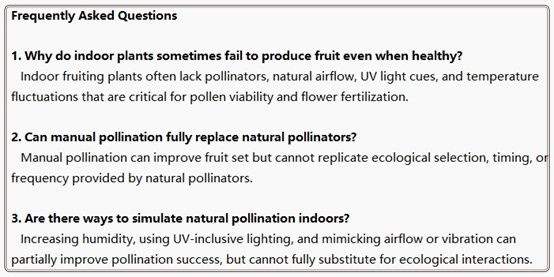
- Can artificial pollination fully replace insects and natural ecosystems?
- Which fruiting plants are especially difficult to pollinate indoors?
Waving an electric toothbrush through the branches of a balcony tomato, gently tapping blueberry blossoms with a cotton swab—this has become a daily ritual for many urban gardeners. We carefully regulate light, humidity, and nutrient solutions, yet remain puzzled: why do lush, vigorous fruit trees produce only a handful of fruits—or none at all?
This frustration goes far beyond a lack of gardening technique. It reveals a deeper truth: when indoor fruit trees fail to bear fruit, the problem often lies not within the plant itself, but in the fact that we have placed it into a space stripped of ecological cooperation.
I. Reframing Pollination Within the Ecosystem
In nature, pollination is not a solo performance by a plant. It is a symphony performed by many actors.
Natural Pollination Relies On:
1. Insect Pollinators
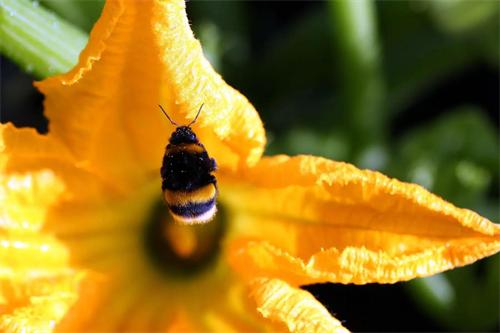
Insects such as the Western honey bee (Apis mellifera) form the backbone of agricultural ecosystems. While collecting nectar and pollen, they inadvertently transfer pollen from stamen to stigma.
2. Wind
For grasses and many trees, wind serves as the primary carrier. Micro-air currents allow pollen to drift like smoke through the air.
3. Birds and Other Animals
Hummingbirds, sunbirds, certain bats, and even some reptiles act as pollinators within specific ecological niches.
4. Micro-airflow and Environmental Fluctuations
Even insect-pollinated plants rely on subtle air movement to shake flowers and release pollen. Day–night temperature differences regulate anther dehiscence and pollen maturation.
What Does the Indoor Environment Remove?
When we move a fruit tree from field to balcony or living room, we are not simply relocating it—we are extracting it from its system.
Indoor environments typically create what could be described as an “element-deprivation zone” for pollination:
- Biological deprivation: absence of pollinating insects
- Physical obstruction: sealed high-rise structures reduce natural wind; double-glazed windows block subtle air circulation
- Spectral distortion: standard window glass filters out ultraviolet light critical to insect vision
- Climatic flattening: constant temperature and humidity erase the day–night variation plants use to perceive seasonal cues
This is the phenomenon of indoor ecological isolation. The plant survives, but its ties to the broader ecological network are severed. Physiological processes continue, yet they are no longer synchronized with environmental signals.
II. Pollination Is Not Just “Pollen Touching a Stigma”
To understand why indoor pollination fails, we must enter the plant’s microscopic physiology. Pollination is not merely physical contact—it is a coordinated event shaped by physics, biology, and climate.
1. Pollen Viability: The Invisible Constraint
Pollen grains are living cells. They are extraordinarily sensitive to environmental conditions.
- Low humidity: Air-conditioned indoor spaces often fall below 40% relative humidity, whereas many fruit tree pollens remain viable only at 50–70%. Once desiccated, membrane damage becomes irreversible and pollen tubes fail to germinate.
- Stable warmth: Constant indoor temperatures accelerate metabolic aging in pollen, shortening its viable window.
The result is not visible to the naked eye—but pollination quietly fails.
2. Spectral Differences: The Loss of Ultraviolet Guidance
To human eyes, many flowers appear colorful and attractive. But to bees, petals display ultraviolet nectar guides—runway lights directing them toward reproductive organs.
Standard LED lighting and UV-filtered sunlight through glass eliminate these spectral cues. Even if pollinators were present, the flower’s signaling system would be incomplete.
Light quality also directly affects pollen vitality. Studies show that red-blue composite light improves pollen viability in oil tea (Camellia oleifera) compared to monochromatic red light. Single-spectrum indoor grow lights may unintentionally suppress reproductive performance.
3. Diurnal Temperature Differences: A Forgotten Reproductive Signal
Plants perceive temperature fluctuations as developmental cues. Species such as tomato (Solanum lycopersicum) and sweet orange (Citrus sinensis) require sufficient day–night temperature variation to trigger proper anther opening and pollen maturation.
In constant indoor climates, plants lose this rhythm. Floral organs may develop incompletely, and pollen release becomes impaired.
Different Plants, Shared Predicament
Though their requirements vary, many fruiting plants encounter similar obstacles indoors.
- Tomato (Solanum lycopersicum)
A self-pollinating species—but dependent on vibration. In nature, wind or bees provide “buzz pollination.” In sealed indoor air, pollen remains trapped unless manually shaken with a toothbrush.
- Sweet orange (Citrus sinensis)
Highly sensitive to humidity. Excess moisture causes pollen grains to burst; insufficient moisture halts germination on the stigma.
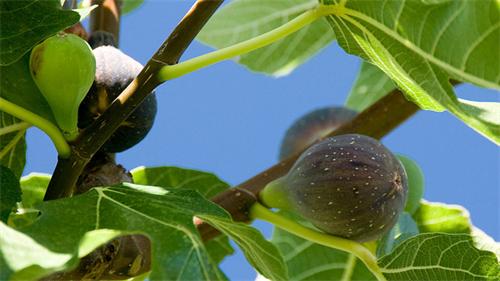
- Common fig (Ficus carica)
An extreme case. The edible portion is a syconium—flowers hidden internally. In nature, pollination depends on a highly specialized fig wasp. Without parthenocarpic varieties or manual intervention, fruiting indoors is nearly impossible.
III. Urban Architecture and the Global Pollinator Decline
Indoor pollination challenges cannot be separated from broader urban ecological transformations.
1. Architecture Reshapes Airflow
High-rise “urban canyon” effects alter local wind patterns. Balconies on upper floors often experience stagnant air. Modern sealed building designs minimize natural ventilation. Micro-airflow—the subtle force that aids pollen dispersal—nearly disappears.
2. Global Decline of Pollinators
According to assessments by the Intergovernmental Science-Policy Platform on Biodiversity and Ecosystem Services (IPBES), pollinators are in global decline, affecting approximately 75% of crop species and over one-third of global crop production.
Urbanization intensifies pressure through pesticide use, habitat fragmentation, artificial light pollution, and air contamination. Studies suggest higher air pollution levels negatively affect bumblebee activity.
When city-wide ecological systems are already under strain, indoor cultivation—already ecologically isolated—faces even greater barriers.
We are attempting to reconstruct ecological functions on isolated islands.
IV. The Illusion of Technological Compensation
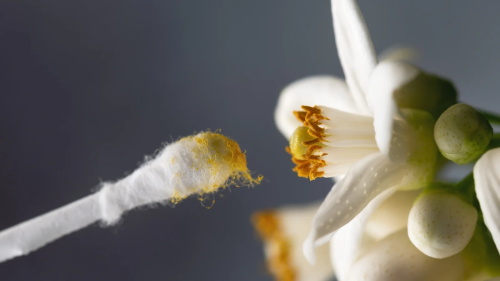
Faced with fruitlessness, our instinct is technological substitution: cotton swabs, electric toothbrushes, pollination brushes, mechanical pollinators.
These methods can improve fruit set. But they create a deeper illusion: that technology can fully replace ecological processes.
The Limits of Artificial Pollination
Artificial pollination addresses yield, not ecosystem function.
1. Timing and precision:
Tomato flowers open within specific windows of stigma receptivity. Pollinators naturally synchronize with these rhythms; humans struggle to replicate this frequency and timing.
2. Selective visitation:
Bees preferentially visit healthier flowers, inadvertently supporting reproductive selection. Manual pollination is indiscriminate.
In some regions where pollinator collapse has occurred, orchards now rely on human labor using spray guns or pollen blowers. Production is maintained—but at significant economic and ecological cost.
When we “dismiss” bees as laborers, we enter a cycle of escalating technological dependency. Indoor hand-pollination is merely a miniature reflection of this global trend.
V. Indoor Agriculture and the Illusion of Control
Indoor cultivation reflects a powerful human desire: total control over nature.
Indoors, we can regulate:
- Temperature with thermostats
- Photoperiod with timers
- Irrigation with drip systems
- Nutrients with EC and pH meters
We build what appears to be a perfect growth chamber.
And yet pollination remains the most stubborn variable.
Urban thinker Jane Jacobs, in The Death and Life of Great American Cities, argued that cities possess “organized complexity” that resists top-down simplification. Ecological systems function the same way.
Pollination depends on relationships—not isolated inputs.
You may control light, water, and nutrients. But you cannot easily replicate the seemingly random, evolutionarily tuned flight path of a bee moving between flowers.
Pollination is a long-negotiated contract among plant, pollinator, climate, and light spectrum. Indoor cultivation attempts to rewrite that contract unilaterally.
Why Do We Overlook Pollination?
When consumers purchase a potted lemon or strawberry already heavy with fruit, they assume it will continue bearing. Marketing emphasizes “high yield,” “easy care,” and “year-round fruiting.”
Rarely does anyone mention: You will need a bee.
Or: You will need desert-like temperature variation.
The existing fruit creates an illusion of permanence. We forget that those fruits were formed within a previous ecological context.
Modern consumer culture simplifies complexity into commodities. We purchase the promise of fruit—but not the ecological conditions required to fulfill that promise.
We take the plant home.
We leave its ecosystem behind.
And in that separation lies the quiet crisis of indoor pollination.
References
1. Intergovernmental Science-Policy Platform on Biodiversity and Ecosystem Services. (2016). The assessment report on pollinators, pollination and food production. Bonn, Germany: IPBES Secretariat.
2. Giannini, T. C., Costa, W. F., Cordeiro, G. D., Imperatriz-Fonseca, V. L., Saraiva, A. M., & Biesmeijer, J. C. (2020). Climate change in the Eastern Amazon: Crop-pollinator and occurrence-restricted bees are potentially more affected. Regional Environmental Change, 20(1), 9. https://doi.org/10.1007/s10113-020-01588-w
3. Ding, J., Jiang, Y., Zhao, J., & Wang, H. (2021). Effects of LED light quality on pollen viability and fruit setting in Camellia oleifera. Scientia Horticulturae, 288, 110376. https://doi.org/10.1016/j.scienta.2021.110376
4. Potts, S. G., Imperatriz-Fonseca, V., Ngo, H. T., et al. (2021). Safeguarding pollinators and their values to human well-being. Nature, 540(7632), 220–229. https://doi.org/10.1038/nature20588
5. Bishop, J., Jones, H. E., Lukac, M., & Potts, S. G. (2018). Insect pollination reduces yield loss following heat stress in faba bean (Vicia faba L.). Agriculture, Ecosystems & Environment, 220, 89–96. https://doi.org/10.1016/j.agee.2015.01.007
About the Author
Oliver Hayes, MSc – Urban Gardening Systems Researcher & Sustainable Home Writer
Oliver Hayes is a researcher and content writer specializing in urban gardening ecology, balcony food systems, and sustainable home environments. He holds a Master’s degree in Environmental Horticulture from the University of Copenhagen and has collaborated with community garden networks, indoor farming startups, and ecological design organizations across Europe. His work focuses on helping everyday households better understand the hidden environmental factors affecting plant health, indoor biodiversity, and long-term sustainable living practices.
Editorial Transparency Statement
This article was developed through a synthesis of peer-reviewed ecological research, horticultural science publications, pollinator studies, and environmental urbanism literature. The content is intended to provide educational analysis rather than commercial gardening advice.
No manufacturers, agricultural companies, lighting brands, or indoor gardening product providers sponsored or influenced this article. Any plant species, technologies, or ecological examples mentioned are included solely for explanatory and educational purposes.
Disclaimer
This article is intended for informational and educational purposes only. Indoor cultivation outcomes vary depending on plant variety, climate, building conditions, lighting systems, humidity, and regional ecological factors.
The article does not constitute professional agricultural, botanical, or environmental engineering advice. Readers attempting indoor fruit cultivation should consult local horticultural experts or extension services when managing valuable crops or specialized species.
Ecological and environmental discussions presented here reflect current scientific understanding, which may evolve as new research emerges.
Recommend for you:
Edible Microgreens 2.0: Indoor Nutrition Trends You Haven’t Tried
Microgreens cultivation is about precise timing, environmental control, and post-harvest management—not some urban pastoral fantasy.
The Cost of Replacement: Why Expensive Furniture Isn’t Always Better
How to Make Thoughtful Choices When Swapping Out Hard-to-Replace Pieces in Your Home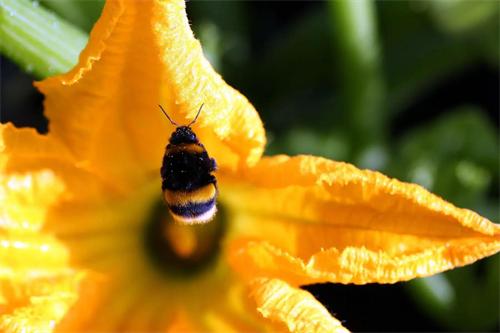
Indoor Pollination Failure in Fruiting Plants
The Ecological Isolation Behind Balcony Harvest Disappointment
Home Privacy in 2026: Balancing Open Spaces and Digital Surveillance
We tore down physical walls, only to weave a digital net inside our homes.