
Biophilic Interior Design: Trending Beyond Plants to Walls, Water, and Sound
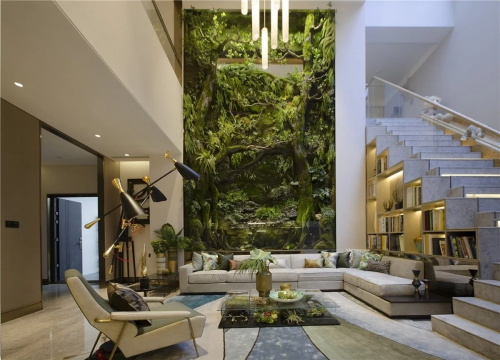
By Clara Whitfield | Updated on March 2026 | 🕓 16 minutes
Key Highlights
- Can biophilic design work without indoor plants?
- Why do many home water features fail after a few months?
- Are artificial nature sounds actually restorative—or just another form of noise?
- What makes natural materials feel psychologically “safe” indoors?
- Can fractal light and shadow patterns reduce stress?
- How does climate affect whether a biophilic design strategy succeeds or fails?
- Is virtual nature psychologically comparable to real nature?
The miniature indoor water wall I spent €800 installing ended up unplugged and abandoned as a static decoration by the fourth month—after the pump noise triggered complaints from my neighbors. That experience made me realize something uncomfortable: most mainstream content about “biophilic design” is essentially just a plant shopping list accompanied by a few photos of floor-to-ceiling windows. For people living in ordinary apartments, it offers almost no practical guidance.
The core of biophilic design is not about dragging the outdoors inside. It is about rebuilding the sensory relationship between humans and their environment. Plants are only one pathway—and often the most troublesome one.
Over the past two years, I have reviewed more than 400 papers, visited project sites across Europe and Southeast Asia, and tried to answer a simple question:
How far can an ordinary home go without relying on plants?
I. The Misunderstood Nature of Biophilic Design: Four Sensory Dimensions
Most people interpret biophilic design purely through vision—greenery, wood, sunlight. But environmental psychology research has long shown that single-sense stimulation has limited effects and quickly loses impact through repetition.
A 2024 study published in PLOS ONE, “Exploring Biophilic Building Designs to Promote Wellbeing and Stimulate Inspiration,” tested four levels of biophilic design on 255 participants (63 university faculty/students and 192 members of the general public). The researchers found that while visual stimulation improved mood, its ability to enhance cognitive inspiration weakened significantly after repeated exposure. The authors argued that future research must incorporate additional sensory modalities—including sound, touch, and smell—to create more durable restorative environments.
I tend to break biophilic design into four practical sensory dimensions:
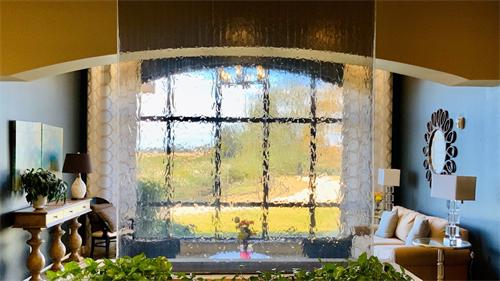
Visual
The key is not “green” itself, but fractal patterns, shifting natural light, and layered visual depth.
In 1989, Stephen and Rachel Kaplan’s Attention Restoration Theory proposed that humans possess an innate preference for natural fractal proportions. These patterns encourage a state of “soft fascination,” allowing the brain to recover from directed attention fatigue.
Auditory
Soundscape is one of the most underestimated dimensions.
A 2025 study published in Buildings, “A Comparative Study with Relaxing Activities,” surveyed 247 participants regarding home soundscape perception. The study found that natural sounds had significantly stronger restorative effects during relaxation than during work-related activities. However, artificial water features with constant, repetitive sound patterns were often reclassified by the brain as “mechanical noise,” losing much of their restorative potential.
Tactile
Material temperature and texture create natural rhythms of touch.
The coolness of stone, the warmth of wood, the roughness of woven textiles—these tactile signals are almost entirely ignored in visually dominated design discussions, despite directly influencing the body’s instinctive sense of trust within a space.
Spatial Experience
Refuge, prospect, and blurred indoor-outdoor boundaries.
This is the hardest dimension to achieve within existing residential architecture, but also the one with the highest psychological payoff.
II. Walls: From Wallpaper to Light and Shadow
Walls are where biophilic design most commonly goes wrong.
Putting up a forest wallpaper is not biophilic design. The brain rapidly recognizes that the image is static and lifeless.
I once visited the Maggie’s Centre in London, where untreated cork walls and lime plaster surfaces were paired with diffuse garden light. The tactile roughness and neutral temperature of the materials created a feeling that the environment was gently “holding” the body rather than merely decorating the room.
But there are cautionary examples too.
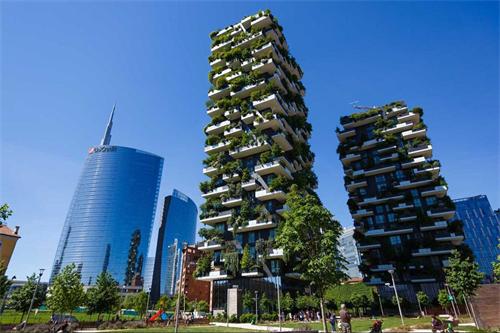
Bosco Verticale (“Vertical Forest”) in Milan planted more than 900 trees and 20,000 shrubs across two residential towers. Completed in 2014, the project genuinely improved localized air quality. Yet residents repeatedly complained about drainage blockages during leaf-fall season and ongoing pest management problems. Maintenance costs reportedly rose around 40% higher than comparable residential towers nearby.
This was not a design failure—it was a reminder that living wall systems must be integrated into building infrastructure from the start. Retrofitting them later carries enormous risk.
For ordinary homes, I have experimented with three levels of wall-based biophilic interventions.
Level 1 (Zero Budget, Rental-Friendly)
Use existing walls to create fractal light patterns.
Move a floor lamp to a low side angle and allow light to pass through blinds or perforated dividers, producing irregular shadow textures on the wall.
A 2025 Buildings study, “Calm by Design: Nature-Inspired Rooms Reduce Electrodermal Activity Levels,” found that exposure to simulated natural light-shadow patterns for just 45 seconds significantly reduced electrodermal activity in young participants. The researchers also acknowledged important limitations: the exposure period was extremely short, the findings may only reflect temporary physiological effects, and the sample consisted primarily of younger adults.
Level 2 (Moderate Investment)
Moss walls or framed fern systems.
A friend in Copenhagen created a 0.8-square-meter “living wall frame” using reclaimed picture frames and moisture-retaining moss substrate. It survived for fourteen months with twice-weekly misting.
The crucial factor was not the plant species—it was the substrate. Genuine sphagnum moss was necessary; decorative dyed moss failed almost immediately.
However, a warning is necessary here.
A 2024 systematic review in Frontiers in Built Environment noted that poorly maintained living wall systems can become breeding grounds for mold and bacteria. Residential spaces may not face hospital-level hygiene requirements, but mold risk in damp wall systems is absolutely real, especially in humid climates.
Level 3 (Long-Term Renovation)
Natural material wall systems.
Cork, untreated wood, rammed-earth-effect plaster.
Truly biophilic materials age visibly over time: wood darkens through oxidation, cork gradually wears, plaster develops hairline cracks. These traces of time are part of the experience itself.
If your goal is permanent visual perfection, these materials are probably not for you.
III. Water Features: Micro-Hydrology in Small Apartments
Water is strangely absent from most residential design discussions because people associate it with hotel fountains or backyard ponds.
But the contribution of water to biophilic design is primarily auditory before it is visual.
Singapore’s Khoo Teck Puat Hospital is often cited as a successful example. The hospital integrates layered sky gardens, natural ventilation systems, and water features throughout public circulation areas. Studies reported a 30% reduction in energy consumption, a 15% improvement in patient recovery times, and a 25% reduction in stress indicators.
But these numbers depend heavily on climate.
Singapore’s consistently hot and humid environment allows evaporative cooling and natural ventilation to function synergistically. Applying the same strategy in Stockholm or Chicago would create entirely different outcomes. Winter evaporation from indoor water systems could worsen dry indoor air, while humidification during heating seasons may increase condensation and mold risks.
This geographical mismatch is one of the most common failures in biophilic design.

After my own failed water-wall experiment in Berlin, I switched to a tabletop micro-water feature inspired by the Japanese tsukubai.
The setup was simple:
- a 25 cm rough ceramic basin,
- a 5W circulation pump,
- water dripping from a bamboo spout onto volcanic stone.
Two changes made the difference.
First, I replaced smooth ceramic surfaces with porous volcanic rock, creating richer overtones when water struck the surface.
Second, I connected the pump to a smart outlet so it operated only two hours each morning and evening. The irregularity mattered. Predictable sound becomes background noise; intermittent sound retains perceptual freshness.
A 2024 PMC study, “Biophilic Interventions in Real and Virtual Environments Reduce Stress During Cognitively Demanding Tasks,” compared real and virtual biophilic environments. Psychologically, both produced similar reductions in stress perception. Physiologically, however, real environments performed significantly better.
This suggests that even a tiny physical water feature—with genuine texture, randomness, and material presence—may outperform a white-noise app, provided the sound remains sufficiently natural.
Maintenance Reality
- Clean algae weekly using diluted hydrogen peroxide.
- Inspect pump bearings monthly.
- Replace pumps immediately once high-frequency humming begins.
A failing pump sounds worse than having no water feature at all.
IV. Soundscape: The Cheapest Dimension—and the Hardest to Get Right
Soundscape is simultaneously the lowest-cost and most cognitively demanding aspect of biophilic design.
Most people download a rainforest white-noise app, adapt to it within two weeks, and lose any restorative effect.
A 2024 PMC scoping review, “Exploring the Relationship Between Mental Health and Urban Green Space Soundscapes,” analyzed 22 studies with sample sizes ranging from 20 to 1,161 participants. Most research had been conducted only during summer months and rarely accounted for seasonal variability.
The authors warned that this likely overestimates the restorative value of urban green soundscapes because pleasant summer weather and elevated natural sound activity artificially amplify positive responses.
In other words: the joy you experience hearing birdsong during a July vacation may not transfer to a dark January workday.
My own soundscape strategy currently operates across three layers.
Isolation Layer
First, fix the room’s acoustic flaws.
Hard surfaces create reverberation that makes natural sounds feel cheap and artificial.
Wool, jute, and unbleached cotton absorb mid- and high-frequency reflections far better than most polyester “acoustic panels.”
Introduction Layer
If the surrounding environment allows it, opening a window remains the most effective soundscape intervention.
But urban apartments often face severe traffic noise.
The 2025 Buildings study involving 247 participants also confirmed that outdoor anthropogenic noise significantly harms home working environments.
My compromise solution has been installing trickle vents in the bedroom. These narrow openings introduce fresh air and subtle environmental sound while attenuating lower-frequency traffic noise.
Dynamic Layer
Sound must remain unpredictable.
In my kitchen window, I hung wind chimes made from brass, cast iron, and ceramic shards. Different wind speeds produce completely different overtone combinations.
This works far better than electronic white noise because the brain cannot accurately predict the timing or frequency of the next sound event. The result is alertness without fatigue.
V. Plant-Free Biophilic Design: The Logic of Karesansui
Not everyone can—or wants to—live with plants.
Allergies, pets, mold risks in humid climates, or simply being chronically bad at plant care are legitimate barriers.
Japanese karesansui (dry landscape gardens) offer an alternative philosophy: instead of replicating nature directly, they imply natural processes through stone, sand patterns, moss patches, and weathered branches.
A designer I met in Oslo keeps no indoor plants whatsoever. Instead, her entryway contains a shallow ceramic basin filled with beach stones collected from nearby shorelines, arranged according to the density patterns created by tides.
Once a week, she sprays a thin layer of water over the stones to recreate the reflective sheen of wet surfaces after rainfall.
The point is not to “look natural.”
The point is to remind you that natural processes exist.
A 2024 Cambridge Ageing & Society study examining older urban adults in Turkey during the pandemic found that the relationship between biophilic features and emotional wellbeing was dynamic rather than stable. Regardless of housing design, negative emotions increased sharply during the crisis period. However, access to outdoor biophilic environments remained strongly associated with maintaining positive experiences.
The researchers openly acknowledged major limitations:
- the study was confined to Turkish urban culture,
- participants were recruited through convenience sampling,
- and the quantitative methodology may have introduced common-method bias.
What the study reminded me is this:
Biophilic interiors cannot replace genuine outdoor contact—especially during periods of social or psychological crisis.
VI. Three Real Apartment Scenarios and Honest Budgets
The following are three practical scenarios based on my own observations and trial-and-error experiences.
Scenario A: Urban Studio Apartment (20–40㎡, Rental-Friendly)
Core Strategy: Visual texture + micro-water feature + tactile materials
- Light and shadow: reposition existing lamps to create fractal shadow patterns using blinds (€0–50)
- Water feature: volcanic-stone tabletop fountain with smart-timer operation (€80–150)
- Tactile materials: unbleached wool blankets, rough ceramic bowls, unfinished oak shelving (€100–200)
- Maintenance: approximately 30 minutes weekly
Limitation:
This setup cannot truly solve soundscape issues. If exterior urban noise is severe, that dimension may simply remain compromised.
Scenario B: Suburban Family Home (With Yard Access)
Core Strategy: Soundscape design + visual prospect + partial natural-wall renovation
- Soundscape: multi-material wind chime installation near garden-facing windows (€30–80)
- Sightlines: remove visual obstructions near windows so major indoor activity areas maintain direct views of at least one tree canopy (€0)
- Wall treatment: cork or lime-plaster renovation on one secondary wall (€300–600)
- Maintenance: approximately 2–3 hours monthly
Limitation:
Natural wall materials age visibly and may release mild odors during early installation periods.
Scenario C: High-Rise Apartment (Sealed Windows, Mechanical Ventilation)
Core Strategy: Artificial light-shadow systems + visible airflow + dry-landscape corner
- Lighting: adjustable warm-tone directional lamps simulating evening tree-shadow movement (€100–200)
- Airflow: a well-designed tower fan combined with lightweight curtains to create visible air movement (€50–150)
- Dry landscape corner: shallow ceramic tray with locally collected stones, shells, and driftwood rotated seasonally (€30–80)
- Maintenance: approximately 1 hour monthly
Limitation:
The soundscape dimension is almost entirely absent, and water features are generally not recommended because humidity management becomes difficult in sealed environments.
VII. Questions I Still Cannot Answer
The Uncertainty of Long-Term Effects
Most existing research examines only short-term exposure.
The 2025 Buildings electrodermal activity study lasted just 45 seconds. A 2024 Applied Sciences virtual-environment study used only 30 convenience-sampled participants.
We still know almost nothing about whether these interventions retain their effects after three years, five years—or whether people eventually adapt completely.
The Shadow of Publication Bias
A 2024 systematic review from Waseda University examined 13 experimental studies on indoor plants and cognitive performance. Although many tasks showed positive effects, statistically insignificant or negative outcomes also appeared—and may be systematically underreported because journals preferentially publish positive findings.
This means the literature we read may already overestimate the benefits of biophilic design.
The Psychological Burden of Maintenance
When living elements become another source of obligation on a to-do list, do they begin to contradict the original purpose of biophilic design?
I have seen too many people spiral into self-criticism because they “killed another plant.”
If natural elements generate anxiety instead of restoration, they become anti-biophilic.
The Gap Between Virtual and Physical Nature
The 2024 PMC study suggested that virtual biophilic environments can psychologically rival real ones, even if physiological differences remain.
As VR and spatial audio technologies continue advancing, future “digital biophilia” may eventually replace many physical interventions.
Personally, I find that possibility unsettling.
And perhaps that discomfort itself deserves examination.
FAQs
1. Do you need plants for a biophilic home?
No. While plants are commonly used, biophilic design can also be achieved through natural materials, lighting patterns, sound design, water features, airflow, and spatial layout. Plant-free approaches such as Japanese dry landscape principles (karesansui) are increasingly popular in smaller apartments and allergy-sensitive households.
2. Are indoor water features worth it in apartments?
They can be effective when carefully designed, especially for auditory restoration. However, poorly designed systems often create pump noise, humidity issues, algae growth, or maintenance stress. Small-scale, intermittent water systems generally perform better than large decorative walls in ordinary apartments.
3. Why do natural sounds stop feeling relaxing over time?
The brain gradually adapts to repetitive sound loops. Static white-noise tracks or constant artificial water sounds may eventually be processed as mechanical background noise. Dynamic and unpredictable sound variation tends to maintain restorative value longer.
4. Can artificial lighting imitate natural environments?
To a degree, yes. Research suggests that shifting light-shadow patterns inspired by natural fractals may help reduce short-term physiological stress responses. However, artificial simulations still differ from real environments in multisensory complexity and long-term adaptation effects.
5. Is biophilic design scientifically proven?
Some evidence supports short-term benefits related to stress reduction, mood improvement, and attention recovery. However, many studies rely on small sample sizes, short exposure periods, or controlled laboratory settings. Long-term real-world effects remain insufficiently studied.
6. Is biophilic design expensive?
Not necessarily. Some of the most effective interventions are low-cost:
- Adjusting light angles
- Improving airflow visibility
- Introducing tactile natural materials
- Reducing reverberation
- Creating visual depth
- Using local stones, wood, or textiles
Large-scale living walls and architectural renovations are usually the most expensive and maintenance-intensive elements.
7. Can biophilic design replace time outdoors?
No. Research consistently suggests that interior biophilic interventions may support wellbeing, but they cannot fully substitute direct contact with outdoor natural environments—especially during periods of stress, isolation, or crisis.
References
1. PLOS ONE. (2024). "Exploring biophilic building designs to promote wellbeing and stimulate inspiration." https://journals.plos.org/plosone/article/file?id=10.1371/journal.pone.0317372
2. Buildings. (2025). "Calm by Design: Nature-Inspired Rooms Reduce Electrodermal Activity Levels." https://www.mdpi.com/2075-5309/15/19/3466
3. Cambridge Ageing & Society. (2021). "Impacts of biophilic design on the development of gerotranscendence and the Profile of Mood States during the COVID-19 pandemic." https://www.cambridge.org/core/journals/ageing-and-society/article/impacts-of-biophilic-design-on-the-development-of-gerotranscendence-and-the-profile-of-mood-states-during-the-covid19-pandemic/DD800D1346FC112D93F9AEF1D7575CA2
4. MDPI Applied Sciences. (2024). "Effect of a Virtual Biophilic Residential Environment on the Perception and Responses of Seniors." https://www.mdpi.com/2076-3417/14/23/11431
5. PMC. (2024). "Biophilic interventions in real and virtual environments reduce stress during cognitively demanding tasks." https://pmc.ncbi.nlm.nih.gov/articles/PMC12612148/
6. PMC. (2024). "Exploring the relationship between mental health and urban green space soundscapes: A scoping review." https://pmc.ncbi.nlm.nih.gov/articles/PMC12956135/
7. Buildings. (2025). "A Comparative Study with Relaxing Activities: Indoor Soundscape Perception While Working and Relaxing at Home." https://www.mdpi.com/2075-5309/15/15/2642
8. Waseda University. (2024). Systematic review of 13 experimental studies on indoor plants/biophilic environments and cognitive functions. https://waseda.repo.nii.ac.jp/record/78461/files/Honbun-9254.pdf
About the Author
Clara Whitfield, MA – Biophilic Design Consultant & Eco-Lifestyle Content Specialist
Clara Whitfield is a consultant and writer focused on biophilic interior design, ecological home trends, and sensory-centered living environments. She earned her Master’s degree in Sustainable Design from the University of Manchester and has contributed to residential wellness projects, eco-conscious furniture brands, and environmental education initiatives. Her writing explores how natural systems, material choices, and urban living conditions shape both household comfort and environmental resilience.
Editorial Transparency Statement
This article is based on a combination of peer-reviewed academic research, field observations, interviews, and personal experimentation with residential biophilic design strategies. The author independently selected and reviewed the referenced materials.
Some studies discussed in this article involve small participant groups, short exposure durations, or region-specific environmental conditions. Where relevant, methodological limitations and publication biases have been acknowledged within the text to avoid overstating scientific certainty.
Disclaimer
This article is intended for informational and educational purposes only and should not be interpreted as medical, psychological, architectural, or environmental engineering advice.
Indoor water systems, living wall installations, humidity modification, and material renovations may create maintenance, safety, mold, or structural risks depending on local climate conditions and building characteristics. Readers should consult qualified professionals before making major residential modifications.
The psychological and physiological effects of biophilic design may vary significantly between individuals, climates, housing types, and long-term living conditions.
Recommend for you:
The Cost of Replacement: Why Expensive Furniture Isn’t Always Better
How to Make Thoughtful Choices When Swapping Out Hard-to-Replace Pieces in Your Home
The Truth Behind Overhyped Home Materials
Why Usage Matters More Than Marketing or Time
Edible Microgreens 2.0: Indoor Nutrition Trends You Haven’t Tried
Microgreens cultivation is about precise timing, environmental control, and post-harvest management—not some urban pastoral fantasy.
What Our Eyes See as ‘Bright’ Isn’t What Plants Actually Perceive
The Overlooked Issue of Light Stability in Balcony Gardening